DRUGS & THERAPEUTICS EDUCATION CENTER
In this education center, get tips and tools for navigating some of the most common clinical presentations in practice—from parasites and dermatitis to OA and beyond. Discover an abundance of resources to download and share with your team and your clients to educate them on numerous common conditions seen in practice and the critical role of preventive care.

FEATURED CONTENT

From urban environments to wintertime, do your clients know when and where parasites can be found? Grab this handy flyer to hang at your clinic to help educate pet owners on the risks of parasites and where they might be lurking.

It’s important for owners to have a plan for their pet in case an emergency arises. Equip them with this checklist of items to include in their emergency preparedness kit to help keep them healthy and comfortable.

Preventive care is critical to overall patient health, but the volume of what to watch out for can overwhelm owners. Supply them with this checklist to help them keep a watchful eye on their pet's health—from parasites to urinary and digestive issues.
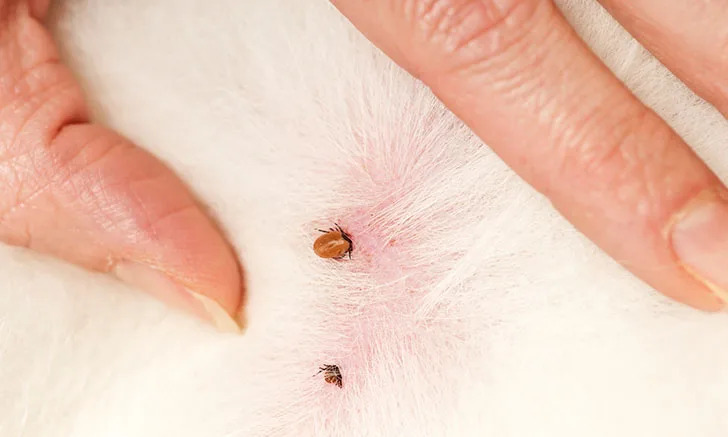
A positive tick-borne disease test in an asymptomatic pet can pose a clinical challenge for veterinarians. Check out these algorithms designed to guide the veterinary team through the complexities of tick-borne disease management based on each patient’s unique circumstances.
PORTAL-EXCLUSIVE CONTENT

Some clients may not understand that parasites can be found on sidewalks or even in their own backyard. Share this handout to help educate clients on the “why” behind parasite prevention.

How many pruritic dogs have come into your exam room this week? Here are 3 differential diagnoses to keep in mind when those itchy patients come into the clinic.

Even the best pet owner can have trouble sticking to a home medication routine, but OA doesn’t take a break. To see how Ernest went from a young dog with significant mobility challenges to a happier, more active member of the family, check out this case study.
PARASITOLOGY RESOURCES

Client compliance is still a challenge in the prevention of parasitic disease. In this video, learn how all-in-one parasite prevention can increase client compliance and practice revenue.

Discussing parasite prevention is critical at every wellness appointment, but the most important one may be at the first new puppy visit. In this video, hear from Dr. Susanna Perenboom-Tobin on how to educate puppy owners on the importance of parasite prevention and protecting their pets from a young age.

In this on-demand CE course, get clinically relevant updates on the evolution of heartworm disease, intestinal parasites, and tick-borne disease. Plus, get a close-up on Simparica Trio, the first all-in-one product to join moxidectin, sarolaner, and pyrantel pamoate.

Cats need parasite prevention, too. In this CE course, explore how to develop a parasiticide protocol to best protect your feline patients, and get expert insights into feline heartworm disease, tapeworms, and more.
CANINE OSTEOARTHRITIS RESOURCES

Osteoarthritis is a common, progressive source of pain in dogs that often goes unrecognized, making early identification and thorough orthopedic evaluation critical for effective management. Check out this video for helpful examination tips, and while you’re at it, download a standardized form to streamline your orthopedic evaluation.

Review the results of a comparator clinical trial evaluating the efficacy and safety of Librela versus the NSAID meloxicam.

Review the results of the most frequently reported adverse events following administration of Librela.

Hear directly from researchers on recent Librela peer-reviewed publications to better understand its real-world use and applications.
SIMPARICA TRIO IMPORTANT SAFETY INFORMATION
See full Simparca Trio Prescribing Information. Use with caution in dogs with a history of seizures. Simparica Trio contains sarolaner, a member of the isoxazoline class which has been associated with neurologic adverse reactions including tremors, ataxia, and seizures in dogs with or without a history of neurologic disorders. The safe use of Simparica Trio has not been evaluated in breeding, pregnant, or lactating dogs. The most frequently reported adverse reactions in clinical trials were vomiting and diarrhea.
LIBRELA IMPORTANT SAFETY INFORMATION
See full Librela Prescribing Information. For use in dogs only. Women who are pregnant, trying to conceive or breastfeeding should take extreme care to avoid self-injection. Hypersensitivity reactions, including anaphylaxis, could potentially occur with self-injection. Librela should not be used in breeding, pregnant or lactating dogs. Librela should not be administered to dogs with known hypersensitivity to bedinvetmab. The most common adverse events reported in a clinical study were urinary tract infections, bacterial skin infections and dermatitis.
See the Client Information Sheet for more information about Librela.