Zinc-Responsive Dermatosis in French Bulldogs
Breezy L. Scranton, DVM, University of California, Davis
Tyler J.M. Jordan, DVM, PhD, DACVD, University of California, Davis
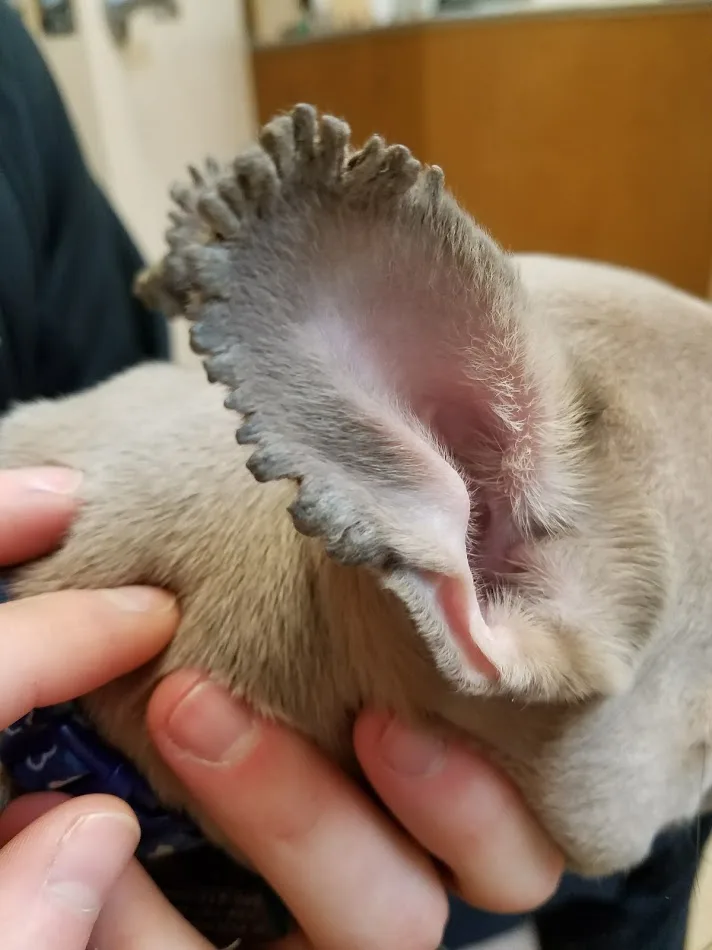
Image courtesy of Rachel J. Dubin, Animal Dermatology Group
In the Literature
Dubin RJ, Bradley CW, Keating MK, Murphy LA, Rosenkrantz WS. Pinnal parakeratotic hyperkeratosis consistent with zinc-responsive dermatosis in 16 French bulldogs. Vet Dermatol. 2026;37(2):274-286. doi:10.1111/vde.70039
The Research…
Zinc deficiency can lead to development of skin disease in a variety of species.1,2 Zinc-responsive dermatosis (ZRD) is an uncommon to rare skin disease in dogs and is clinically characterized by development of erythema, crusting, scaling, alopecia, pruritus, and secondary skin infections that often develop in areas of friction (eg, nasal planum, pressure points).2
Dogs with ZRD are typically categorized with syndrome I or syndrome II.2 Syndrome I is primarily described in Arctic dog breeds (eg, Siberian huskies, Alaskan malamutes) and is believed to be mediated by an inherited defect in intestinal zinc absorption.2 Syndrome II has been described in a variety of dog breeds fed either zinc-deficient diets or diets that interfere with zinc absorption (eg, high levels of phytates).2 Diagnosis of ZRD is based on patient history, clinical presentation, and histopathology; nucleated keratinocytes within the stratum corneum and hair follicles, a histopathologic feature known as parakeratotic hyperkeratosis (Figure), is a defining hallmark of ZRD.3
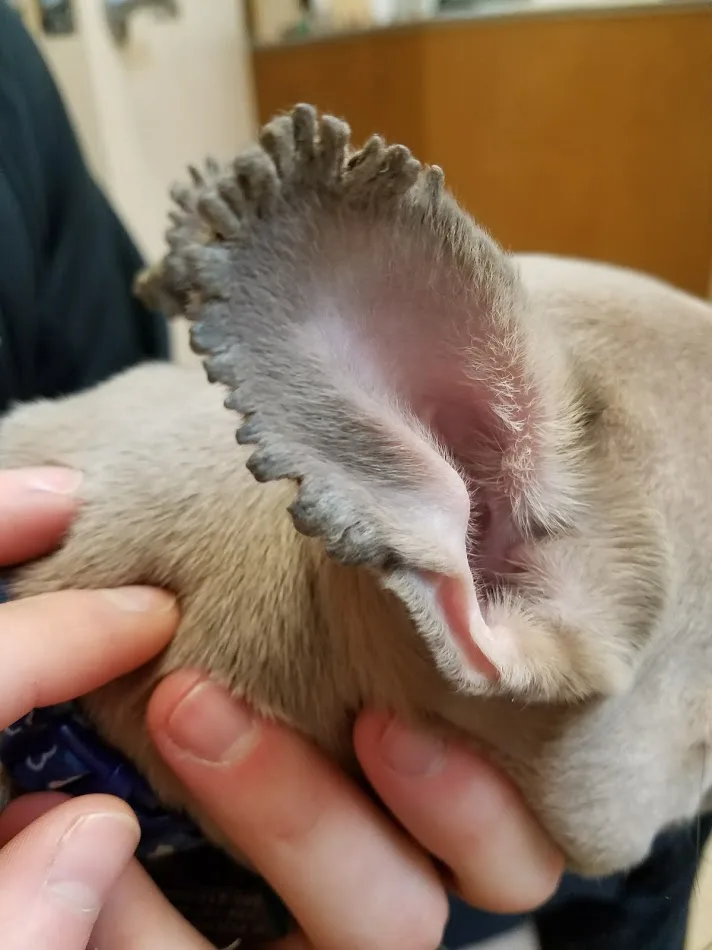
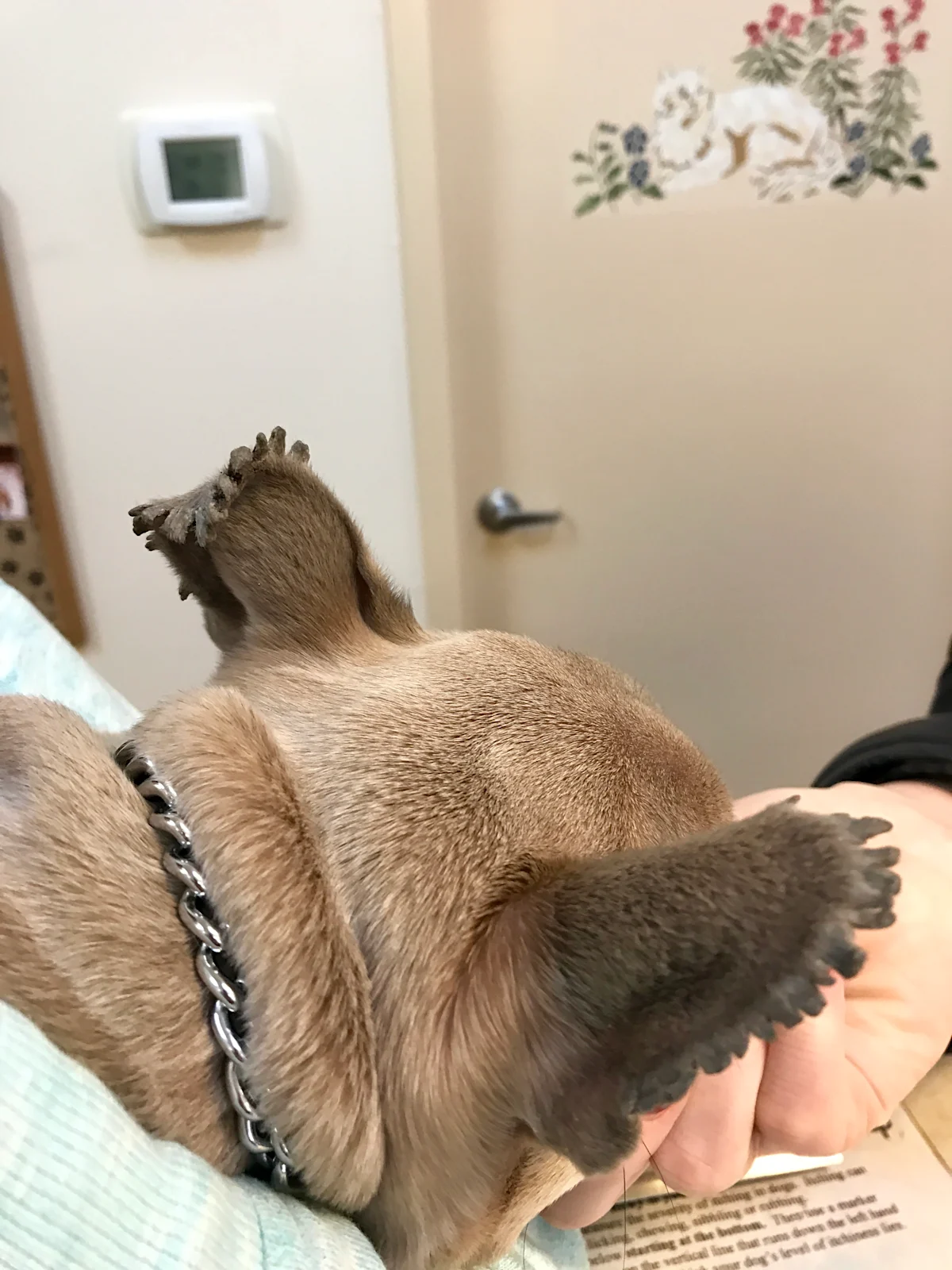
FIGURE Pinnal parakeratotic hyperkeratosis in a French bulldog. Images courtesy of Rachel J. Dubin, Animal Dermatology Group
This retrospective studydescribed French bulldogs (n = 16) with skin disease clinically and histopathologically resembling ZRD. Affected dogs were presented with adherent crusting, scaling, and alopecia, with or without a secondary bacterial and/or yeast infection, involving the pinnal margins; a subset also were presented with lesions involving the dorsal haired muzzle, scrotum, elbows, and tail. Skin biopsies from all dogs were characterized by marked epidermal parakeratotic hyperkeratosis extending into hair follicles.
Zinc supplementation was administered to 12 dogs. Overall, 8 of these dogs showed some clinical improvement, and 6 showed clinical improvement within 1 to 2 months. In 1 dog, the zinc supplementation formulation was changed from zinc methionine to zinc sulfate before clinical improvement was noted. Clinical relapse was described in 4 dogs after zinc was discontinued; reintroduction led to clinical improvement in 3 dogs.4 These findings were similar to those of another study describing a cohort of Boston terriers presented with thick, dry, adherent scale involving the pinnal margins.4
… The Takeaways
Key pearls to put into practice:
Differential diagnoses for dogs with scaling and crusting of the pinnal margins traditionally include vasculitis, ear margin seborrhea, canine hypothyroidism, and sarcoptic mange. This study highlights the importance of also considering ZRD in French bulldogs.
Dogs diagnosed with ZRD should undergo careful evaluation for possible nutritional deficiencies.
Skin biopsies for routine histology are needed for definitive diagnosis of ZRD. Sarcoptic mange, concurrent infection, and hypothyroidism should be ruled out prior to skin biopsy collection. Collection of skin biopsies from the pinnae can be challenging, result in tissue defects, and increase the risk for perioperative complications in brachycephalic breeds undergoing sedation or general anesthesia. Empiric treatment with zinc supplementation for 1 to 2 months and/or application of topical moisturizers can be considered prior to skin biopsy collection because adverse effects are minimal.
Treatment of ZRD often requires long-term zinc supplementation. Zinc methionine is preferred over other zinc formulations because of its higher bioavailability and tolerability.4
You are reading 2-Minute Takeaways, a research summary resource presented by Clinician’s Brief. Clinician’s Brief does not conduct primary research.