Cervical Bite Wound
Karen M. Tobias, DVM, MS, DACVS, University of Tennessee
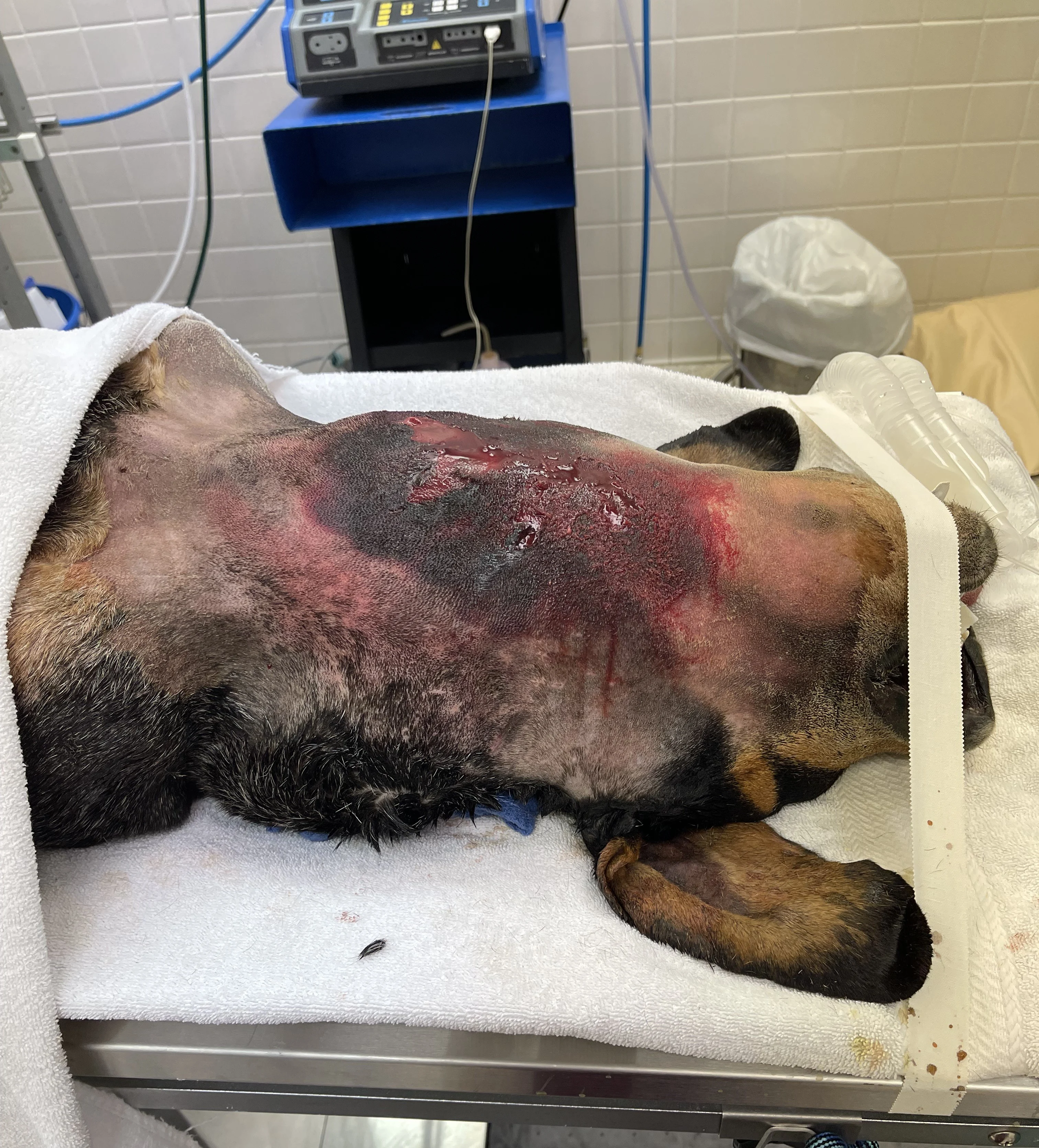
Cervical Bite Wound Case
A 64-lb (29-kg), 5-year-old crossbreed dog was presented with bleeding neck wounds from a suspected dog bite. On physical examination, bruising, hemorrhage, subcutaneous emphysema, and cervical pain were present, but no signs of neurologic defects were seen. The wounds were explored following stabilization, bloodwork (eg, PCV, total protein), and radiography. The dog was intubated because of possible airway trauma.
Surgical exploration revealed damaged local muscles and a ruptured right jugular vein. The vein was ligated, and necrotic muscles were carefully debrided. The surgical wound was managed open using a tie-over bandage. Bandage changes, wound cleansing, and debridement under injectable analgesics were performed daily until the wound appeared healthy. Closure was performed primarily over a continuous suction drain.
Bite Wound Discussion
Bite wounds are treated with sedation, analgesia, wide clipping, antiseptic cleansing, wound exploration, tissue debridement, drainage as needed, and systemic antibiotics.
Amoxicillin/clavulanate is often started empirically; older wounds should be cultured to determine bacterial susceptibility. Continuous suction drains should not be used in sites that are actively bleeding or leaking air. Cervical bites can cause airway damage (eg, tracheal perforation, laryngeal paralysis, pneumomediastinum) that may affect treatment and outcome.
In general, dogs that are previously vaccinated for rabies and bitten by a wild or unvaccinated animal should be administered a rabies booster, quarantined, and monitored for signs of rabies for 45 days; bitten dogs not previously vaccinated for rabies require strict quarantine for 4 to 6 months, depending on state laws.
Difficult topics and alternative approaches to care can be challenging to communicate to clients. This article on Top 5 Tools for Communicating in Tough Situations can help you better understand the tools needed to navigate these difficult discussions.
Empathy
Personality & Behavior Assessments
Awareness of Body Language
Respectful Listening
Confidence