Xenotransfusion of Canine Plasma Products to Cats
Karen Humm, VetMB, MA, MSc, CertVA, DACVECC, DECVECC, FHEA, MRCVS, The Royal Veterinary College London, United Kingdom
In the Literature
Gómez-Soto E, Guedra-Allais M, Le-Gal A, Starybrat D. Multicenter retrospective study of xenotransfusion of canine plasma products to cats: 14 cases (2022-2024). J Vet Emerg Crit Care (San Antonio). 2026;36(3):357-364. doi:10.1111/vec.70100
The Research …
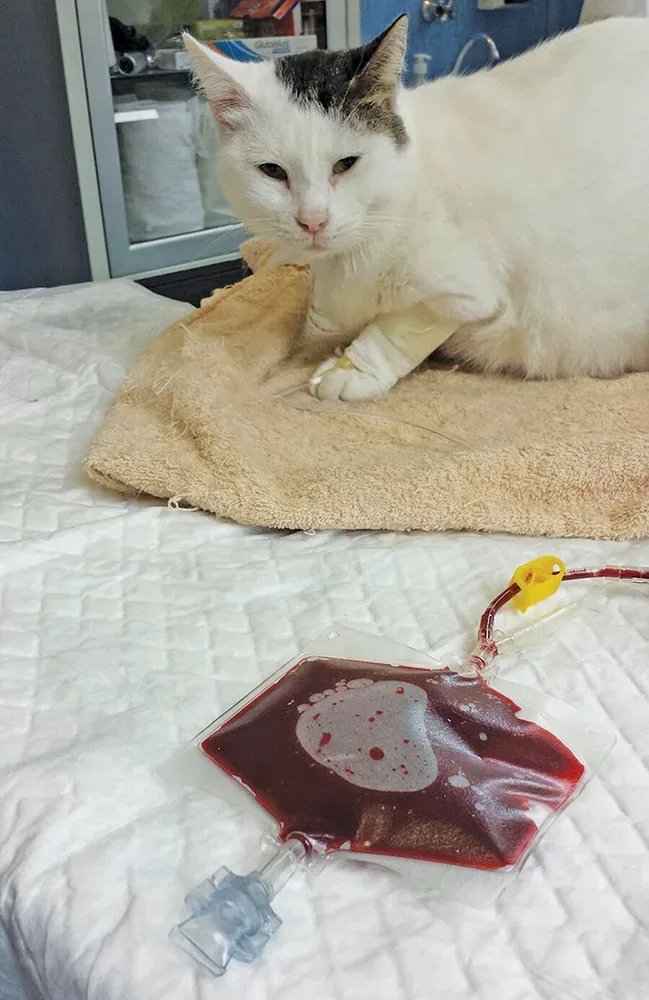
Administration of canine RBC products to cats (both experimentally and for clinical purposes) has been previously described,1,2 but administration of plasma products alone has not. Lack of availability of feline blood products is a major indication for considering xenotransfusion over allotransfusion.2
This retrospective study described the indications, transfusion protocols, transfusion reactions, and outcomes of cats (n = 14) administered 16 canine plasma xenotransfusions, with 2 cats receiving 2 transfusions within 24 hours. Indications for transfusion included coagulopathy (n = 8), colloidal support (n = 5), and severe hypovolemia (n = 1).
Only 6 cats received exclusively canine plasma products; the other 8 cats were not included in analysis of plasma-associated transfusion reactions, as whether a reaction was associated with the canine plasma product could not be definitively determined. Of the 6 cats, 2 developed acute respiratory distress during plasma transfusion (1.5 and 2 hours from start of transfusion), 1 cat was euthanized, and 1 cat died within 24 hours due to deteriorating conditions. The authors did not have enough information to classify these as specific transfusion reactions, although transfusion-associated circulatory overload, characterized by acute hemolytic transfusion reaction, transfusion-related acute lung injury, or transfusion-associated dyspnea, were possible causes. The other 4 cats without concurrent plasma administration had no evidence of transfusion reaction.
Prothrombin time and activated partial thromboplastin time were measured before and after xenotransfusion in 5 of 6 coagulopathic cats; values normalized in 3 cats. Of the 5 cats, 4 were concurrently administered vitamin K. There was no increase in total protein after xenotransfusion. Of all cats in the study, 5 survived to discharge.
… The Takeaways
Key pearls to put into practice:
Xenotransfusion of canine plasma products to cats is possible, but an accurate rate of transfusion reactions cannot be gleaned from this study due to the small number, critically ill nature, and high mortality rate of included cats.
Assessment of transfusion reactions in this study was also limited due to concurrent administration of other blood products in some cats and because the high mortality rate in this population may have affected the ability to recognize potential delayed transfusion reactions.
Potentially fatal respiratory transfusion reactions may be seen at a high rate in plasma xenotransfusion recipients. Ensuring pet owners are aware of the unknown and possibly high risk for potentially fatal transfusion reactions with canine plasma product administration to cats is critical.
Alternative management strategies should be carefully considered prior to canine plasma xenotransfusion administration to cats, including administration of feline blood products when possible, use of procoagulant medications for coagulopathic patients, and vasopressor and/or artificial colloid/human serum albumin use in patients with cardiovascular instability.
You are reading 2-Minute Takeaways, a research summary resource presented by Clinician’s Brief. Clinician’s Brief does not conduct primary research.