Canine Atopic Dermatitis
Maite Verde, DVM, PhD, Zaragoza University
Updated April 2026 by Rosanna Marsella, DVM, DACVD; University of Florida
Overview
Canine atopic dermatitis (CAD) is a clinical syndrome that affects genetically predisposed patients. CAD manifests as a chronic, relapsing pruritic skin disease and results from a combination of genetic and environmental factors.
Atopic disease in dogs primarily manifests as cutaneous disease, although some patients may also have respiratory signs. In most cases, immunoglobulin E (IgE) is detected against environmental allergens.1 Allergens not associated with the environment (primarily food) may trigger dermatitis flare-ups with signs indistinguishable from CAD. Food allergens can be a trigger for atopic dermatitis flare-ups in some patients (Figure 1).2,3
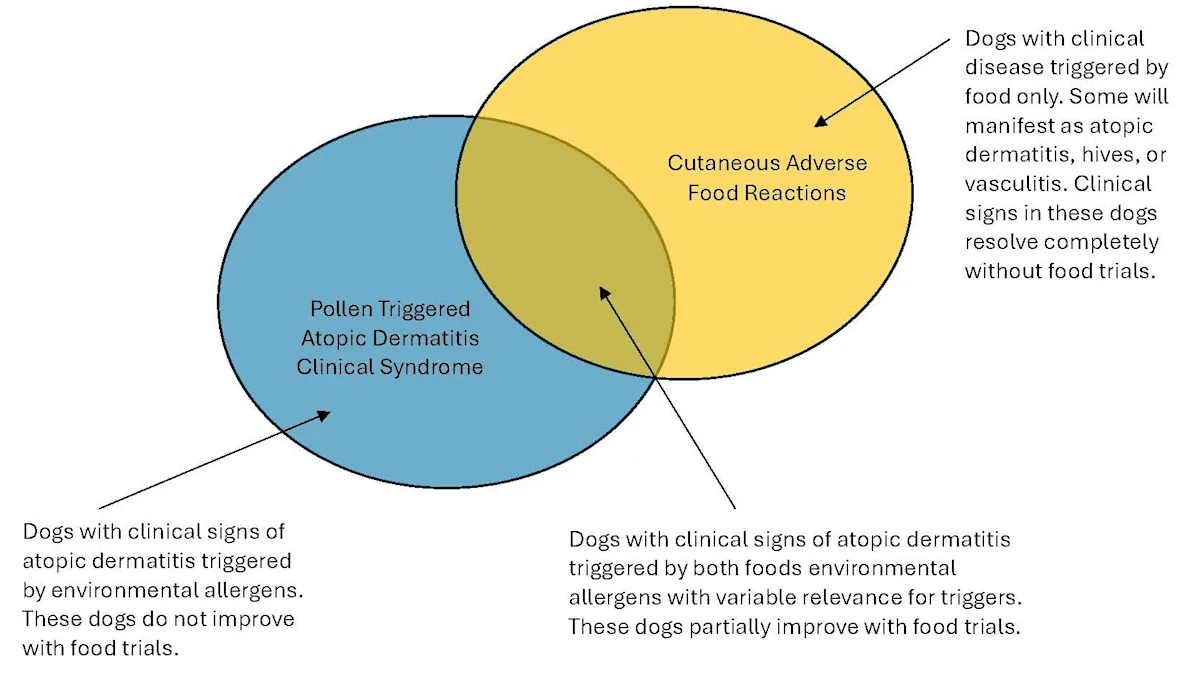
FIGURE 1 Graph illustrating that atopic dermatitis and food allergy are overlapping clinical syndromes. Some patients have only food triggers, only environmental allergen triggers, or a combination of food and environmental allergen triggers.Cutaneous adverse food reactionscan have a variety of clinical manifestations; some dogs are clinically indistinguishable from dogs with classic pollen allergic atopic signs, and others can have signs of hypersensitivity (eg, urticaria, vasculitis).
Atopic-like dermatitis is an inflammatory, pruritic skin disease with clinical features identical to those of CAD, in which an IgE response to environmental or other allergens cannot be documented.4 Atopic-like dermatitis, similar to intrinsic atopy in humans, describes patients with clinical features of CAD and no detectable IgE increase.4 This definition assumes that IgE is not necessary for clinical manifestations of the disease and that other mechanisms (eg, skin barrier dysfunction) can lead to dermatitis clinically indistinguishable from classic atopic demititis.
Epidemiology
Signalment
Breed Predisposition
Breed predisposition and breed-specific clinical phenotypes have been reported.5,6
Age
Age of onset can range from 6 months to 6 years,7 depending on factors like breed and geographic location.
Highly susceptible dogs in warm climates, with pollen present year-round, have an increased risk for early onset of signs.7
French bulldogs and shar-peis appear to develop CAD earlier in life compared with other breeds.5
Dogs with food-induced CAD are more likely to be presented with clinical signs at a younger age (<1 year of age, 50%) compared with dogs with CAD related to environmental allergens (38%).8
In general, clinical signs appear before 3 years of age in 68% of all cases.2,9
Genetic Implications
CAD is a complex, multifactorial disease; genetic and environmental factors play a fundamental role.
Causes & Risk Factors
Clinical manifestation of signs is facilitated by heavy exposure to pollen, insects, and high humidity.
Other risk factors include exposure to pollutants and other agents that impair epithelial barrier function.10-12
Pathophysiology
CAD is triggered mainly by aeroallergens; diverse factors (eg, bacterial or yeast overgrowth, physiologic or weather factors) can affect presentation.8
The primary mechanisms of disease are abnormalities in the epidermal structure and function, along with cutaneous inflammation caused by inappropriate immune responses to skin antigens.
A defective cutaneous barrier is considered crucial for development of atopic dermatitis.8 Abnormalities in the epidermal lipids are present in patients with atopic dermatitis, resulting in increased permeability and penetration of allergens. Defects or dysfunction in structural skin integrity (eg, corneodesmosomes, intercellular lipids, terminally differentiated keratinocytes) are associated with CAD development.13
Causes of cutaneous barrier dysfunction include:
Intercellular lipid lamellae structural defects in the stratum corneum and at its junction with the stratum granulosum
Defects of skin lipid composition
Reduced ceramides
Reduced expression and mutations of filaggrin
Filaggrin is a structural protein isolated in the upper epidermal layers that binds to keratin filaments and causes aggregation into microfibrils. This contributes to cellular compaction and a highly insoluble keratin matrix.
Defects of extrusion of lamellar bodies leading to decreased antimicrobial peptides and decreased ceramides
Ceramides compose the matrix that acts as a protein scaffold for the attachment of cornified-envelope proteins and lipids that form the stratum corneum.
Aberrant lamellar organization
Increased transepidermal water loss14,15
An overactive T-helper type 2 immune response against environmental allergens that penetrate the epidermis can lead to increased production of allergen-specific IgE (not in atopic-like dermatitis cases) and to an inflammatory dermal reaction that worsens cutaneous barrier function, appearance of lesions, and pruritus.
Bacteria (eg, Staphylococcus pseudintermedius) and yeast (eg, Malassezia pachydermatis) easily colonize the skin surface, adhere, and multiply faster in patients with AD.8 Overgrowth is common and can produce recurrent pyoderma and Malassezia spp dermatitis. Bacteria and yeast may also act as antigens, leading to worsening hypersensitivity reactions and further exacerbation of the inflammatory process.
The enteric barrier and immunologic tolerance mechanisms in the GI tract may cause functional defects (ie, altered intestinal permeability). Some patients may develop hypersensitivity to allergens, particularly proteins, in the diet.
Factors that can trigger flare-ups or worsen disease include flea bites, food, inhalants, and contact allergens.16 Some detergents, some textile fibers, extreme temperatures and humidity, and cutaneous microbial colonization can have the same effects.
Clinical Presentation
CAD is a clinical syndrome, not a uniform disease.
Clinical manifestations can evolve throughout the life of affected dogs.
Some dogs are presented with year-round clinical signs from the onset of CAD.
In ≈30% of cases, signs are seasonal and associated with environmental allergens.7 Signs may become present year-round as the disease progresses.
Dogs with food-induced atopic dermatitis or CAD caused by dust mites are presented with year-round clinical signs.7
Pruritus without lesions (ie, pruritus sine materia) at onset is the main sign of the disease and can be accompanied by erythema and papules as initial lesions in affected areas.
Pruritic intensity can be moderate (eg, 4-5 on a scale of 1-10) early in the disease process but increases progressively as the process becomes chronic and/or is complicated with secondary infections (eg, bacterial or yeast overgrowth) or other aggravating factors (eg, food, fleas, contact irritants).
Lesions are not specific, but their distribution pattern can be highly suggestive of CAD (Figure 2).
Lesions observed in the acute phase include erythema and a papulopustular rash that evolve to squamous lesions, lichenification, and alopecia as the disease progresses.
Areas most commonly affected are ventral hairless zones (axillae, inguinal region, and interdigital areas; Figure 3), similar to the lesions seen in allergic contact dermatitis.
Other affected areas include the muzzle, periocular region, pinnae (Figure 4), and flexural surface of the elbow (Figure 5).
Other signs may include conjunctivitis, otitis (Figure 6), hyperhidrosis, chronic changes from pruritic behavior (eg, salivary staining, lichenification, hyperpigmentation; Figures 7 and 8), acute moist dermatitis, acral pruritic nodules, and acral lick granulomas.
External otitis can be the first sign in up to 43% of cases.7
Some dogs with CAD are predisposed to develop reactions to allergens (eg, food, flea, contact allergens) and/or to develop secondary bacterial infections and yeast infections, with some breed predispositions (eg, West Highland white terriers, German shepherd dogs).16
Concurrent environmental and food allergens have been observed in 13% to 30% of cases9; in these patients, GI manifestations (eg, increased frequency of defecation, soft and light-colored feces, flatulence, scooting) can accompany cutaneous signs.
Noncutaneous signs (eg, rhinitis, reverse sneezing, alteration of the estrus cycle) can also be observed.
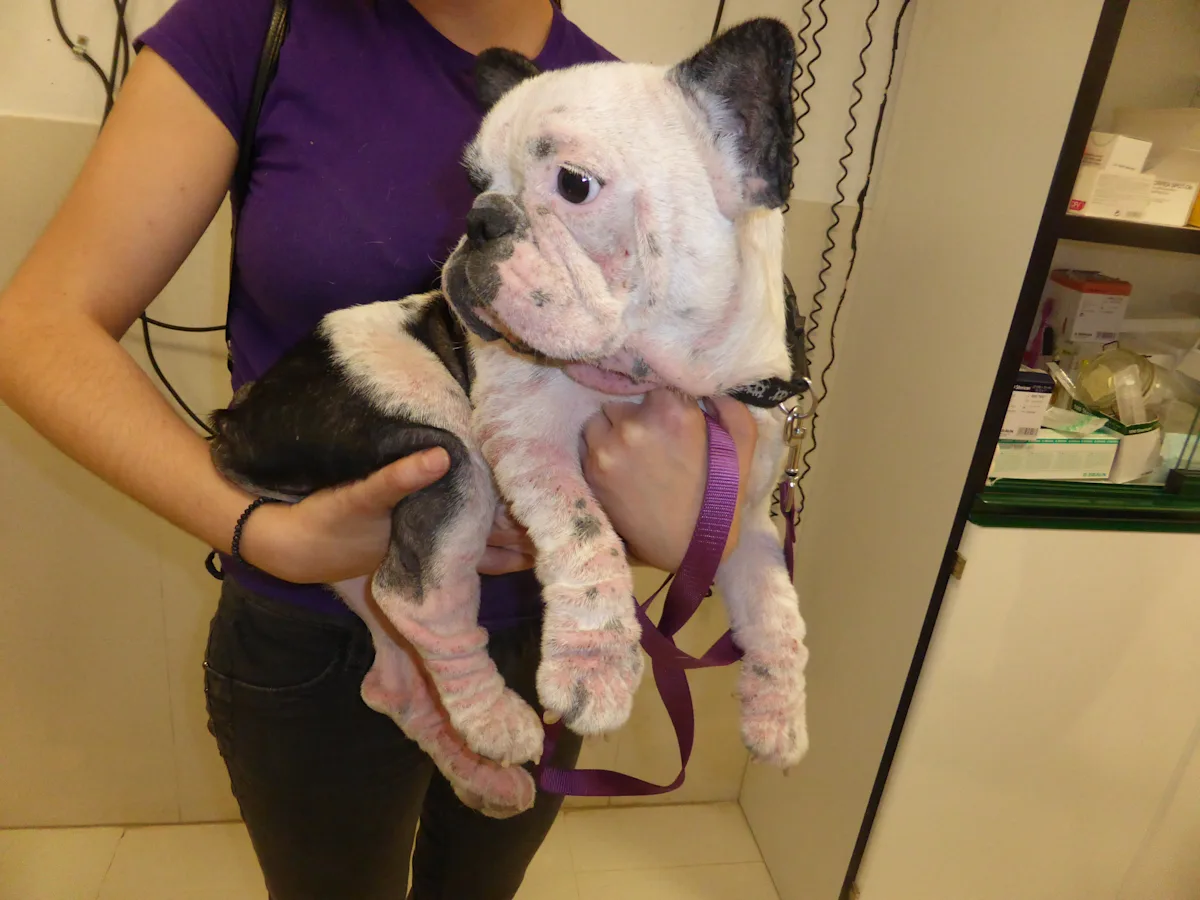
FIGURE 2 Dog with atopic dermatitis and generalized lesions
Differential Diagnoses
Definitive Diagnosis
Based on the presentation and frequency of different signs, a set of diagnostic criteria has been proposed (see
Favrot’s Clinical Criteria Sets).6
Favrot’s Clinical Criteria Sets6
These criteria sets should be used only after ruling out other causes of pruritus (eg, ectoparasites, infections, food allergy).
Set 1 Criteria
Age at onset, <3 years
Time spent mostly indoors
Corticosteroid-responsive pruritus
Chronic or recurrent yeast infections
Affected thoracic feet
Affected ear pinnae
Nonaffected ear margins
Nonaffected dorsolumbar area
Dogs exhibiting at least 5 of these criteria have 85.4% sensitivity and 79.1% specificity for CAD.6
Dogs exhibiting at least 6 of these criteria have 58.2% sensitivity and 88.5% specificity for CAD.6
Set 2 Criteria
Age at onset, <3 years
Time spent mostly indoors
Pruritus without lesions (ie, pruritus sine materia) at onset
Affected thoracic feet
Affected ear pinnae
Nonaffected ear margins
Nonaffected dorsolumbar area
Dogs exhibiting at least 5 of these criteria have 77.2% sensitivity and 83% specificity for CAD.6
Dogs exhibiting at least 6 of these criteria have 42% sensitivity and 93.7% specificity for CAD.6
Diagnosis should be based on clinical history, signs, and exclusion of other pruritic causes of dermatitis with similar clinical presentations.
There is no definitive test for CAD diagnosis.
For patients with a clinical history and signs suggestive of CAD, the following steps can help reach a diagnosis.
Differential diagnosis should be made based on information from clinical history and physical and dermatologic examinations (see Canine Atopic Dermatitis Differential Diagnosis: Causes of Pruritus to Be Ruled Out).
Basic dermatologic diagnostic tests and/or therapeutic trials should be conducted to rule out Sarcoptes scabiei, Demodex spp mite infestation, pyoderma, and yeast overgrowth.
Superficial scrapings on the periphery of alopecic lesions and squamous scabs; lesions on the edge of the pinnae, hocks, and elbows; and an evident pinnal–pedal response can help diagnose S scabiei.
In case of doubt, other treatments (eg, selamectin, moxidectin, isoxazolines) may be considered.
Demodex spp mites can be found on deep skin scrapings of dogs with signs similar to those of CAD.
These mites are readily found on deep skin scrapings of alopecic lesions; blood should be visible on cytologic samples to confirm adequate depth of scraping.
Demodex spp mites may be noted in dogs previously treated with systemic corticosteroid medications. In which case, demodicosis may resolve strictly with discontinuation of corticosteroid therapy.
Canine Atopic Dermatitis Differential Diagnosis: Causes of Pruritus to Be Ruled Out
Nonseasonal Causes
Scabies (S scabiei)
Demodicosis
Otoacariasis (Otodectes cynotis)
Dermatophytosis
Food hypersensitivity
Contact allergy to perennial allergens (eg, carpet fibers)
Contact allergy to plants (eg, Chrysanthemum cinerariifolium, Achillea millefolium, Curcuma longa, Anthemis nobilis, Taraxacum officinale, Tanacetum vulgare, Chamomilla recutita)
Flea-allergy dermatitis
Insect bite hypersensitivity
Seasonal Causes
Flea-allergy dermatitis
Contact allergy to seasonal plants
Insect bite hypersensitivity
Less Frequent Causes
Internal parasitism with hypersensitivity
Cheyletiellosis
Pediculosis
Trombiculiasis
Primary seborrhea
Mycosis fungoides (cutaneous lymphoma)
Drug reactions
Treatment
Treatment should be adapted to each patient; there is no set formula for CAD treatment.
The right therapeutic approach for each patient is based on concomitant factors (eg, geographic area, severity of clinical signs, duration of signs, acute or chronic presentation, patient age, pet owner resources).
General Considerations
Following diagnosis, an intradermal or serologic ELISA allergen test can be performed to identify the environmental allergens.
Bacterial overgrowth, surface folliculitis, and pyoderma are common in patients with CAD.
Topical therapy (eg, antiseptic shampoos applied 2 times per week at onset, then once per week) may be indicated and can resolve pyoderma in some patients (Table).
Systemic antibiotics may be warranted in cases of deep pyoderma but should be used judiciously to help prevent development of bacterial resistance.
Yeast overgrowth is common in patients with CAD and can significantly contribute to pruritus.
Malassezia spp can trigger hypersensitivity reactions. If yeast is found on surface cytology, topical therapy (eg, chlorhexidine and miconazole baths) or systemic therapy with antifungals (eg, itraconazole, ketoconazole, fluconazole, terbinafine) should be initiated.
Control of internal and external parasites (eg, fleas) should be verified.
Adulticidal flea preventives should be administered consistently to all potentially allergic patients in geographic regions endemic for fleas.
All pruritus-inducing factors should be analyzed to determine which are most important for control or elimination. All factors needed to bring a patient below threshold, making the patient subclinical, should be identified and managed.
Treatment is multimodal in most patients, as multiple aspects of the disease contribute to the severity of signs and should be addressed concurrently for optimal success.
Topical therapy is critical for atopic patients for allergen removal, treatment of infections, and restoration of the skin barrier.
Skin Barrier Repair
Skin barrier repair can be achieved topically and systemically.
Topical options include shampoos and conditioners that contain ceramides and essential fatty acids combined with spot-on products that contain essential fatty acids, sphingolipids, and phytosphingosine (a ceramide precursor).
Systemic options include oral administration of essential fatty acids, especially omega-3 fatty acids, which are anti-inflammatory and can increase ceramide levels in the skin.
Omega 3-6 sources are cold water marine oil, evening primrose, borage, and black currant oil.17,18
Treatment of Secondary Infections
Current recommendations for superficial pyoderma are initial use of topical antimicrobial treatments (eg, chlorhexidine, silver products).
Systemic antibiotics may be considered only in cases in which topical therapy is not feasible or effective (Table 1).
These guidelines are based on documented increases in antibiotic resistance.
With systemic antibiotics, cases with a narrow spectrum for Staphylococcus spp should be considered first, avoiding indiscriminate use of broad-spectrum antibiotics (eg, fluoroquinolones), which should be reserved for multidrug-resistant infections and Pseudomonas spp.
The current recommendations for duration of systemic antibiotic therapy are 2 weeks for superficial infections and 3 weeks for deep infections. Rechecks at 2 and 3 weeks respectively are needed to assess progress and determine the next course of action.19 Recheck is critical for balance between treatment courses that are unnecessarily long or too short.
Systemic antifungals (Table 1) can be administered in patients with Malassezia spp overgrowth and significant associated signs not controlled with topical treatment. As Malassezia spp have been reported to develop resistance to azoles, patients that do not respond to azoles may need treatment with terbinafine.
Antipruritics
Pruritus is multifactorial and additive in atopic patients. Treating infections and removing pollens with topical therapy is a beneficial way to decrease pruritus (Table 2). For residual atopic itch, several treatment options are currently available (Table 3). Treatment should be chosen based on the patient's age, comorbidities, any prior history of demodicosis or neoplasia, and the speed of action. Janus kinase inhibitors and glucocorticoids are among the fastest options; cyclosporine can take several weeks to reach full efficacy.
Diet
In cases in which a dietary component is suggested, patients should be fed a novel protein diet, an extensively hydrolyzed protein diet, or a diet with single amino acids.
These options are all suitable for a food trial.
The duration of a food trial depends on the patient. Pruritus and relapses of infections should be assessed during the food trial to assess the impact of foods as a trigger for clinical flare-ups.
Immunotherapy
Allergen-specific immunotherapy (ASIT; ie, hyposensitization) is considered the only treatment that may alter the course of CAD.
ASIT may be a good option for long-term control of CAD. ASIT allows for modulation of the immune system through administration (SC, sublingual, or intralymphatic) of allergen concentrates to which the patient is shown to be sensitive (based on the results of allergen testing), using increasing doses with decreasing frequency of administration.
ASIT is typically the best option, particularly in young patients with nonseasonal CAD and in patients expected to stay in the geographic area.
In the author’s experience, ASIT should be maintained lifelong once good results are achieved.
ASIT is effective in ≈50% to 75% of cases.2
Prevention & Owner Education
Owners should be educated on the following.
CAD is a chronic, incurable disease.
Pruritus may not resolve completely but should markedly improve to a reasonably tolerable level with therapy.
An attempt will be made to use as few drugs as possible to minimize or control signs.
Relapses are possible, and the condition can worsen with age.
Strict diet and flea control are important.
Measures to lower the concentration of aeroallergens may help prevent relapses.
Minimizing Allergen Exposure
Allergen exposure can be minimized by giving baths to reduce epicutaneous exposure, preventing atopic dogs from walking on grass (particularly recently cut grass), removing carpets and rugs from the home, frequently vacuuming curtains and fabric-covered furniture, frequently laundering dog beds with hot water to reduce mites, keeping the home free of tobacco smoke, and controlling the relative humidity and temperature using air conditioning.
Antiparasitic Control
GI parasite and flea control should be administered year-round.
Preventives should be given based on the area’s climate, the patient’s living environment (eg, indoor, outdoor, additional animals in the home), and bathing frequency.