New World Screwworm: A Primer for Companion Animal Veterinarians
J. Scott Weese, DVM, DVSc, DACVIM, FCAHS, University of Guelph, Ontario, Canada
Background
New World screwworm (NWS) is a parasitic larvae infestation caused by the NWS fly, Cochliomyia hominivorax. Risk to livestock (eg, animal health, animal production) has been the focus because re-establishment of NWS in the Northern hemisphere could have a multibillion-dollar impact on livestock production in North America; however, companion animals can also be infected, with potentially devastating effects. Companion animals may also serve as potential vectors for infection, as infected animals can be moved from endemic areas to areas where the parasite is not currently established. Humans can also be affected, with the potential for severe disease, including rare fatalities.1
Mechanism of Infection
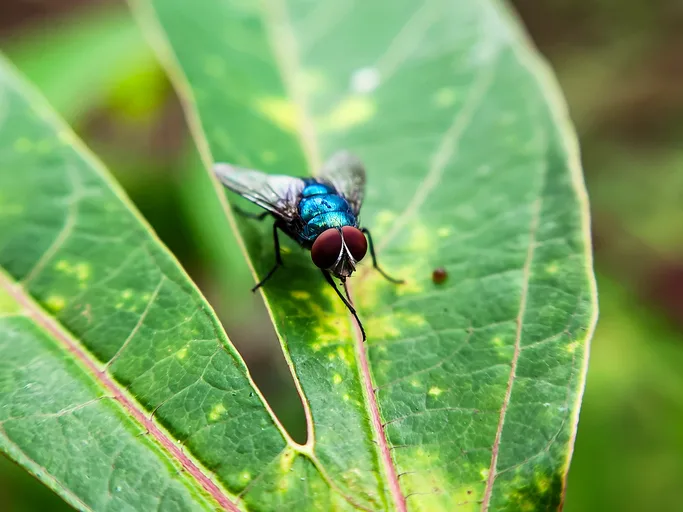
Adult C hominivorax flies are similar in size to, or are slightly larger than, the common house fly and have distinct orange eyes, a metallic blue or green body, and 3 stripes along the back. Adult flies lay 200 to 300 eggs around the edges of wounds or skin lesions, on mucous membranes, or in ears. Unlike typical fly larvae that solely target necrotic tissue, screwworm maggots also burrow through and consume healthy living tissue. As more tissue is damaged and wounds expand, more adult flies can be attracted to the site, resulting in multiple rounds of infestation. Maggots fall off the animal after feeding for ≈1 week and burrow into the soil to pupate. Adult flies eventually emerge from the soil, continuing the life cycle.
Geographic Range & Risk Factors
The NWS fly is endemic throughout much of South America and was previously endemic throughout Central America and the southern United States but was serially eradicated in the 1950s to 2001.2 As control efforts waned, re-emergence occurred in Panama in 2022. Since then, movement has been rapidly northward, reaching Mexico in 2024. At the time of writing, infection has not been re-established in the United States but has been found close to the US border, and continued northern spread is likely. NWS flies are also endemic in multiple Caribbean countries.
C hominivorax inhabits tropical and subtropical habitats, but there is potential for endemic establishment in southern regions of the United States. Florida and the Texas Gulf Coast have the greatest climatic suitability, but the fly could potentially persist in multiple southern states.2 The larvae are not cold tolerant, and pupation in the soil ceases at temperatures of ≈45°F (7°C). The risk for sustained, year-round transmission is thus limited to warmer regions; however, seasonal impacts are possible if the fly is introduced into northern regions during warmer times of the year. For example, if an infested dog is imported into northern regions during the summer, sustained transmission is possible for a few months, resulting in pronounced local transmission and disease. This risk, in addition to potential importation of infected animals at any time of year, indicates some degree of likelihood for encountering an infected patient in veterinary practice in any region.
In addition to presence in an endemic area, the main risk factor for infection involves breaks in the skin. Flies can lay eggs on very small skin lesions, potentially including something as minor as an insect bite. Other risk factors for skin lesions include spending time outside, walking through areas with rough foliage, undergoing recent parturition, presence of excessive skin folds, presence of surgical wounds, or infection with any disease that results in skin barrier damage (eg, allergic skin disease). Flies are also attracted to the umbilicus of newborn animals. Although infestations are most often associated with wounds, infestation of healthy mucous membranes or the ears can also occur.
Risk for C hominivorax increases with proximity to infected animals, with closer distances and greater numbers of infected animals driving transmission risk. C hominivorax, however,can travel long distances (eg, up to 50-60 km/week in some circumstances3).
Clinical Signs
Clinical signs are associated with effects of infestation and secondary complications (eg, bacterial infection). Larvae can be highly destructive and result in pronounced, large lesions that, depending on the extent of the lesions, can cause significant morbidity and mortality, extension into important structures (eg, joints, tendon sheaths, peritoneal or pleural cavities), secondary bacterial infections, and other potential long-term management challenges from large destructive lesions. Discharge may range from minimal to abundant and may be purulent or hemorrhagic depending on the degree and location of damage and presence of secondary bacterial infection.
In some cases, lesions may be mild or subtle. Small numbers of larvae may cause limited overt damage. Some patients may be presented with no external evidence of infestation except a draining tract from a small but deep infestation.
Diagnosis
Diagnosis of NWS involves identification of the fly larvae in infected tissues, which may be readily apparent in cases of large infestations, but small numbers of larvae in deeper tissues, in which larvae are not identifiable on external inspection, are possible and can include small draining tracts. Exploration may be required to identify maggots in these cases.
Larva identification can be performed using online identification keys (see Suggested Reading) but should ideally be performed by a parasitologist who has experience with NWS. Local (eg, state, provincial, national) animal health regulators should be contacted, as they may facilitate identification (see Reportability).
Animals imported from endemic areas or locations bordering endemic areas should be carefully evaluated for skin lesions of any size. Any animal from an endemic region with a wound should be treated regardless of whether larvae are evident.4
Treatment
Physical removal of larvae, wound care, and antiparasitic administration are the main components of treatment. All larvae should be removed whenever possible; removal may require extensive debridement and exploration.
Concurrent antiparasitic treatment is indicated to kill any larvae left behind. In the United States, the FDA has conditionally approved the combination of lotilaner, moxidectin, praziquantel, and pyrantel in dogs and granted Emergency Use Authorization for lotilaner in dogs and cats based on an expectation of efficacy, largely from a field study of 11 infested dogs.5 All dogs in the study were administered a single oral dose of lotilaner, and all larvae were dead within 24 hours.5 Other antiparasitics may also be effective. In small studies of naturally infested dogs, afoxolaner and sarolaner have shown 100% efficacy.6,7 Nitenpyram expelled 94% of larvae within 18 hours and had 100% efficacy at 24 hours.8 Spinosad has also been effective, albeit potentially with lower efficacy than lotilaner and nitenpyram, with one study reporting 80% efficacy in dogs.9 These studies all used normal label doses.
In the United States, Emergency Use Authorization has been given for ivermectin in prevention of NWS in cattle; doramectin and fluralaner are conditionally approved for treatment and prevention in cattle. Similar efficacy can be reasonably expected in other species. The dose of ivermectin in heartworm preventive medications is substantially lower than the dose required for treatment or prevention of NWS (ie, 4-6 micrograms/kg vs 200 micrograms/kg). Ivermectin or moxidectin-based monthly preventives would presumably have no protective effect.
Substantial wound care may be necessary based on the severity and extent of lesions, possibly including long-term bandage changes, repeated debridement, local (eg, honey, biocides) or systemic (ie, antimicrobials) treatment of secondary infection, and supportive care for debilitated or anorexic patients. Pain management is usually necessary.
Infection Control
Infested animals are not directly infectious. Larvae need to drop off the animal and pupate in the soil for adult flies to emerge; however, because infested animals are the source of the next generation of adult flies, soil contamination with larvae should be minimized. Prompt diagnosis, physical removal of larvae, and administration of effective antiparasitic medication are critical. After removal, larvae should be killed via placement in 70% ethanol or 5% to 10% formalin. Larvae should not be discarded on the ground, as this continues their normal life cycle.
A broader method of control is sterile fly release. Adult flies only mate once. Female flies that mate with a sterile male lay nonfertile eggs. Millions of sterile males can be produced through irradiation and released in areas where NWS is endemic or at risk for emergence. The United States has markedly increased sterile fly production to prevent establishment at border regions. Core strategies also include inspection of animals imported from endemic regions and fly trapping for surveillance. Although eradication through sterile fly production should be possible throughout Central America, this process is not realistic in South America because of the wide suitable geographic range and impossibility of releasing enough sterile flies in a sustained manner across most of the continent.
Prevention
The main prevention measures are limiting wounds, providing good wound care, and reducing fly exposure in animals with skin lesions in endemic areas. Underlying skin disease (eg, allergic skin disease), presence of items that cause skin damage (eg, some collars), tick bites, and nonspecific skin trauma can be reduced through various management practices (eg, control of allergic skin disease, use of tick preventives, changing collars or other items that cause skin trauma, restricting activities that cause skin lesions). These methods are not 100% effective but should be used as much as possible.
Routine use of antiparasitics with known or suspected efficacy against NWS are not likely to prevent infestation because they do not repel flies or kill eggs immediately. Drugs with activity against NWS might reduce impact through early killing of larvae as they feed on tissue, reducing the severity of damage; however, clinical data are lacking.
Transporting dogs across borders and continents can risk the spread of undetected vectors and pathogens that can threaten animal and human health. Clinicians play a crucial role in safeguarding both animal and public health by screening imported dogs, educating pet owners, and advocating for proper care and vaccination.
Read more about The Veterinarian’s Role in Managing Imported Dogs, the Top 5 Tips for Animal Transportation, and Exotic Pathogens in Imported Dogs.
Reportability
NWS infection of domestic animals is immediately reportable in the United States (US Department of Agriculture) and in Canada (Canadian Food Inspection Agency) and may be reportable to individual state or provincial health personnel.