Mesenchymal Stromal Cell Therapy for Refractory Feline Chronic Gingivostomatitis
Brenda L. Mulherin, DVM, DAVDC, Iowa State University
In the Literature
Williams VS, Schneider JL, Parrish RS. Long-term field safety study evaluating allogeneic, uterine-derived mesenchymal stem cells for refractory feline chronic gingivostomatitis. J Feline Med Surg. 2026;28(4):1098612X261431058. doi:10.1177/1098612X261431058
The Research…
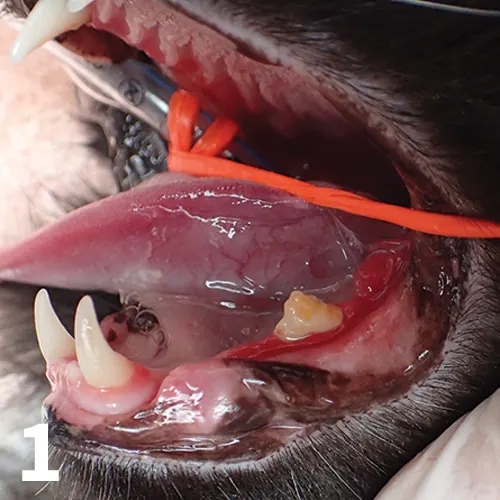
Feline chronic gingivostomatitis (FCGS) is a chronic, painful, debilitating disease that causes significant inflammation of the oral cavity. Over 10% of the feline population may be affected by this disease,1 with some research reporting >26% of cats are affected.2 Although a true etiology has not been identified, newer research has focused on feline calicivirus infection and its role in the development of gingivostomatitis.3 Surgical management remains the most common treatment option for affected cats, with full-mouth extractions frequently performed; however, not all cats respond to surgical management, and alternative treatment options may be required. Current therapeutics for medical management include combinations of analgesic (eg, buprenorphine, amantadine, gabapentin, NSAIDs), immunosuppressive (eg, glucocorticoids, cyclosporine), and immunomodulatory (eg, recombinant feline interferon-omega, mesenchymal stromal cells) therapies.4
This studya was a continuation of a previous prospective clinical field study that explored uterine-derived mesenchymal stromal cells (UMSCs) for treatment of refractory FCGS in cats that had undergone full- or partial-mouth extractions.5 Patients in the initial study were followed for 90 days; the present study followed 35/46 cats from the initial study for up to 1 year after treatment to evaluate long-term safety and effectiveness. Outcomes were assessed using a pet owner report of the patient’s overall response and a global oral lesion score given by the clinician.
Cats were initially treated with 2 IV injections of allogeneic UMSCs at a mean of 14 days apart.5 No additional UMSC injections were administered. Physical examinations and diagnostics (ie, hematology, serum chemistry profile, urinalysis) were performed at 180, 270, and 365 days following enrollment in the study. Patient re-evaluation also included observations from the owners and documentation of any potential adverse events. All 35 cats were included in the safety analysis part of the study; 32 cats were evaluable for treatment effectiveness at day 365.
No clinically relevant trends in hematology, serum chemistry profile, or urinalysis values were noted; 3 serious adverse events occurred in 3 cats but were deemed unrelated to treatment. Adverse events deemed nonserious, including GI effects (eg, vomiting, nausea, diarrhea, hypersalivation) or respiratory effects (eg, tachypnea, dyspnea), occurred within 24 hours of UMSC injection.
Based on owner perception of quality of life and clinician assessment of oral inflammation, >65% of cats showed significant improvement 1 year following treatment, and 22% of cats were deemed clinically cured by the clinician. In addition, 91.5% of cats no longer needed concurrent anti-inflammatory or immunosuppressive medications to help alleviate clinical signs.
… The Takeaways
In this study, treatment with UMSCs for refractory FCGS demonstrated clinically significant improvement in reduction of oral inflammation.
UMSCs were not associated with significant adverse events after treatment for refractory FCGS following full- or partial-mouth extractions.
Although this research supports UMSCs as a potential treatment option, this experimental product is not currently readily available for use in the clinic and is thus not a feasible option for widespread treatment of refractory FCGS.
a This study was funded by Gallant Therapeutics.
You are reading 2-Minute Takeaways, a research summary resource presented by Clinician’s Brief. Clinician’s Brief does not conduct primary research.