What’s Up With This Cat’s Nose? Cryptococcosis in a Cat
Ian Newton, DVM Candidate , Cummings School of Veterinary Medicine at Tufts University
Mary Anna Labato, DVM, DACVIM (SAIM), ACVNU (Founding Member) , Cummings School of Veterinary Medicine at Tufts University
Presentation & Examination
A 4-year-old neutered male domestic shorthair cat was presented with a 2-month history of a progressive, firm, nonpainful swelling over the nasal bridge (Figure 1). The owner reported that the swelling had been accompanied by profuse, chronic serosanguinous discharge and intermittent sneezing.
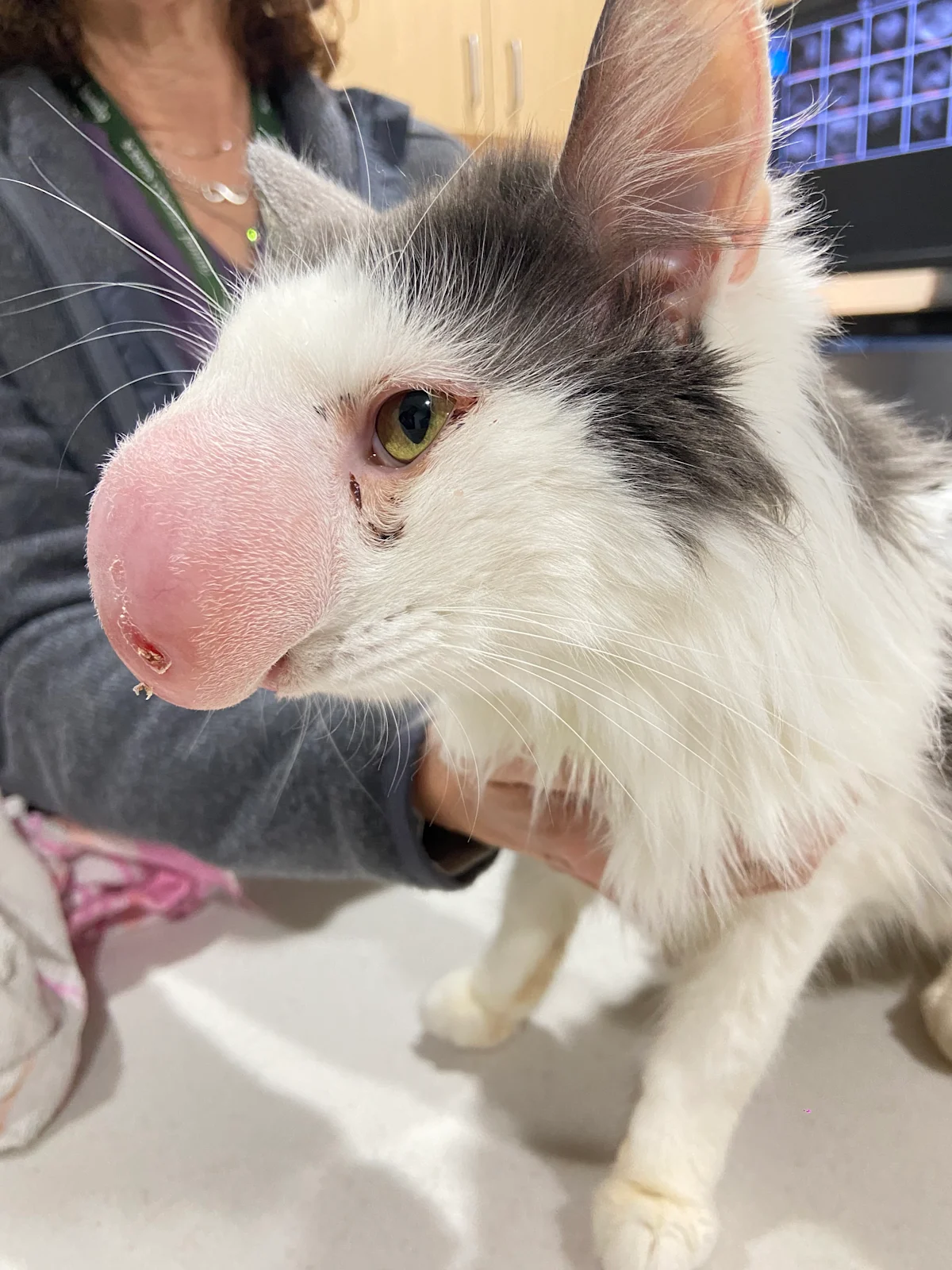
FIGURE 1 Classical presentation (ie, firm, nonpainful swelling over the nasal bridge) of localized granulomatous inflammation due to Cryptococcus spp in a cat with nasal cryptococcosis. Photo courtesy of Aline Graham, DVM.
On physical examination, a pronounced swelling extending from the nasal planum to the level of the medial canthus bilaterally was appreciated. The swelling was firm on palpation and appeared to have subcutaneous involvement. No neurologic abnormalities were observed.
Ophthalmologic Examination
Ophthalmologic examination revealed chorioretinitis, the most frequent ocular manifestation of cryptococcosis. Cryptococcus spp spores spread to the eyes from the nasal cavity via hematologic dissemination.1 The most common ocular lesions are multiple, small, irregular, gray to black, punctate lesions surrounded by an abnormal fundus (Figure 2). Anterior uveitis, secondary to lesions of the posterior segment, can also occur.1
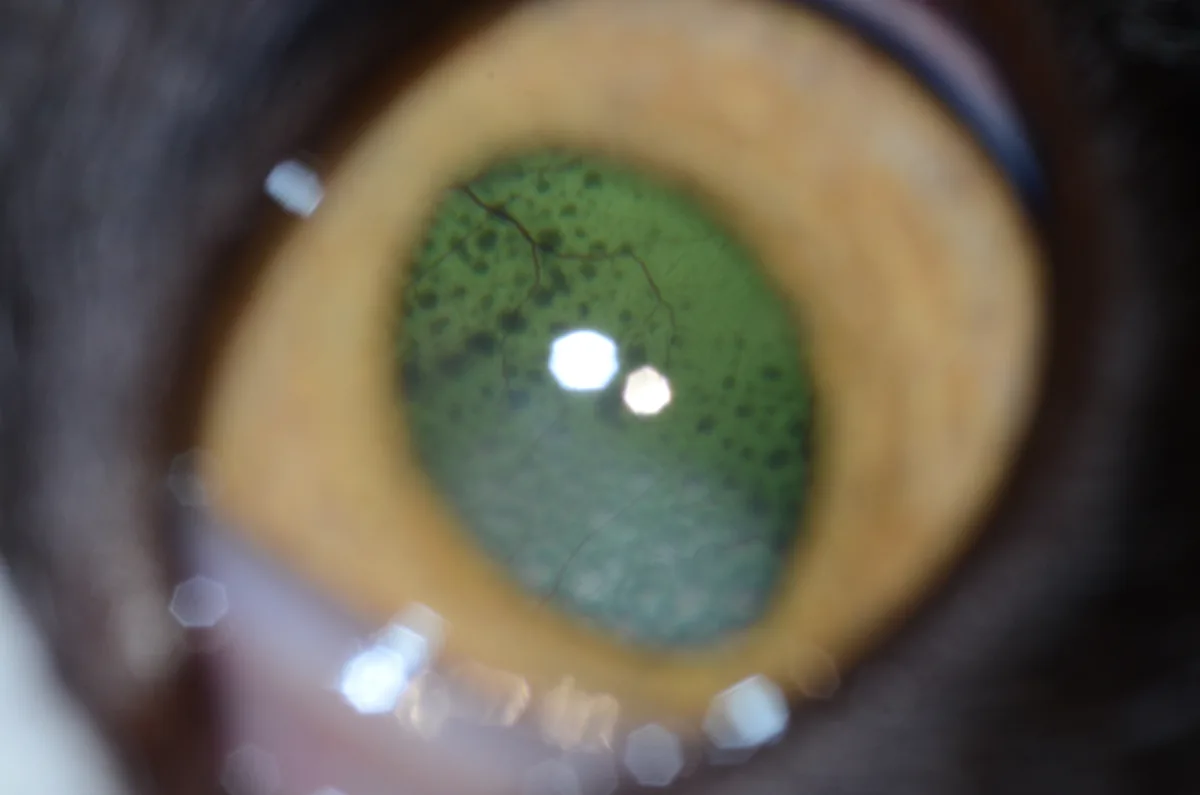
FIGURE 2 Multiple, punctate, gray to black lesions on the retina consistent with chorioretinitis secondary to hematogenous dissemination of Cryptococcus spp. Retinal lesions are a common ocular manifestation of systemic Cryptococcus spp infection in cats. Photo courtesy of Stephanie Pumphrey, DVM, PhD, DACVO.
Nasal Cryptococcosis
Nasal cryptococcosis is the most common systemic mycosis in cats, with Cryptococcus neoformans and Cryptococcus gattii being the principal etiologic agents.2 The fungus typically colonizes the nasal cavity following inhalation of environmental spores, leading to granulomatous inflammation of the nasal cavity and adjacent subcutaneous tissues.2 Swelling of the nasal bridge can be a distinctive clinical sign in cats infected with Cryptococcus spp secondary to expansion of a granulomatous lesion in the nasal cavity and subcutaneous tissue. This presentation should prompt strong clinical suspicion and further diagnostic workup for cryptococcosis, especially in patients living in endemic regions.2
Diagnostics
Diagnostic workup includes cytology or histopathology of aspirated or excised tissue. Analysis of infections typically reveals encapsulated yeast organisms; cryptococcal antigen testing can also be performed. Advanced imaging (eg, CT, MRI) can help investigate the extent of sinonasal and subcutaneous involvement.2 Although affected cats are commonly presented with characteristic swelling of the nose, this sign is not pathognomonic for cryptococcosis.
Differentials
Differential diagnoses include neoplasia, other fungal rhinitides, and chronic bacterial infections.3
Treatment & Prognosis
Therapy for localized disease includes oral antifungals, with treatment duration guided by clinical and antigenic response. Fluconazole is considered the first-choice treatment, followed by itraconazole. Second-generation triazoles should be reserved for resistant infections. Amphotericin B and flucytosine should be reserved for severely resistant infections.
Prognosis is considered favorable for localized disease, although prognosis becomes guarded with CNS involvement or disseminated infections.2,3
Conclusion
This case underscores the importance of recognizing nasal bridge swelling as a sentinel sign in cats affected by cryptococcosis. Recognition allows for prompt diagnosis and appropriate administration of antifungal therapy.