Proposed Cleaning Protocol for Endotracheal Tube Reuse
Jonathan Miller, DVM, MS, DACVS (Small Animal), Eclipse Specialty & Emergency Pet Care, Whippany, New Jersey
In the Literature
Ascione F, Radu IL, Di Nola S, et al. Efficacy of an endotracheal tube disinfection protocol and the impact of its steps on tubes collected from dogs anaesthetized for routine clinical procedures. Vet Anaesth Analg. 2026;53(1):101157. doi:10.1016/j.vaa.2025.11.001
The Research …
No established disinfection protocols for effectively eliminating bacteria and preventing fungal contamination of endotracheal tubes are currently published.1,2
This study aimed to assess the efficacy of a protocol based on World Health Organization guidelines for decontamination and reprocessing of medical devices.
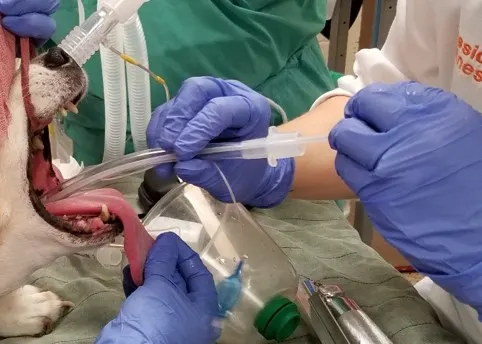
Sterile polyvinyl chloride endotracheal tubes used during routine canine surgeries were sampled for aerobic, anaerobic, and fungal growth after removal from the trachea. The used tubes were then randomly assigned to 1 of 5 protocols: 30-minute soak in detergent with enzymatic cleaner, 30-minute soak in peracetic acid (ie, combination of hydrogen peroxide and vinegar), 1-minute rinse with tap water, 24 hours of air drying, or all 4 protocols in succession. Cultures were performed after protocol completion.
Of 99 endotracheal tubes, 97 exhibited growth after extubation, with several microbial species cultured (most commonly Pasteurella canis; 3 samples grew Candida albicans). No growth was noted in the complete process involving all 4 protocols in succession. Bacterial growth was found in 100% of endotracheal tubes soaked in detergent, 20% of those soaked in peracetic acid, 90% of those rinsed with tap water, and 35% of those left to air dry for 24 hours. No statistical difference was seen in the decontamination rate between the peracetic acid and complete protocol groups.
… The Takeaways
Key pearls to put into practice:
This study highlights the possibility of implanting bacteria into the trachea of the next patient when reusing endotracheal tubes; the clinical significance of this risk is still unknown.
The most effective protocol described in this study requires soaking used endotracheal tubes in 2 different chemicals for 1 hour total, rinsing in tap water, and allowing 24 hours of air drying, a process that requires personnel time and training.
The complete protocol, which eliminated 100% of bacteria, performed better than a previous study in which a detergent soak followed by chlorhexidine soak resulted in 80% of tubes with no bacterial growth.1
You are reading 2-Minute Takeaways, a research summary resource presented by Clinician’s Brief. Clinician’s Brief does not conduct primary research.