Canine Alopecic Dermatoses
Linda A. Frank, MS, DVM, DACVD, University of Tennessee
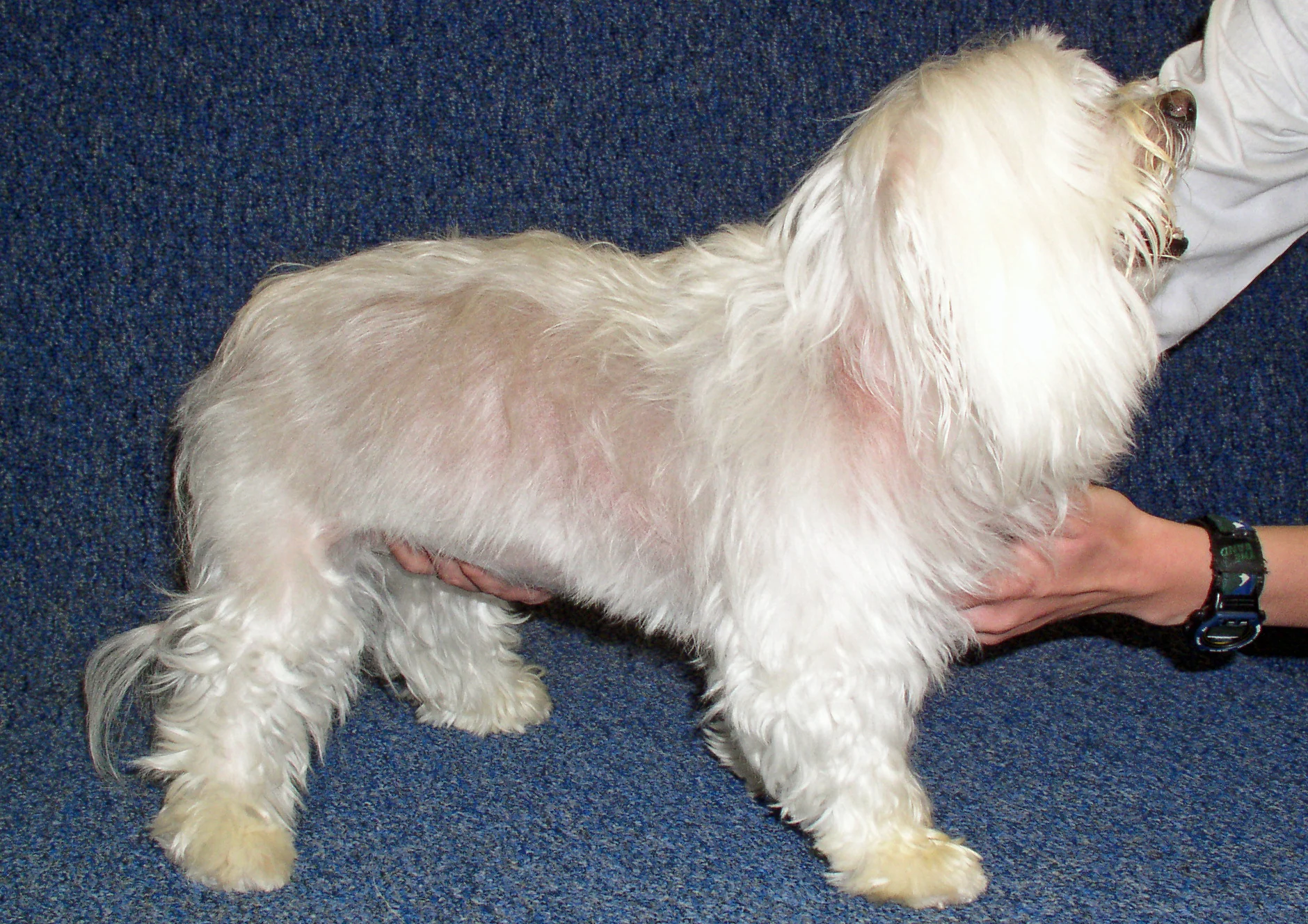
Alopecia is a common clinical presentation in dogs and has many causes, including traumatic, inflammatory, and noninflammatory conditions. Although close inspection can help determine the category of alopecic condition, diagnosis can rarely be made without signalment, patient history, and diagnostic tests.
Secondary pyoderma is common with all causes of alopecia. In patients with evidence of pyoderma, infection should be treated before other diagnostic tests, especially histopathology, are pursued.
Quiz: Canine Alopecic Dermatoses
In the quiz below, match each condition with only one image and signalment. Some will be straightforward, but others will be more difficult to determine without the benefit of additional diagnostic tests. Each disease corresponds with only one image.
Canine Alopecic Dermatoses: Answers & Explanations
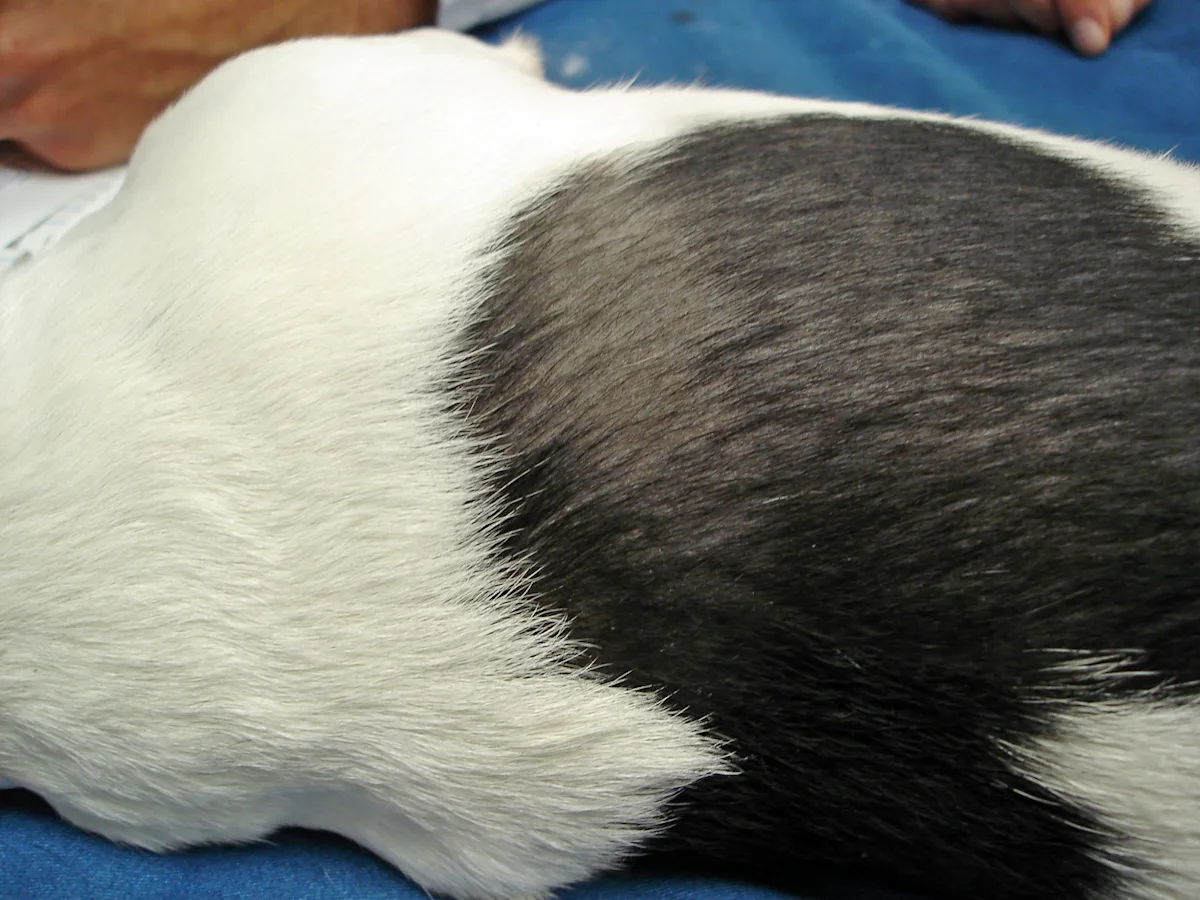
FIGURE 1 Adult crossbreed dog
Black-Hair Follicular Dysplasia
Hair loss in this patient is restricted to the black areas of hair. Very few diseases have this presentation. Definitive diagnosis is achieved via biopsy. Histopathologic evaluation in this patient demonstrated periadnexal melanin accumulation and large aggregates of melanin within hair shafts, bulbs, and epidermis. This condition cannot be diagnosed via trichogram (ie, hair-pluck examination) because the hairs are too pigmented to see abnormal clumping.