Broth Turbidity Test for Aminopenicillin-Resistant Uropathogens
Duncan C. Ferguson, VMD, PhD, DACVIM (Small Animal), DACVCP, University of Illinois, VetMedAcademy, Cave Creek, Arizona
In the Literature
Brookshire WC, Ballard L, Collinsgru A, et al. Evaluation of a rapid, low-cost broth turbidity test for detecting ampicillin-resistant lower urinary tract infections in dogs and cats. J Vet Intern Med. 2025;39(6):e70259. doi:10.1111/jvim.70259
The Research …
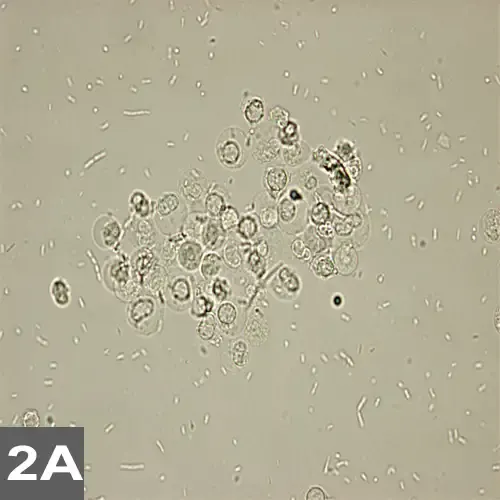
Typical signs of bacterial cystitis include pollakiuria, dysuria, stranguria, hematuria, and urinary incontinence, with urinalysis typically identifying increased WBCs (ie, pyuria) and/or bacteria (ie, bacteriuria).1 When urine sediment is inactive, positive urine culture is rare (≈3%).2
Most cases of bacterial cystitis involve a single organism; urine cultures most commonly grow Escherichia coli, followed by Enterococcus spp and Proteus spp.3 Ampicillin and amoxicillin are aminopenicillins that have excellent activity against Proteus spp, Staphylococcus spp, and Streptococcus spp, with urine concentrations that may be effective against E coli and Klebsiella spp; however, Pseudomonas spp are usually resistant.4 Ampicillin is used in susceptibility testing to predict the activity of amoxicillin. Although the Clinical and Laboratory Standards Institute has set the breakpoint of ampicillin at 8 micrograms/mL, a typical dose and administration interval of 25 mg/kg PO every 8 hours produced a mean urine concentration of 300 micrograms/mL, and 11 mg/kg PO every 8 hours produced an mean urine concentration of 200 micrograms/mL.5 A treatment duration of 3 to 5 days is recommended.6 Although studies have shown E coli resistance to aminopenicillins to be 40% to 50%,3,7,8 amoxicillin is still considered a good first-choice therapy for bacterial cystitis. Traditional culture and susceptibility testing, however, requires time and cost, which may be limiting factors.9-12
This study evaluated a low-cost broth turbidity test (BTT) for identification of uropathogens resistant to ampicillin. Urine samples from 145 dogs and 15 cats submitted for routine culture and susceptibility testing were tested in parallel with BTT. Turbidity (bacterial growth) was visually assessed relative to a negative control tube after 16 to 24 hours, and results were correlated to culture and minimum inhibitory concentration (MIC) plate sensitivity results (available 1-2 days later).
For BTT to be a perfect screening test (ie, 100% sensitivity), all ampicillin-resistant bacteria would need to be detected. BTT showed 89.5% sensitivity, with a false-negative result associated with sluggish in vitro bacterial growth due to recent administration of cefovecin (a long-acting cephalosporin) in 1 case and E coli infection with an MIC 1 dilution above the breakpoint in a second case. Consideration of drug history could have eliminated the first case from inclusion in the study, raising the sensitivity estimate to >94%. Notably, BTT had 100% specificity; all 36 samples of ampicillin-susceptible organisms were identified.
… The Takeaways
Key pearls to put into practice:
BTT is a rapid (16-24 hours), inexpensive, in-clinic screening test for uropathogens sensitive to ampicillin. Bacterial cystitis is typically caused by one organism, most commonly E coli, which has 40% to 50% resistance to aminopenicillins.3,7,8
BTT is indicated in patients with clinical signs and history of bacterial cystitis and bacteriuria and/or pyuria on urinalysis. If possible, prostatitis and pyelonephritis should be excluded first.
In this study, BTT identified ampicillin resistance with an ≈5% to 10% false-negative rate; however, ampicillin sensitivity had a 100% true positive rate, as confirmed by culture and susceptibility testing.
Recent antimicrobial administration may lead to false-negative BTT results; therefore, culture and susceptibility testing may be indicated.
Application of BTT supports good antimicrobial stewardship by reducing inappropriate and ineffective use of aminopenicillins that can lead to resistant strains of bacteria.
You are reading 2-Minute Takeaways, a research summary resource presented by Clinician’s Brief. Clinician’s Brief does not conduct primary research.