When Does Pet Behavior Hint at Something More?
Meghan E. Burns, DVM, Connect Veterinary Consulting

Helping our clients to recognize the signs of pain and understand the underlying change in their pet’s behavior.
It can be difficult for pet owners to understand that the reason they are seeing behavior changes in their pets is due to an underlying medical issue that results in pain. Obtaining a thorough patient history will help us as veterinary professionals as well as the pet owner to see which behavior patterns can be related to pain.
In the 2015 AAHA/AAFP Pain Management Guidelines,1 there are 3 key indicators to consider when evaluating an animal for pain:
Consistency of normal behavior
Loss of normal behavior
Exhibition of new behaviors
Recognizing subtle changes in behavior and/or changes in activity level when they start is ideal. Having those key conversations with pet owners prior to dogs reaching mid-life is crucial. The more educated owners are the more likely they are to be aware of subtle changes and bring their pet to their veterinarian when those changes are observed.
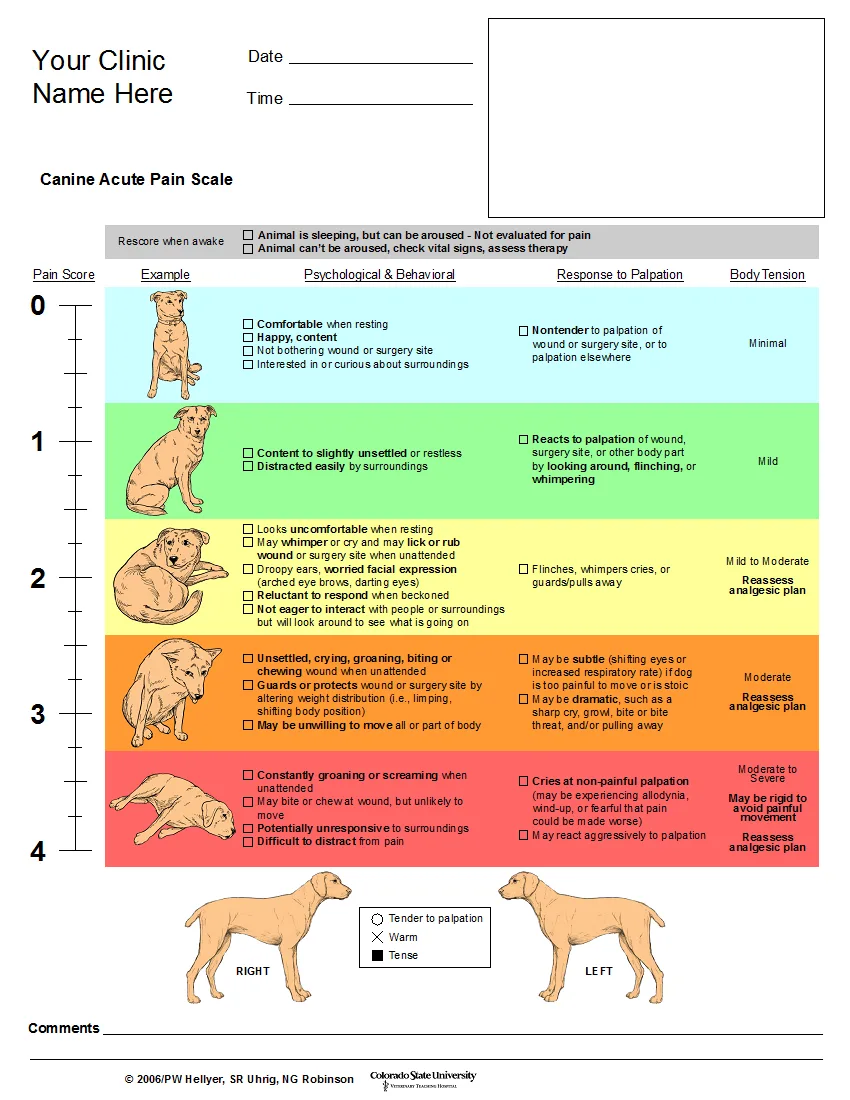
There is no one tool for assessing pain in pets. However, there are scoring tools that the AAHA and AAFP have recommended for both acute and chronic pain. Acute pain is secondary to trauma, recent surgery, or a medical condition. The Pain Management Guidelines1 mention several different scoring systems for acute pain, including the widely used Glasgow Short Form Composite Measure Pain Scale (CMPS-SF). The 4A-VET scale is an additional composite measure pain score for dogs that is reported to have more variability with different patient observers than the CMPS-SF but is reported to be less biased by sedation.2 Another option includes the Colorado State University Canine Acute Pain Scale (see figure) which is readily available on-line and is easy for practices to implement and use with its numerical rating scales (0 to 4). No matter which acute pain scale scoring system works best for your practice, please ensure that everyone is trained on the scale and implements it with each patient in the hospital.
Chronic pain has been generally defined as pain that persists beyond an expected healing time or pain associated with medical conditions where healing is not expected to occur. Chronic pain has its own set of pain scale options described in the Pain Management Guidelines.1 Most clients will report general malaise or increase in sleeping but do not understand the reason behind the change in behavior. Other behavioral changes that may be observed include difficulty standing, jumping, reluctance taking stairs, decreased appetite, changes in urination or defecation, hiding, and aggression. These clinical signs or some combination can be intolerable to owners. Under-diagnosed chronic pain in pets can lead to premature euthanasia.3 On the other hand, properly diagnosed and well-managed pets with chronic pain can have an improved quality of life.
Once identified, appropriate and consistent pain control is paramount to assist in a good quality of life for the pet. Behavioral changes are the primary indicator to pet owners that their pet is in pain. There are scoring systems available to be as objective as possible with the initial patient evaluation as well as for follow-up visits to evaluate the progression and effectiveness of treatment. Pain management is a team effort from the hospital staff to the pet owner and everyone needs to play an active role in therapeutic decisions and evaluation of treatment success. Encouraging education and involvement throughout the pet’s entire lifetime will strengthen the human-animal bond as well as the client-doctor relationship for years to come.
Meloxidyl® is a registered trademark of Ceva Santé Animale S.A.