Research Note: Remdesivir for Ocular Involvement of FIP
Source
Andrews ALMM, Izaguirre E, Green J, et al. Treatment with remdesivir alone or in combination with GS-441524 in cats with ocular involvement of feline infectious peritonitis: an observational case series. J Vet Intern Med. 2025;39(6):e70253. doi:10.1111/jvim.70253
Research Note
Ocular and neurologic involvement of FIP is seen more frequently in its noneffusive (ie, dry) form and occurs in up to 36% of cases.1-4 FIP can be treated with GS-441524, with or without prior administration of its prodrug remdesivir (which improves cellular penetration of GS-441524).5 Data, however, are limited regarding use of GS-441524 or remdesivir for treatment of ocular forms of FIP.
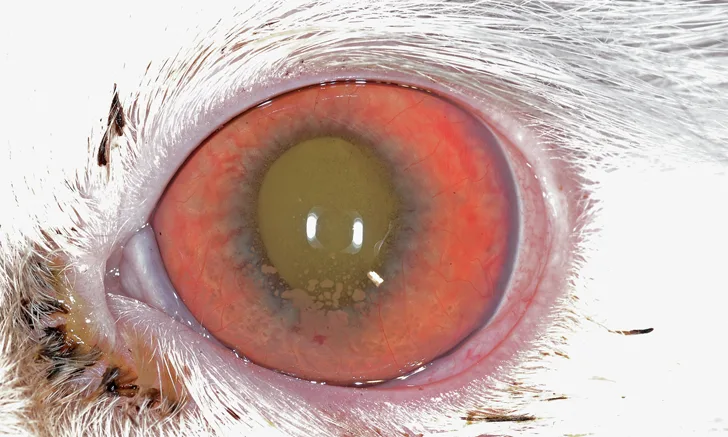
In this study, ophthalmic examination for concurrent evidence of ocular disease was performed in 61 cats diagnosed with FIP. Twenty cats (11 [55%] with effusive FIP; 9 [45%] with noneffusive FIP) were subsequently diagnosed with ocular involvement (including panuveitis, anterior uveitis, posterior uveitis, and glaucoma). Of these 20 cats, 3 were treated with oral GS-441524 only, and 17 were initially treated with injectable (SC or IV) remdesivir (14 were later transitioned to oral GS-441524, and the other 3 were euthanized prior to transition). Cats were concurrently treated with other systemic anti-inflammatory drugs (eg, meloxicam, prednisone), topical anti-inflammatories, and other topical medications (eg, atropine, carbonic anhydrase inhibitor) depending on clinical signs.
Of the cats with FIP with ocular involvement, 16 (80%) survived and recovered with marked improvement in clinical signs of ocular disease during the 84-day treatment course. The authors concluded that FIP-associated uveitis in cats carries a good prognosis for resolution of ocular inflammation when treated with antiviral medications combined with anti-inflammatories.
You are reading Research Notes, a research summary resource presented by Clinician's Brief. Clinician's Brief does not conduct primary research.