Chronic Otitis Externa in a Beagle
Rosanna Marsella, DVM, DACVD, University of Florida
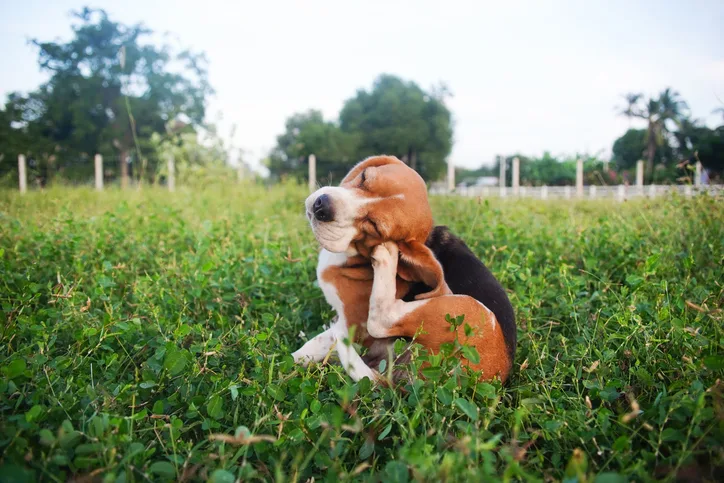
Tanner, a 6-year-old, 26.5-lb (12-kg) neutered male beagle, was presented for chronic, bilateral otitis externa of 12 months’ duration, including nonseasonal relapses. The owner reported that Tanner appeared to itch his paws and ears but focused mainly on the ears. He was fed a chicken-based kibble diet and occasional treats. Another beagle also lived in the home. Vaccinations, including heartworm, flea, and tick prevention, were up to date.
Physical Examination
Physical examination was unremarkable other than the presence of dermatologic disease. Dermatologic examination revealed moderate erythema and salivary staining over the palmar aspect of the thoracic paws (Figure 1) and moderate erythema of the concave pinnae (Figure 2). On otoscopic examination, a large amount of dark brown exudate was present in the ear canals bilaterally; the tympanic membranes could not be visualized.
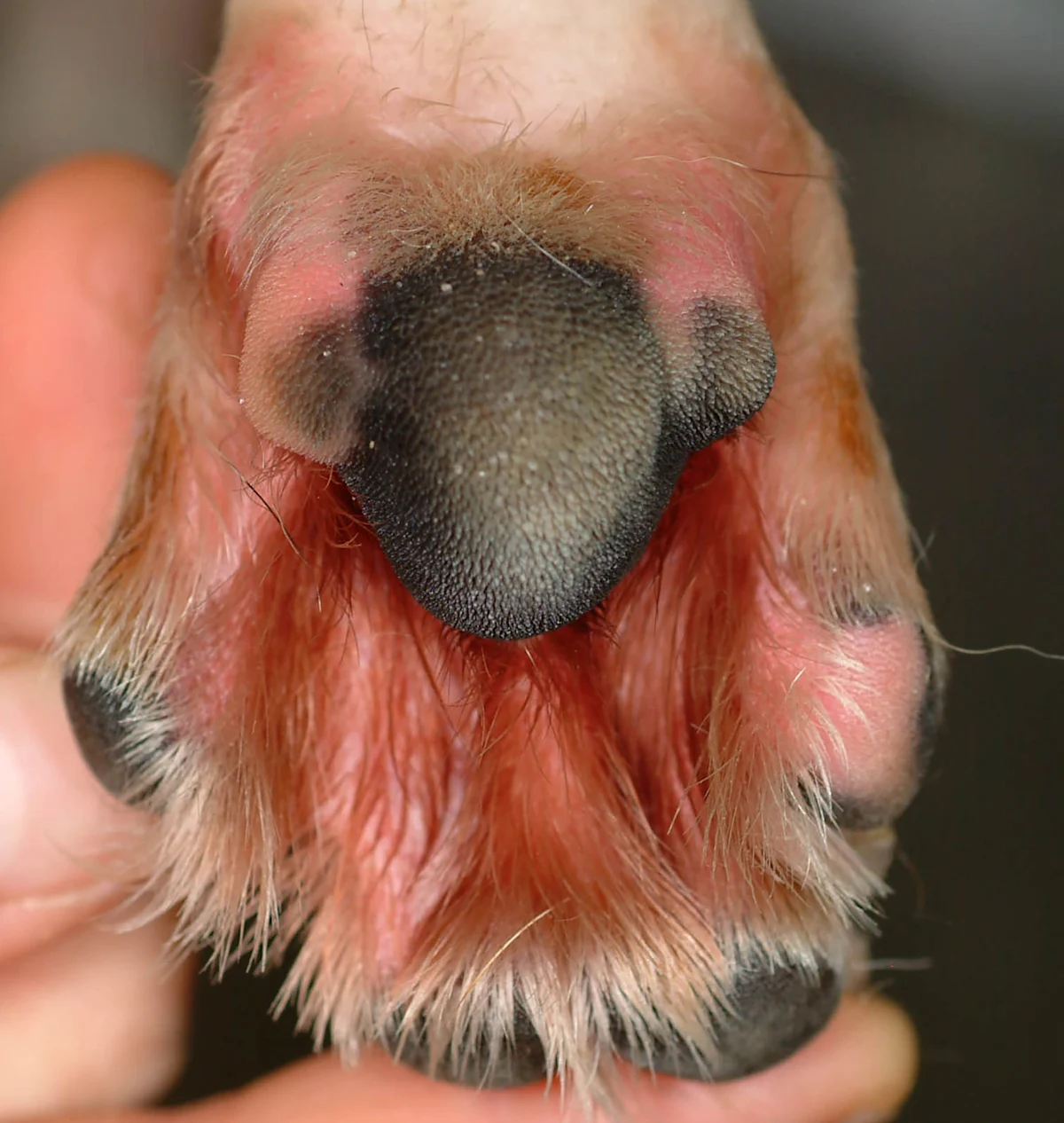
FIGURE 1 Salivary staining and erythema of the palmar aspect of the thoracic paw
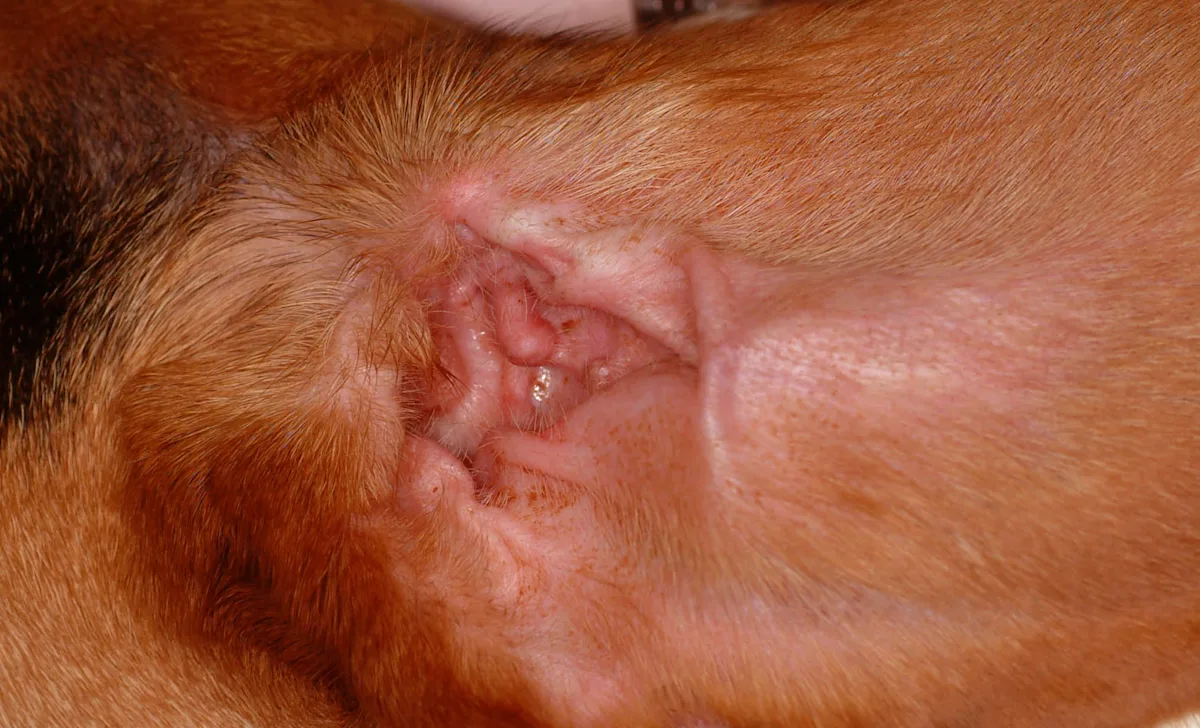
FIGURE 2 Erythema on the concave pinna and opening of the external ear canal
Differential Diagnoses
Differentials included bacterial or yeast infection of the external ear canal secondary to primary underlying allergic disease. Pododermatitis was also present and most likely due to allergic disease. Food and environmental allergies were considered possible primary causes based on patient history. Environmental allergies are typically a diagnosis of exclusion; food allergy was thus considered first as a differential. Microscopic examination of a stained slide of exudate obtained from both ear canals and a tape cytology of the thoracic paws was planned to address secondary infections.
Diagnostics
Cytology of an acetate tape impression of the affected paw revealed presence of rare yeast organisms and large numbers of pollen and epithelial cells. Ear cytology revealed yeast organisms (>40/high-power field [HPF]) consistent with Malassezia pachydermatis otitis. No bacteria were present.
Diagnosis: Malassezia pachydermatis Otitis Externa
Treatment
Secondary infections were first addressed because active infections can interfere with interpretation of food trial results. The owner was instructed to clean Tanner’s ears with an acidifying product (eg, acetic/boric acid ear wash) and apply a miconazole lotion every 12 hours for 3 weeks. A shampoo containing colloidal oatmeal and pramoxine was recommended once weekly to remove pollen from the feet and minimize pruritus. A food trial was planned to address primary disease following resolution of secondary infections.
Recheck Examination
At the 3-week recheck, the owner reported no difficulty administering treatments as instructed and moderate improvement in ear scratching. Moderate erythema of both pinnae was visible, and otoscopic examination revealed only mild erythema of the horizontal ear canal and minimal exudate. Tympanic membranes could be visualized bilaterally; no abnormalities were noted.
Ear cytology revealed rare yeast organisms (0-1/HPF). Infection was resolved, so a dietary trial could be initiated. A variety of diet types had been fed previously; therefore, an extensively hydrolyzed diet was selected.1
Because ear infections occurred regularly every 2 to 3 months, the food trial was expected to last >3 months to determine whether frequency of infections would be affected. To avoid exposure to flavored medications, chewable monthly heartworm, flea, and tick preventives were discontinued, and a topical product was initiated. The owner was instructed to not provide treats during the food trial.
Follow-Up Examinations
At 8 weeks, pruritus had worsened, and marked erythema and brown exudate were detected. Ear cytology revealed >40 yeast organisms/HPF. The owner reported that Tanner appeared to enjoy the new diet and there had been no deviations from the food trial. Due to the relapsing infection while on a strict food trial, food allergy was considered unlikely, and atopic dermatitis associated with environmental allergens was clinically diagnosed. Intradermal skin testing was performed to identify allergens for inclusion in the allergen-specific immunotherapy; 58 allergens (including tree, grass, weed, mite, and mold) revealed numerous strong positive reactions, including a strong reaction (4+ on a scale of 0-4, in which 0 represents reaction to saline and 4+ represents reaction to histamine) to Malassezia spp allergen. An allergen-specific immunotherapy was formulated, and an ear cleaning and treatment protocol similar to the previous regimen were prescribed. The owner expressed concern about repeated use of glucocorticoid therapy, so none was instituted at the time.
At 11 weeks, no clinical improvement in the ears was noted. The amount of exudate in the ear canal had decreased, but cytology revealed many yeast organisms (30-40/HPF) with no major change from the previous visit. The owner was instructed to continue the ear cleaning regimen, and the topical antifungal was switched from miconazole to clotrimazole. Ketoconazole (5 mg/kg PO every 12 hours for 3 weeks) was prescribed.
At 14 weeks, no clinical improvement in the ears was noted. Bilateral erythema was noted in the ear canals, and cytology continued to show a large number of yeast organisms (30-40/HPF). The owner reported adherence to the medication regimen. Azole resistance was considered. Azole resistance is a growing concern, particularly multiple azoles, which requires changing to a different class of antifungal.2-5 Exposure of Malassezia spp to miconazole can induce tolerance to several azoles.6,7 Due to conflicting results regarding standards for Malassezia spp susceptibility testing, treatment was changed to another antifungal drug (nystatin in this case). The owner was instructed to continue the cleaning regimen and begin administering a generous amount of over-the-counter nystatin cream (100,000 U/g) in the ear canals every 12 hours until the next recheck.
At 17 weeks, marked improvement in erythema, pruritus, and exudate in both ear canals was noted. A minimal amount of discharge was present, and cytology showed rare yeast. The owner reported administering the allergen-specific immunotherapy as instructed, and no adverse effects were reported. The owner was instructed to apply topical fluocinolone acetonide 0.01%/dimethyl sulfoxide 60% otic solution twice weekly to minimize inflammation and decrease the risk for future infections. Proactive use of topical glucocorticoids for canine atopic dermatitis increases time to flare.8 Applying corticosteroid drops in the ear canal is the same approach for dogs prone to recurrent otitis. This strategy is beneficial in dogs prone to otitis and is not linked to increased risk for secondary microbial overgrowth.9
At the 9-month follow-up, Tanner continued to do well with the immunotherapy regimen; no otitis relapses had occurred.
Treatment at a Glance
Topical azole or nystatin should be administered daily until resolution (typically, 2-3 weeks).
A topical glucocorticoid (eg, fluocinolone, dexamethasone) should be administered once or twice per week to decrease inflammation in the ear canal and prevent new infections.
The underlying cause should be addressed in all cases of otitis. Allergies are a triggering cause in many patients. Controlling flare factors for the specific patient is an important component of overall management of recurrent otitis externa.
Discussion
Chronic otitis externa is a common and frustrating condition that can be caused by many underlying diseases. Treatment is frequently focused on infection without addressing the primary cause. After the infection extends from the external ear canal to the bulla (otitis media), infections in the external ear canal tend to recur, even if the underlying disease is addressed. Determining whether the infection is limited to the external ear canal and identifying the underlying disease are thus critical.
Dogs with seasonal recurrence typically have environmental allergies that act as triggers. Dogs with year-round clinical signs should be evaluated for food allergies, a possible mass (unilateral signs), or endocrine disease. After the infection reaches the bulla, treatment can be challenging and requires systemic therapy. Most cases also require flushing of the bullae with the patient under general anesthesia. Many dogs with otitis media may not exhibit neurologic signs; however, rapid recurrence of signs soon after topical therapy is stopped (regardless of treatment duration) is an indication of deep infection.
Obtaining a thorough patient history, performing an otoscopic examination (when possible), and performing cytologic evaluation are critical for treatment of chronic otitis.
Take-Home Messages
Identifying and correcting secondary infections and primary underlying disease are key.
Malassezia spp resistance to azoles is increasingly common,2 and patients should be monitored with routine cytology to determine the type and severity of infection.
Many dogs with allergies can benefit from administration of topical corticosteroids a few times per week. Proactive use of topical glucocorticoids is a simple and feasible approach for controlling inflammation and decreasing the number and severity of flares in allergic patients.
Ear infections are always secondary; underlying disease should be identified and corrected.
Many treatment options are available for environmental allergies in dogs, but only allergen-specific immunotherapy can alter the immune response and address the cause of atopic disease.
Younger dogs respond better to immunotherapy.2,10 Discussing this option with pet owners as part of a long-term strategy to address allergies can be beneficial.
Otitis Externa Quiz: Cat or Dog?
Presentation and treatment options vary between species. Test yourself with this quiz on canine and feline variations of otitis externa.
How to Help Clients Feel Confident About Giving Medication
When prescribing a medication, ask the client whether they feel comfortable and confident with administration. Ask about potential challenges, and create space for them to be honest and forthcoming. They may respond with:
I’m usually comfortable giving my dog pills, but I recently had surgery and am unable to get down on the floor to give medication right now.
I have a family member in the hospital and don’t have time to pick that medication up from the pharmacy.
I’m willing to try medication, but I never learned how to give pills to animals. I could use some help.
Once you know what the concerns are, you can help address them. Administering medication may feel more manageable for the client and be less likely to cause anxiety, missed doses, and treatment failure.