Depigmentation Associated With Canine Nasal Aspergillosis
Nicole Belward, DVM, DACVIM (SAIM), Pieper Memorial Veterinary Center, Middletown, Connecticut
Canine nasal aspergillosis, most commonly caused by Aspergillus fumigatus, is a locally invasive fungal infection encountered throughout North America, particularly in young to middle-aged, dolichocephalic breeds (eg, German shepherd dogs, Siberian huskies, retrievers). Destructive turbinate lysis and fungal plaque formation result in chronic mucopurulent discharge, epistaxis, nasal pain, and, in progressive cases, external planum changes (Figure 1).
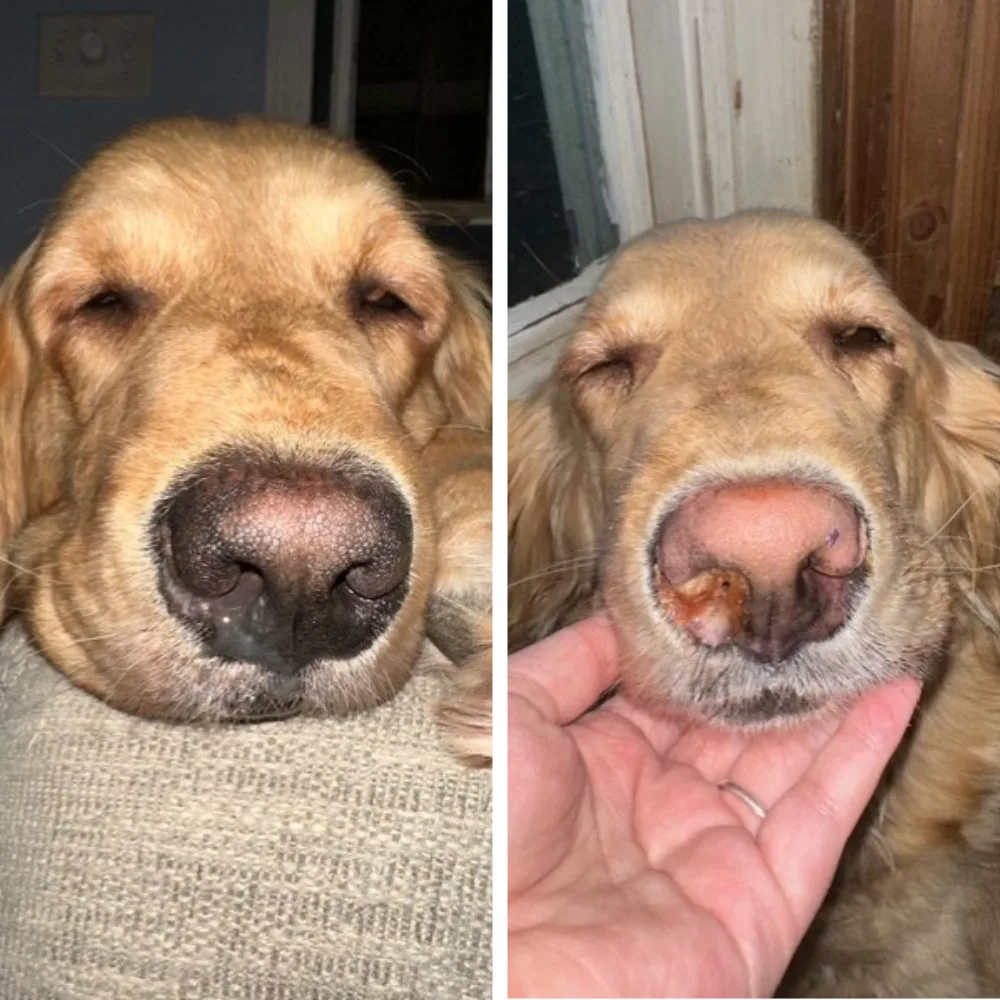
FIGURE 1 (left) Early disease is characterized by subtle but persistent nasal discharge that is typically thick; white, green, or brown; unilateral or bilateral; and intermittently hemorrhagic. External nasal architecture may appear largely intact, and discharge may be the only visible abnormality. (right) After 3 months, marked progression can be seen, including substantial depigmentation of the nasal planum and erosion of the ventral nares that is most pronounced in areas of prolonged contact time with nasal discharge. Loss of normal black pigmentation results in a mottled pink appearance, often accompanied by surface irregularity, crusting, and focal ulceration. In some cases, mild distortion of the nares may be appreciated.
Depigmentation of the nasal planum is not pathognomonic for nasal aspergillosis; differential diagnoses include discoid lupus erythematosus, neoplasia, and other inflammatory dermatoses. Chronic, often unilateral, mucopurulent discharge and epistaxis with visible pigment loss, particularly of the ventral nares, should heighten suspicion for fungal rhinitis and prompt advanced imaging and rhinoscopy. Recognition of this external clue can accelerate diagnostic workup and lead to confirmation via advanced imaging, with subsequent plaque identification and administration of topical antifungal therapy. Early intervention can improve outcomes and limit progressive destruction of nasal structures and external tissue involvement.