Drugs Used to Prevent Heartworm Disease in Dogs & Cats
Lindsay A. Starkey, DVM, PhD, DACVM, (Parasitology), Oklahoma State University
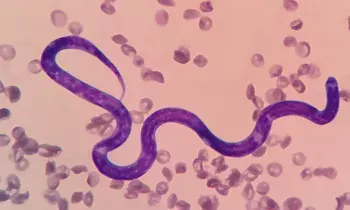
Heartworm disease, caused by Dirofilaria immitis, can be lethal in dogs and cats, is found worldwide (with numerous competent mosquito vectors), and is zoonotic. Some D immitis isolates are not as susceptible as others to available heartworm disease preventives.1-3 An integrated prevention approach that reduces vector populations and feeding in addition to use of macrocyclic lactone (ML)-based preventives can provide more protection than a nonintegrated approach, especially if transmission of ML-resistant isolates is suspected (see Environment & Lifestyle Strategies for Mosquito Control).4
Environment & Lifestyle Strategies for Mosquito Control17
Housing pets indoors
Limiting outdoor exposure when mosquitoes are most active
Using screens on doors and windows
Removing and/or treating (eg, with Bacillus thuringiensis subsp israelensis) sources of standing water that are locations for mosquito maturation
Using insecticidal and/or repellent chemicals outdoors
Following are FDA-approved MLs for prevention of heartworm disease and Environmental Protection Agency-approved mosquito repellents. Products in this article may be effective against parasites not listed on the label; however, such use is extra label.
Drugs Used to Kill Third- & Early Fourth-Stage Dirofilaria Immitis Larvae
Macrocyclic Lactones
MLs are glutamate-gated chloride channel agonists; their mechanism of action is binding glutamate-gated chloride channels, triggering a chloride influx that hyperpolarizes neurons and leads to paralysis and death of the target parasite. MLs also disrupt transmission of invertebrate neurotransmitters, including gamma-aminobutyric acid.5,6
MLs are essential FDA-approved heartworm preventives that can be combined with other active ingredients to expand parasite coverage.7
Eprinomectin
Eprinomectin is a semisynthetic avermectin used as a topical heartworm preventive in cats.8-10
Dosage (Cats)
0.48 to 1.5 mg/kg topically monthly (transdermal)
Key Points
Kills third- and fourth-stage larvae of ML-susceptible D immitis isolates
Kills roundworms (Toxocara cati: adults, fourth-stage larvae) and hookworms (Ancylostoma tubaeforme: adults,fourth-stage larvae; Ancylostoma braziliense: adults)
Approved for use in cats ≥7 weeks of age (≥8 weeks of age for the combination product containing esafoxolaner) and ≥1.8 lb (0.8 kg)
Safety has not been tested in breeding, pregnant, or lactating cats or in cats <7 weeks of age (<8 weeks of age for the combination product containing esafoxolaner) or <1.8 lb (0.8 kg).
Common adverse effects include vomiting, anorexia, lethargy, mild itching, and hair loss at the application site.
Not to be administered orally
Adverse effects of oral administration can include hypersalivation, vomiting, and lethargy.
Eprinomectin (0.5 mg/kg) + praziquantel (10 mg/kg)
Praziquantel can kill tapeworms (Dipylidium caninum, Echinococcus multilocularis).
Eprinomectin (0.48 mg/kg) + praziquantel (9.98 mg/kg) + esafoxolaner (1.44 mg/kg)
Praziquantel can kill tapeworms (D caninum).
Esafoxolaner can kill adult fleas (Ctenocephalides felis), treat and prevent flea infestations, and treat and control tick (Amblyomma americanum, Ixodesscapularis) infestations.
Esafoxolaner is an isoxazoline and should therefore be used with caution in cats with a history of seizures or neurologic disorders.
Ivermectin
Ivermectin, an avermectin, was the first ML approved for use in veterinary medicine and is used as a heartworm preventive in dogs.9,10
Dosage
Dogs: 6 micrograms/kg PO monthly
Key Points
Kills third- and fourth-stage larvae of ML-susceptible D immitis isolates
Ivermectin as a single agent at this dose is not labeled for treatment or control of parasites except D immitis third- and fourth-stage larvae.
Dogs should be tested for heartworm infection prior to initiation of a heartworm prevention program. Ivermectin is not labeled for microfilariae clearance or activity against adult stages of D immitis.
Approved for use in dogs ≥6 weeks of age
Safe in dogs with the multidrug sensitivity gene (MDR1 gene, also known as ABCB1 gene) mutation and pregnant or breeding dogs at the labeled dose and route of administration
Should be used with caution in sick, debilitated, or underweight dogs
Adverse effects include vomiting, diarrhea, and lethargy.
Additional adverse effects can include mydriasis, ataxia, staggering, convulsions, hypersalivation, difficulty swallowing, increased water consumption, and coughing.
Combination products
Ivermectin (6 micrograms/kg) + pyrantel (5 mg/kg)
Pyrantel can kill adult roundworms (Toxocara canis, Toxascaris leonina) and adult hookworms (Ancylostoma caninum, A braziliense, Uncinaria stenocephala).
Approved for use in dogs ≥6 weeks of age
Safe in pregnant or breeding dogs
Ivermectin (6 micrograms/kg) + pyrantel (5 mg/kg) + praziquantel (5 mg/kg)
Pyrantel can kill adult roundworms (T canis, T leonina) and adult hookworms (A caninum, A braziliense, U stenocephala).
Praziquantel can kill tapeworms (D caninum, Taenia pisiformis).
Approved for use in dogs ≥8 weeks of age and ≥6 lb (2.73 kg)
Safety has not been tested in pregnant or lactating dogs, dogs <8 weeks of age, or dogs <6 lb (2.73 kg).
Products containing only ivermectin alone are not currently commercially available for dogs in the United States and Canada.
Ivermectin products for cats are not currently commercially available in the United States and Canada.
Many pet owners have heard that drugs used for heartworm prevention are not safe for dogs with the MDR1 mutation. These owners have their pets best interest in mind (just like we do), and they may perceive reactions as condescending, judgmental, or dismissive. Following are some dos and don’ts to try in these situations.
Don’t try to coerce someone to change their opinion.
Don’t get defensive.
Don’t use scare tactics.
Do praise the owner for caring enough to do their research.
Do find common ground.
Do ask for permission to share…after the owner has shared.
Do share knowledge and concerns respectfully and objectively. This may include sharing package insert data demonstrating that, in drug studies, dogs with the MDR1 gene mutation were administered elevated doses of heartworm preventives while being closely monitored for adverse effects.
Do respect the owner’s decision.
And of course …
Do document the discussion in the medical record.
These tips are modified from How to Manage Misinformation From Dr. Google by Sarah J. Wooten, DVM, CVJ. Click the link to read more.
Milbemycin Oxime
Milbemycin oxime is an ML in the milbemycin class and is available as an oral heartworm preventive with relatively broad parasiticidal activity.10,11
Dosage (Dogs, Cats)
Dogs: 0.5 mg/kg PO monthly
Cats: 2 mg/kg PO monthly
Key Points
Dogs
Kills third- and fourth-stage larvae of ML-susceptible D immitis isolates
Dogs should be tested for heartworm infection prior to initiation of a heartworm prevention program. Milbemycin oxime is not labeled for microfilariae clearance or activity against adult stages of D immitis.
Mild, transient hypersensitivity reactions have been reported in microfilaremic dogs.
Kills adult hookworms (A caninum), adult roundworms (T canis, T leonina), and adult whipworms (Trichuris vulpis)
Some combination formulations approved for use in dogs ≥4 weeks of age and ≥2 lb (0.91 kg)
Safe in dogs with the MDR1 mutation and pregnant or breeding dogs at the labeled dose and route of administration
Adverse effects include vomiting, diarrhea, and depression/lethargy.
Additional adverse effects can include anorexia, ataxia, weakness, convulsions, and hypersalivation.
At label dosages, adverse effects appear to be infrequent in microfilaria-free dogs, including MDR1-deficient dogs.
Chewable formulations should be administered in a manner that encourages the dog to chew or should be broken into pieces before administration to reduce the risk for choking; this is not mentioned in package inserts for tablet formulations.
Combination products
Milbemycin oxime + lufenuron (10 mg/kg)
Lufenuron controls flea (C felis) populations by preventing development of flea eggs; it does not kill adult fleas.
Approved for use in dogs ≥4 weeks of age and ≥2 lb (0.91 kg)
Both active ingredients have been tested safely in pregnant dogs and breeding male dogs.
Formulations containing lufenuron may cause additional adverse effects (eg, urticaria, pruritus, skin congestion).
Tablets should be administered with food for maximum effectiveness.
Milbemycin oxime + praziquantel (5 mg/kg) ± lufenuron (10 mg/kg)
Praziquantel can kill tapeworms (D caninum, Echinococcus granulosus, E multilocularis, T pisiformis).
Lufenuron controls flea (C felis) populations by preventing the development of flea eggs; it does not kill adult fleas.
Combination products containing praziquantel are approved for use in dogs ≥6 weeks of age and ≥2 lb (0.91 kg).
Safety of the combination products have not been tested in pregnant or lactating dogs, dogs <6 weeks of age, or dogs <2 lb (0.91 kg).
Formulations containing lufenuron may cause additional adverse effects (eg, urticaria, pruritus, skin congestion).
Milbemycin oxime + spinosad (30 mg/kg)
Spinosad can kill fleas (C felis) and prevent and treat flea infestations by killing adult fleas.
Approved for use in dogs ≥8 weeks of age and ≥5 lb (2.27 kg)
Should be used with caution in breeding females
Safety has not been evaluated in breeding males.
Should be used with caution in dogs with epilepsy
Dogs <14 weeks of age may experience higher rates of vomiting.
Tablets should be administered with food for maximum effectiveness.
Spinosad alone is safe when administered concurrently with heartworm preventives at label directions.
Severe adverse effects have been reported following concomitant extra-label use of ivermectin with spinosad alone.12
Cats
Kills third- and fourth-stage larvae of ML-susceptible D immitis isolates
Kills adult roundworms (T cati) and hookworms (Atubaeforme)
Approved for use in cats ≥6 weeks of age and ≥1.5 lb (0.68 kg)
Safety has not been evaluated in pregnant, breeding, lactating, or heartworm-positive cats.
Adverse effects have not been reported.
Moxidectin
Moxidectin is a milbemycin ML available in oral, transdermal, and subcutaneous formulations that can have relatively broad parasiticidal activities depending on formulation and route of administration. This drug has the longest half-life of MLs available for use in dogs and cats.2,10,13
Dosage (Dogs, Cats)
Dogs
12 to 24 micrograms/kg PO monthly
2.5 mg/kg topically monthly (transdermal)
0.17 mg/kg SC every 6 months or 0.5 mg/kg SC every 12 months
Cats
1 mg/kg topically monthly (transdermal)
2 mg/kg topically every 2 months (transdermal)
Key Points
Dogs
Kills third- and fourth-stage larvae of ML-susceptible D immitis isolates
Dogs should be tested for heartworm infection prior to initiation of a heartworm prevention program. Oral and injectable moxidectin are not labeled as effective for microfilariae clearance; no formulation is labeled effectiveagainst adult stages of D immitis.
Moxidectin formulations are more effective for killing third- and fourth-stage D immitis larvae considered to be ML-resistant isolates as compared with ivermectin, milbemycin oxime, and selamectin after one dose (as measured by lower worm counts during necropsy).1-3
Safe in dogs with the MDR1 mutation at the labeled dose and route of administration
Should be used with caution in sick, debilitated, or underweight dogs
Adverse effects include vomiting, diarrhea, depression/lethargy, anorexia, ataxia, weakness, convulsions, and hypersalivation.
Oral moxidectin
Not labeled for treatment or control of parasites except D immitis
Oral moxidectin formulations combined with other active ingredients expand the spectrum of coverage (seebelow).
Topical moxidectin
Kills roundworms (T canis: adults, fourth-stage larvae; T leonina: adults), hookworms (A caninum, U stenocephala: adults, immature adults, fourth-stage larvae), whipworms (T vulpis: adults), and microfilariae of D immitis; treats and controls sarcoptic mange (Sarcoptes scabiei var canis)
Not intended for oral administration
Dogs should be prevented from licking application sites (on themselves or other treated dogs) for at least 30 minutes after application.
Adverse effects of ingestion can include depression, salivation, dilated pupils, incoordination, panting, and tremors; signs may be more severe in dogs with the MDR1 mutation.
Should not be applied to irritated skin
The canine product should not be used on cats because drug concentrations are different.
Injectable moxidectin (≥0.17 mg/kg)
Treats existing hookworm infections (A caninum, U stenocephala: adults, larvae)
Six- and 12-month injections are approved for use in dogs ≥6 months of age and ≥12 months of age, respectively.
No adverse effects have been reported in pregnant or breeding dogs.
Combination products
Moxidectin (24 micrograms/kg) + pyrantel (5 mg/kg) + sarolaner (1.2 mg/kg)
Administered orally
Pyrantel can kill roundworms (T canis: adults, immature adults; T leonina: adults) and hookworms (A caninum: adults, immature adults, fourth-stage larvae; U stenocephala: adults).
Sarolaner can kill adult fleas (C felis), treat and prevent flea infestations, prevent D caninum infections as a direct result of killing C felis vector fleas, treat and control tick (A americanum, Amblyomma maculatum,
Dermacentor variabilis, Haemaphysalis longicornis, I scapularis, Rhipicephalus sanguineus) infestations, and prevent Borrelia burgdorferi infection by killing I scapularis vector ticks.
Approved for use in dogs ≥8 weeks of age and ≥2.8 lb (1.27 kg)
Safety has not been tested in pregnant or lactating dogs or dogs younger or weighing less than the approved age or weight for each product.
Sarolaner is an isoxazoline and should therefore be used with caution in dogs with a history of seizures or neurologic disorders.
Moxidectin (12 micrograms/kg) + pyrantel (5 mg/kg) + afoxolaner (2.5 mg/kg)
Administered orally
Pyrantel can kill adult roundworms (T canis, T leonina) and adult hookworms (A caninum, A braziliense, U stenocephala).
Afoxolaner can kill adult fleas (C felis), treat and prevent flea infestations, treat and control tick (A americanum, D variabilis, H longicornis, I scapularis, R sanguineus) infestations, and prevent B burgdorferi infection by killing I scapularis vector ticks.
Approved for use in dogs ≥8 weeks of age and ≥4 lb (1.8 kg)
Safety has not been tested in pregnant or lactating dogs or dogs younger or weighing less than the approvedage or weight for each product.
Afoxolaner is an isoxazoline and should therefore be used with caution in dogs with a history of seizures or neurologic disorders.
Moxidectin (20 micrograms/kg) + pyrantel (5 mg/kg) + lotilaner (20 mg/kg) + praziquantel (5 mg/kg)
Administered orally; must be administered with food
Pyrantel can kill roundworms (T canis: adults, immature adults; T leonina: adults) and hookworms (A caninum:larval, immature, and adult; U stenocephala: adult).
Lotilaner can kill adult fleas (C felis), treat and prevent flea infestations, and treat and control tick (A americanum, D variabilis, H longicornis, I scapularis, R sanguineus) infestations.
Praziquantel can kill tapeworms (D caninum, E granulosus, T pisiformis).
Approved for use in dogs ≥8 weeks of age and ≥3.3 lb (1.5 kg)
Safety has not been tested in pregnant or lactating dogs or dogs younger or weighing less than the approved age or weight for each product.
Lotilaner is an isoxazoline and should therefore be used with caution in dogs with a history of seizures or neurologic disorders.
Moxidectin (2.5 mg/kg) + imidacloprid (10 mg/kg)
Administered topically
Imidacloprid can kill adult fleas (C felis) and treat flea infestations.
The only FDA-approved heartworm preventive labeled for treatment of circulating D immitis microfilariae in heartworm-positive dogs
Approved for use in dogs ≥7 weeks of age and ≥3 lb (1.36 kg)
Safety has not been tested in pregnant or lactating dogs or dogs younger or weighing less than the approved age or weight for each product.
Cats
Kills third- and fourth-stage larvae of ML-susceptible D immitis isolates
Moxidectin at ≥1 mg/kg kills roundworms (T cati: adults, fourth-stage larvae) and hookworms (A tubaeforme: adults, immature adults, fourth-stage larvae).
Moxidectin at 1 mg/kg is also labeled to treat ear mites (Otodectes cynotis).
Moxidectin at 2 mg/kg is also labeled to treat immature adult roundworms (T cati).
Safety has not been evaluated in pregnant, breeding, or lactating cats.
Should not be used in sick, debilitated, or underweight cats
Should not be applied to irritated skin
Adverse effects include lethargy, agitation, excessive grooming, hiding, pacing, discomfort, application sitereactions, decreased appetite
Other reported adverse effects include hyperactivity, hypersalivation, polydipsia, ataxia, trembling, coughing and gagging, periorbital/chin/lip swelling, blepharospasm, aggression, pyrexia, alopecia, elevated ALT, and mydriasis.
Not to be administered orally
Adverse effects associated with oral administration include hypersalivation, tremors, vomiting, and/or decreased appetite.
Effectiveness after bathing or water immersion has not been evaluated.
Combination products
Moxidectin (1 mg/kg) + imidacloprid (10 mg/kg)
Imidacloprid can treat flea (C felis) infestations by killing adult fleas.
Approved for use in cats ≥9 weeks of age and ≥2 lb (0.91 kg)
No adverse effects were noted in heartworm-positive cats.
Moxidectin (2 mg/kg) + fluralaner (40 mg/kg)
Fluralaner can treat and prevent flea (C felis) infestations by killing adult fleas and treat and control tick (I scapularis, D variabilis) infestations.
Approved for use in cats ≥6 months of age and ≥2.6 lb (1.18 kg)
Should be used with caution in heartworm-positive cats
Fluralaner is an isoxazoline and should therefore be used with caution in cats with a history of neurologic disorders.
Selamectin
Selamectin is a semisynthetic avermectin ML available only as a transdermal heartworm preventive with relatively broad parasiticidal activity in dogs and cats.10,14
Dosage (Dogs, Cats)
6 mg/kg topically monthly (transdermal)
Key Points
Dogs
Kills third- and fourth-stage larvae of ML-susceptible D immitis isolates
Dogs should be tested for heartworm infection prior to initiation of a heartworm prevention program. Selamectin is not effective for microfilariae clearance or adult stages of D immitis.
Prevents and controls flea (C felis) infestations by killing adult fleas and preventing flea eggs from hatching; also treats and controls ear mites (O cynotis)
In dogs, selamectin is labeled for treatment and control of sarcoptic mange (S scabiei) and control of tick (D variabilis) infestations.
Approved for use in dogs ≥6 weeks of age
Safe in dogs with the MDR1 mutation
No adverse effects have been reported in pregnant, breeding, lactating, or heartworm-positive dogs.
Should not be used in sick, debilitated, or underweight dogs
Adverse effects include vomiting, diarrhea, anorexia, lethargy, salivation, tachypnea, muscle tremors, localized alopecia, pruritus, urticaria, erythema, ataxia, and fever. Seizures and death occur rarely.
Not to be administered orally
Adverse effects associated with oral administration include hypersalivation, soft feces, reduced activity, mild tremors, ataxia, vomiting, and/or decreased appetite.
Should not be applied to broken skin or wet hair coat; however, bathing or shampooing dogs 2 hours after administration did not reduce effectiveness of topical selamectin against heartworm.15
Cats
Kills third- and fourth-stage larvae of ML-susceptible D immitis isolates
Prevents and controls flea (C felis) infestations by killing adult fleas and preventing flea eggs from hatching; also treats and controls ear mites (O cynotis), roundworms (T cati), and hookworms (A tubaeforme)
Approved for use in cats ≥8 weeks of age
No adverse effects have been reported in pregnant, breeding, lactating, or heartworm-positive cats.
Should not be used in sick, debilitated, or underweight cats
Adverse effects include vomiting, diarrhea, anorexia, lethargy, salivation, tachypnea, muscle tremors, localized alopecia, pruritus, urticaria, erythema, ataxia, and fever. Death occurs rarely.
Not to be administered orally
Adverse effects associated with oral administration include hypersalivation, soft feces, reduced activity, mild tremors, ataxia, vomiting, and/or decreased appetite.
Should not be applied to broken skin or wet hair coat; however, bathing or shampooing cats 24 hours after administration did not reduce effectiveness of topical selamectin against heartworm.15
Combination product
Selamectin (6 mg/kg) + sarolaner (1 mg/kg)
Sarolaner can treat and control tick (A americanum, A maculatum, D variabilis, I scapularis) infestations.
Indicated for the prevention of tapeworm (D caninum) infections as a direct result of killing C felis vector fleas on treated cats.
Approved for use in cats ≥8 weeks of age and ≥2.8 lb (1.27 kg)
Safety has not been evaluated in pregnant, breeding, or lactating cats or cats <8 weeks of age.
Sarolaner is an isoxazoline and should therefore be used with caution in cats with a history of neurologic disorders.
Should not be applied to broken skin or wet hair coat
Effectiveness after bathing or water immersion has not been evaluated.
Drugs Used to Manage Mosquito Vectors
Synthetic Pyrethroids
Synthetic pyrethroids are sodium channel modulators; their mechanism of action is disruption of neuronal function, resulting in paralysis and death of the target parasite.16
Synthetic pyrethroids are often used to repel mosquitoes; permethrin and deltamethrin (± other active ingredients) are approved by the Environmental Protection Agency for this use. Repelling mosquitoes can prevent deposition of heartworm stages that could lead to adult heartworm infection.
Permethrin
Permethrin is a topical insecticide available in multiple environmental and host formulations.
Dosage (Dogs)
36.08% to 44.8% topically monthly
Key Points
Can be fatal in cats
Cats should be prevented from licking the product off treated dogs.
Repels and kills mosquitoes, fleas (C felis), ticks (Amblyomma spp, D variabilis, Ixodes spp, Rhipicephalus spp), and lice, and repels and prevents blood-feeding by biting flies for one month
Adverse effects include skin irritation, vomiting, diarrhea, lethargy, and agitation.
Not intended for oral use in dogs
Should be used with caution in debilitated, geriatric, pregnant, or nursing dogs
Should not be added directly to water; toxic to aquatic organisms
Waterproof and remains effective after bathing with shampoo, swimming, or exposure to rain or sunlight
Combination products (not an exhaustive list)
Permethrin + pyriproxyfen + dinotefuran or fipronil
Approved for use in dogs ≥8 weeks of age and ≥5 lb (2.27 kg)
Pyriproxyfen, an insect growth regulator, can prevent immature flea life stages.
Permethrin + pyriproxyfen + fipronil is approved for control of S scabiei mites.
Permethrin + pyriproxyfen + dinotefuran is approved for control of Cheyletiella spp.
Permethrin + pyriproxyfen + imidacloprid
Approved for use in dogs ≥7 weeks of age and ≥4 lb (1.82 kg)
Pyriproxyfen, an insect growth regulator, can prevent immature flea life stages.
Conclusion
Heartworm infection and disease are preventable with compliant preventive product use. A multimodal approach that targets D immitis (with an ML-based product) and the vector (with environment and lifestyle strategies ± a repellent for dogs) can provide better protection for patients and pet owners.4,17,18