Glaucoma: A Brief Review of Medication Therapies
Jim Budde, PharmD, RPh, DICVP, FACVP, Chief Pharmacy Officer, Instinct Science
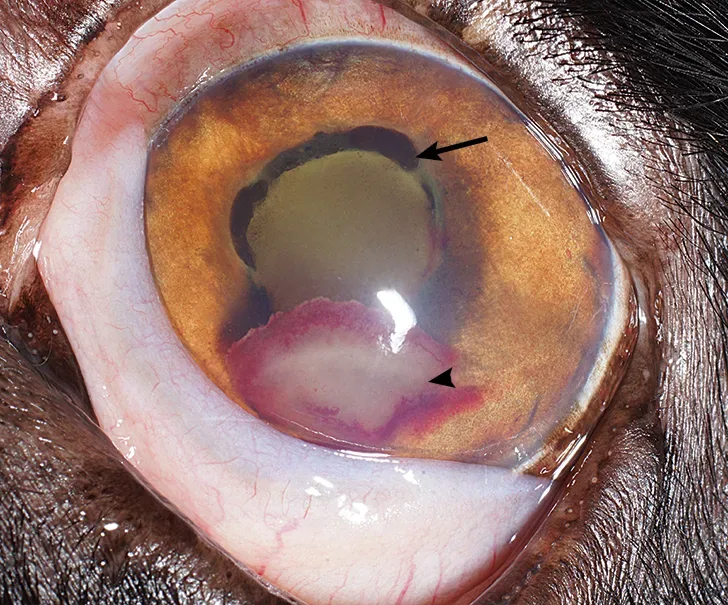
Background
One hallmark of glaucoma is elevated intraocular pressure (IOP). Although the pathophysiology of glaucoma differs between dogs and cats, elevated IOP in both species results from impaired outflow of aqueous humor. Because IOP reflects the balance of the rates of aqueous humor production and removal, medical management of elevated IOP may target either or both of these mechanisms.
Dorzolamide
Carbonic anhydrase inhibitor (CAI) that reduces IOP by decreasing aqueous humor production
Significant IOP-lowering effect in dogs; reduction in IOP more modest in cats1-5
Onset of IOP-lowering effect delayed by several hours
Typically applied every 8 hours
Combination with timolol more effective than dorzolamide alone6
Hypokalemia has been observed.7
Other ophthalmic CAIs (eg, brinzolamide) are available, but their use is less common. Oral CAIs (eg, acetazolamide, methazolamide) are also available, but systemic adverse effects are common and limit their use.
Latanoprost
Prostaglandin analogue that decreases IOP via increased aqueous humor outflow
First-line agent for dogs; inconsistent/poorly effective in cats8-10
Rapid onset of IOP-lowering effect in dogs
Administered every 12 or 24 hours
Causes miosis in dogs and cats8-12
Other ophthalmic prostaglandin analogues are available, but their use is less common.
Timolol
Nonselective beta-adrenergic blocker that reduces IOP by decreasing aqueous humor production
Onset of IOP-lowering effect delayed by several hours
May be used in the unaffected eye in dogs to delay onset of glaucoma
Ophthalmic beta-blockers may cause miosis and decreased heart rate6,9,13-18; caution is needed in patients with cardiopulmonary conditions (eg, congestive heart failure, asthma).
Other ophthalmic beta-blockers are available, but their use is less common. Systemic beta blockers may lower IOP but are not used for glaucoma management.
Administration Tips
If >1 eye medication will be administered, a 5-minute delay is needed between each medication.
Eye drops should be applied before eye ointments.
An Eye on Safety
In patients with closed-angle glaucoma, anticholinergic medications can cause mydriasis, which can further impair the outflow of aqueous humor and worsen glaucoma (Table). Sympathomimetics (eg, phenylephrine) may stimulate angle closure via effects on the iris; rarely, some serotonergic agents (eg, fluoxetine, venlafaxine) also precipitate angle closure via the same mechanism.
Conclusion
Glaucoma management is continually evolving. Understanding how therapies differ in mechanism, onset, and safety is essential for tailoring treatment to the individual patient. Detailed information on agent selection and use is available through Plumb’s.