Nutritional Comparison of Weight-Loss Diets in Cats
Betty Chow, BVM&S, MRCVS, DACVIM (SAIM), VCA Animal Specialty and Emergency Center, Los Angeles, California
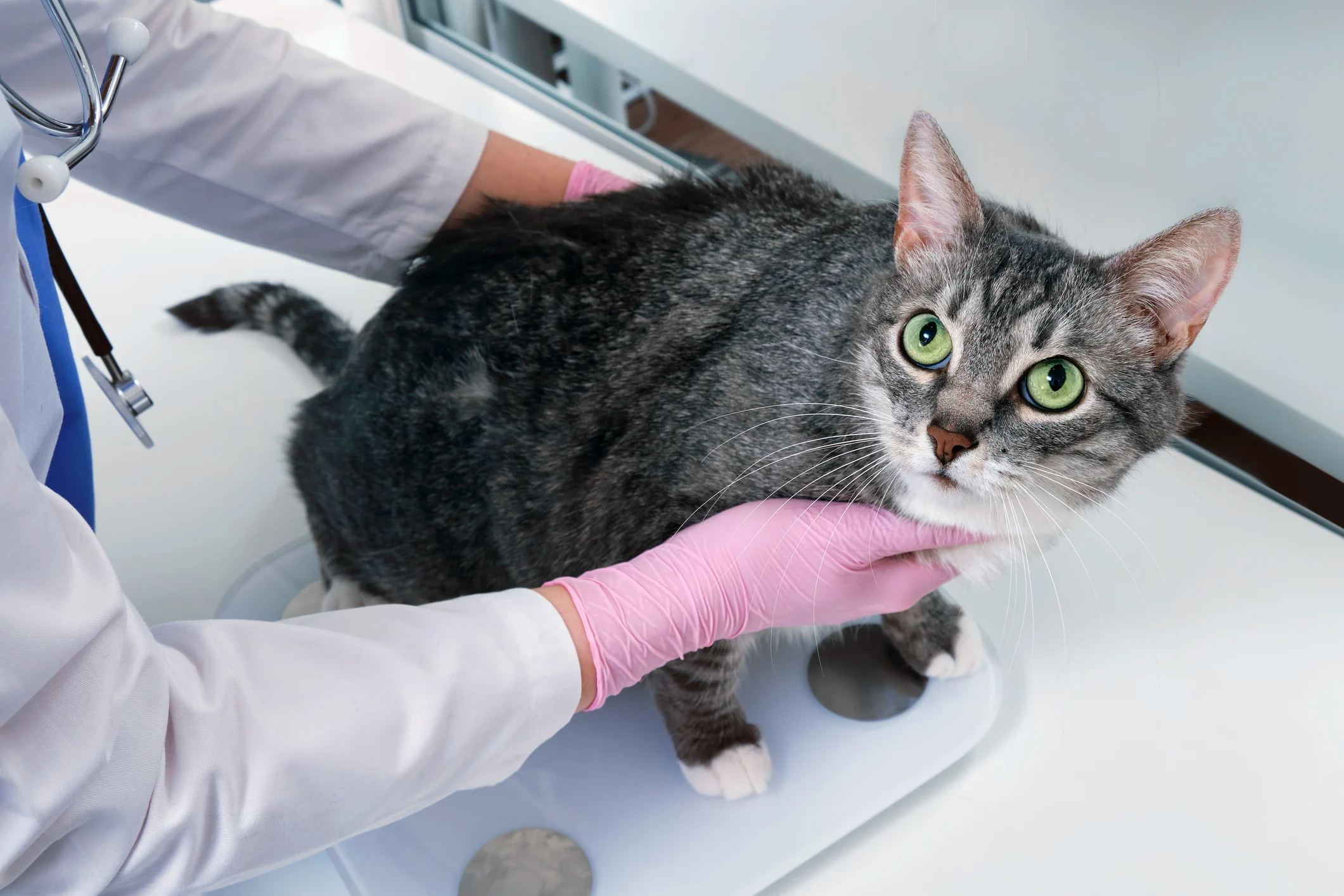
In the Literature
Grant CE, Godfrey H, Chan J, et al. Ex vivo energy restriction in obese cats reveals more amino acid and vitamin intakes below recommendations with over-the-counter compared to veterinary weight-loss diets. Am J Vet Res. 2025:1-9. doi:10.2460/ajvr.25.05.0156
The Research …
Feline obesity affects 12% to 63% of cats in developed countries, leading to compromised quality of life and comorbidities.1,2 Weight loss is often achieved via energy restriction that results in a negative energy balance. Various equations have been used to calculate caloric restriction recommendations and resting energy requirements (RER) based on current or ideal body weight (BW), but applicability of these equations has not been evaluated. In addition, some over-the-counter (OTC) diets are marketed for weight loss or as light or low calorie, which could mislead pet owners into thinking these diets can be safely used for energy restriction. Depending on the individual diet and degree of energy restriction, essential nutrient intake may be below National Research Council (NRC) recommendations for adult cats.
This ex vivo theoretical study evaluated whether cats fed various energy-restricted diets met NRC recommendations for essential nutrients. BW, BCS, and morphometry data from previous weight-loss studies of 16 obese cats were used to calculate energy and nutrient intake of various diets using different energy equations. Diets selected included 3 dry feline diets (ie, veterinary weight-loss [WEIGHT], OTC with weight management or light calorie label claim [LOWCAL], OTC adult maintenance [ADULT]) from 3 pet food manufacturers. Three predictive energy equations (ie, RER [70 kcal/kg0.75], 0.8 × RER, 0.6 × 130 kcal/kg0.4) using current or ideal BW assumptions were used to generate 6 theoretical nutrient intake calculations based on nutrient analysis of all diets.
Although mean essential nutrient intake varied by energy equation used, results showed that use of current or ideal BW for any of the 3 equations did not affect essential nutrient intake. NRC recommendations were more often met with WEIGHT diets than with LOWCAL or ADULT diets, with WEIGHT diets resulting in higher intakes of all nutrients. The study authors concluded that purpose-formulated veterinary weight-loss diets have lower risk for nutrient intake below NRC recommendations when compared with OTC adult maintenance or low-calorie diets.
… The Takeaways
Key pearls to put into practice:
Purpose-formulated veterinary weight-loss diets yielded the greatest intake of crude protein, amino acids, and most vitamins and more often met NRC recommendations, followed by OTC low-calorie diets and OTC adult maintenance diets.
Of the energy equations used in this study, 0.6 × 130 kcal/kg0.4 was the most restrictive calculation; use of RER or 0.8 × RER may be preferable for energy restriction calculations.
Using ideal BW for energy calculations may result in lower energy intake but essential nutrition intake similar to current BW, potentially leading to more successful weight loss; however, use of ideal BW in overweight and obese cats has not been assessed for accuracy.
You are reading 2-Minute Takeaways, a research summary resource presented by Clinician’s Brief. Clinician’s Brief does not conduct primary research.