Feline Herpesvirus-1
Peter Foley, DVM, MS, DACVIM, University of Prince Edward Island, Charlottetown, Prince Edward Island, Canada
Jason W. Stull, VMD, MPVM, PhD, DACVPM, University of Prince Edward Island, Charlottetown, Prince Edward Island, Canada
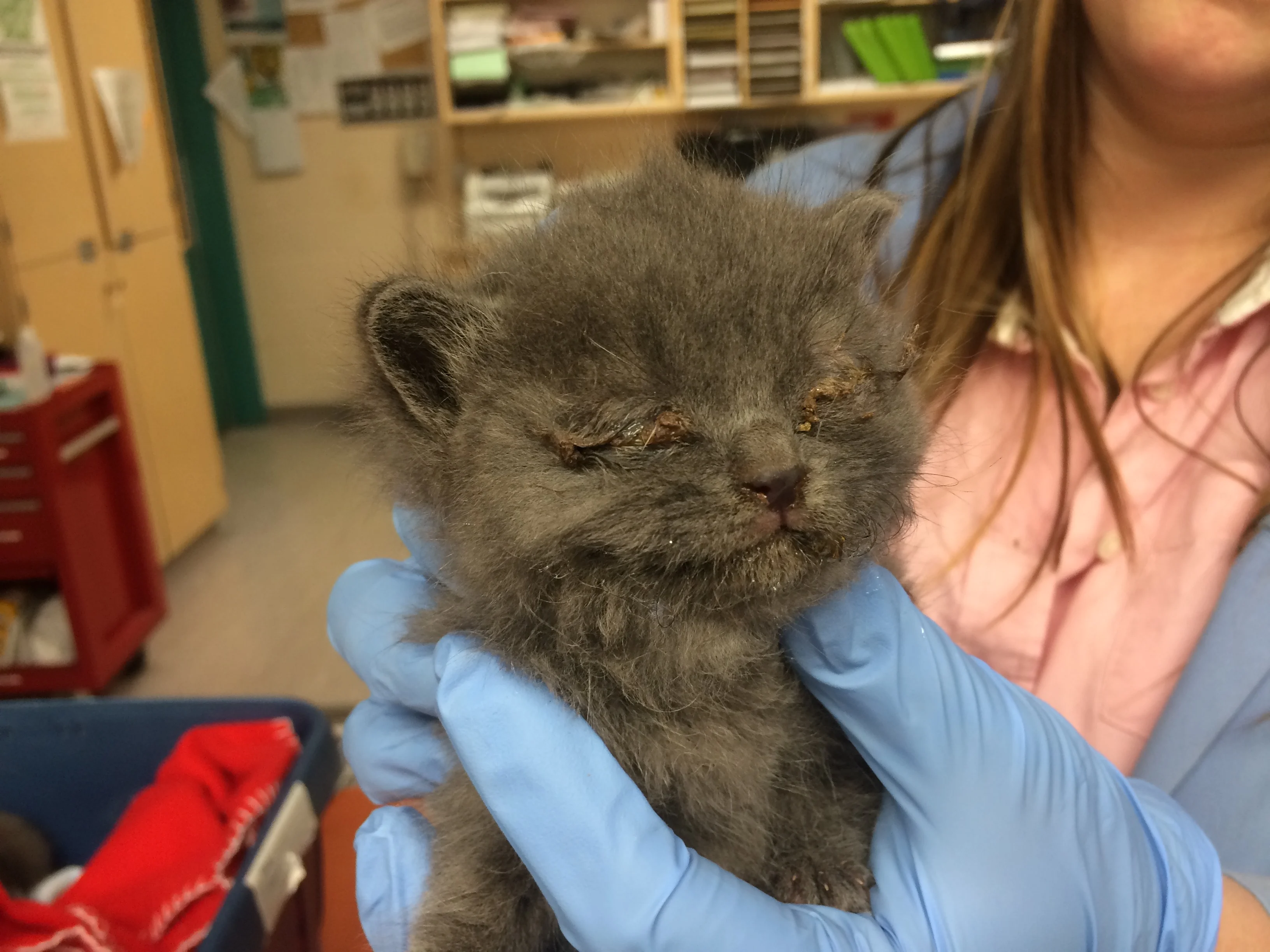
Feline upper respiratory tract disease (FURTD) is a common, contagious illness caused by one or more viruses, bacteria, fungi, or protozoa. Feline herpesvirus-1 (FHV-1) commonly contributes to FURTD and often results in upper respiratory signs (eg, discharge from the eyes or nose, coughing, sneezing, conjunctivitis), corneal and oral ulcers, and fever. Clinical disease is usually self-limiting within 2 weeks, although coinfections or secondary bacterial infections can exacerbate clinical signs and duration, especially in young kittens (Figure).
Kittens and unvaccinated young cats (<2 years of age) appear to be most susceptible to infection; transmission occurs via direct cat-to-cat contact or fomites. Lifetime infection and subsequent intermittent shedding are common and often incited by stress and parturition/lactation, which are important sources of infection in newborn kittens from carrier queens.
Diagnosis of Feline Herpesvirus-1
A presumptive diagnosis of FURTD is often based on patient history and physical examination findings and is usually adequate for individual patient management. Diagnosis of FHV-1 is based on diagnostic testing, including PCR and virus isolation from clinical samples (eg, nasal, conjunctival, corneal swabs or scrapings, airway lavage). Reliability of FHV-1 diagnostic testing is generally good but can be challenged by various factors, including sensitivity (PCR higher than virus isolation) and timing of sample collection (best early in acute disease and prior to application of ocular stains that may interfere with test results).1 Confirmed diagnosis is encouraged for FURTD outbreaks or individual cats with severe or atypical signs.
Treatment of Feline Herpesvirus-1
In most cats, FURTD is self-limiting regardless of the causative agent, and treatment is predominantly supportive. Preventing dehydration and maintaining adequate nutrition are important to reduce severe sequelae. For diagnosed or suspected FHV-1, topical ophthalmic lubricant may be beneficial due to viral disruption of the ocular tear film, and ocular antivirals (eg, cidofovir) may be useful for severe or refractory FHV-1–related eye disease. Antimicrobials are rarely indicated in typical self-limiting infections, with the exception of infected corneal ulcers secondary to herpes infection. For severe infections with mucopurulent nasal–ocular discharge, fever, and lethargy, antimicrobials (eg, doxycycline) should be considered for likely bacterial infections.2 Systemic antivirals (eg, famciclovir) have been used for severe FHV-1 infections; however, their efficacy is uncertain based on poor biotransformation to the active form.1
Prevention is Key
Vaccination against FHV-1 (along with calicivirus and panleukopenia virus) is recommended for all cats.3 Vaccination is highly effective in preventing or minimizing clinical signs of FHV-1, although infection may still occur.
FURTD pathogens, including FHV-1, are highly contagious. Patients with suspected or confirmed infections should be managed with infection control practices in mind. Personal protective equipment (eg, disposable gloves, disposable or immediately laundered gowns) should be used when handling these cats and touching contaminated surfaces. These cats should be housed away (ie, isolated) from other cats.