Feline Congenital Hypothyroidism
Avin Arjoonsingh, DVM, MS, DACVIM (SAIM), University of the West Indies, St. Augustine, Trinidad and Tobago
Feline congenital hypothyroidism is likely an underrecognized disorder, as it is uncommonly reported and there are <100 cases in the literature.1-3 Primary hypothyroidism is most commonly reported in kittens, but secondary (ie, pituitary) and tertiary (ie, hypothalamic) cases are possible.4,5 Primary hypothyroidism can be caused by thyroid hypoplasia, thyroid dysgenesis, thyroid dyshormonogenesis (most cases) due to thyroid peroxidase gene mutations, or sodium- iodine symporter gene mutations (described in a Japanese breed).1,2,6-12
Presentation
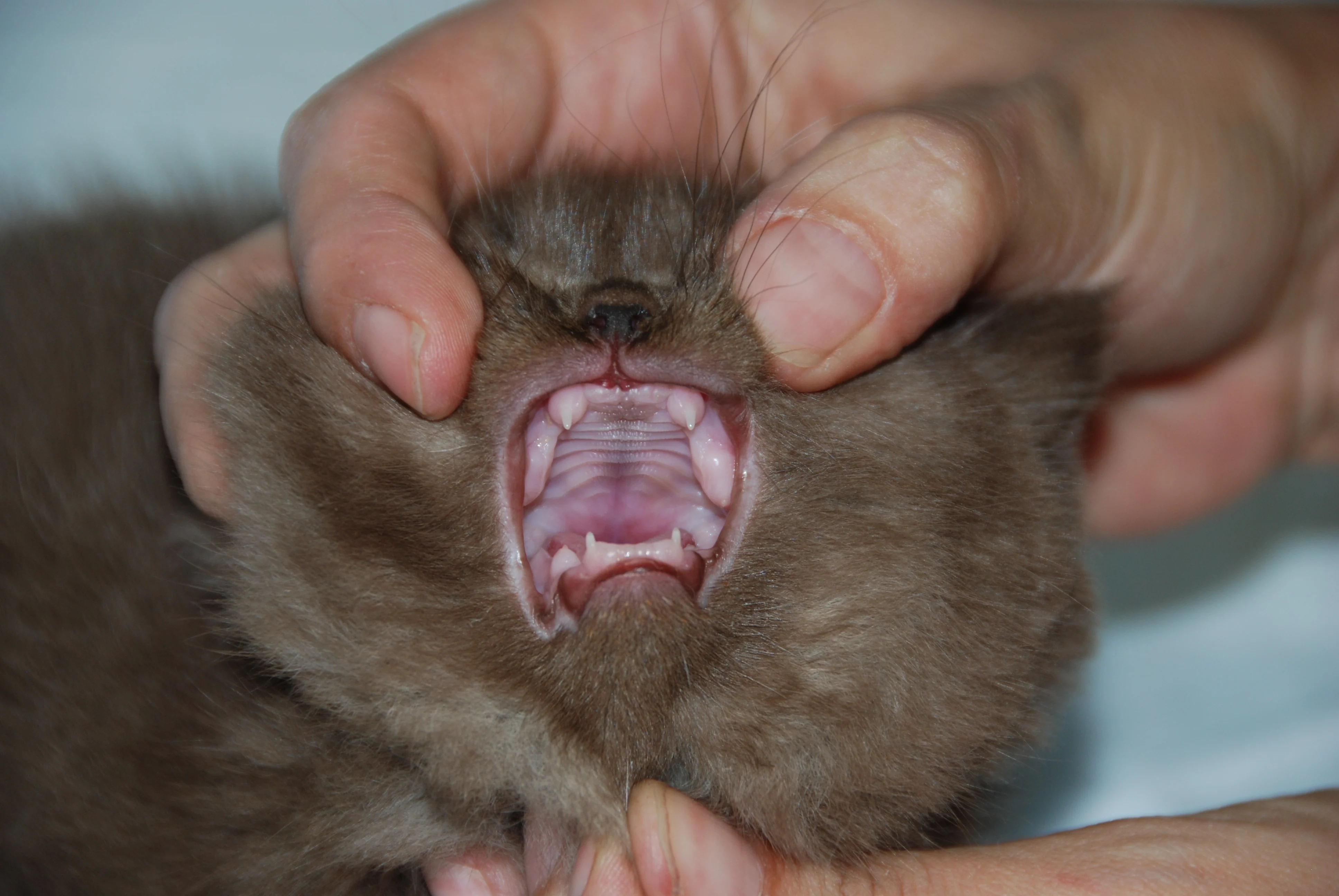
Clinical manifestations occur at 4 to 8 weeks of age and are associated with decreased thyroid hormone concentrations that result in disproportionate dwarfism. Clinical signs include enlarged head with facial dysmorphia, short neck, and short limbs. Additional reported signs are palpable goiter (in ≈50% of kittens with thyroid dyshormonogenesis; may take up to 6 months to detect), mental dullness, lethargy, retained deciduous teeth, constipation, megacolon, hypothermia, bradycardia, retention of kitten coat, cold intolerance, and neuromuscular signs (Figure 1).1,2,10,13,14
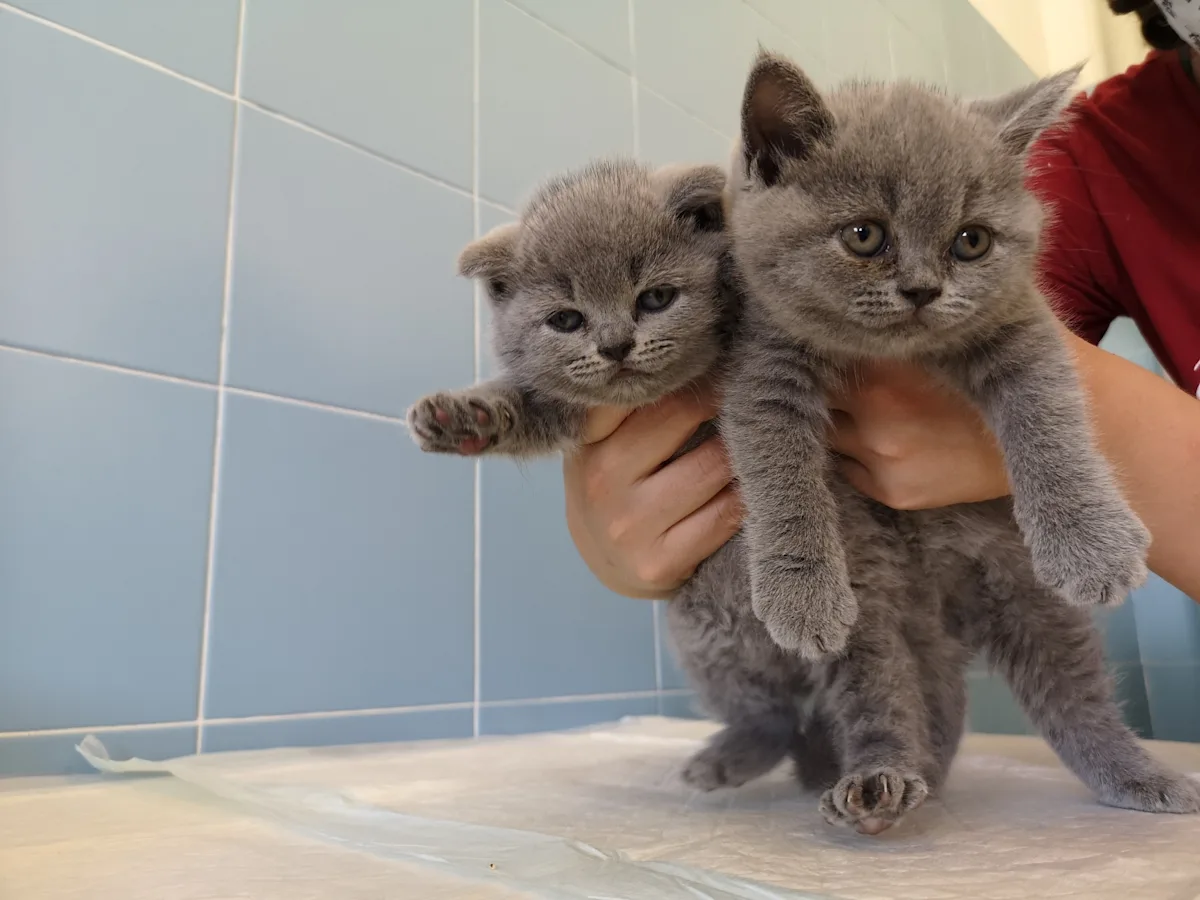
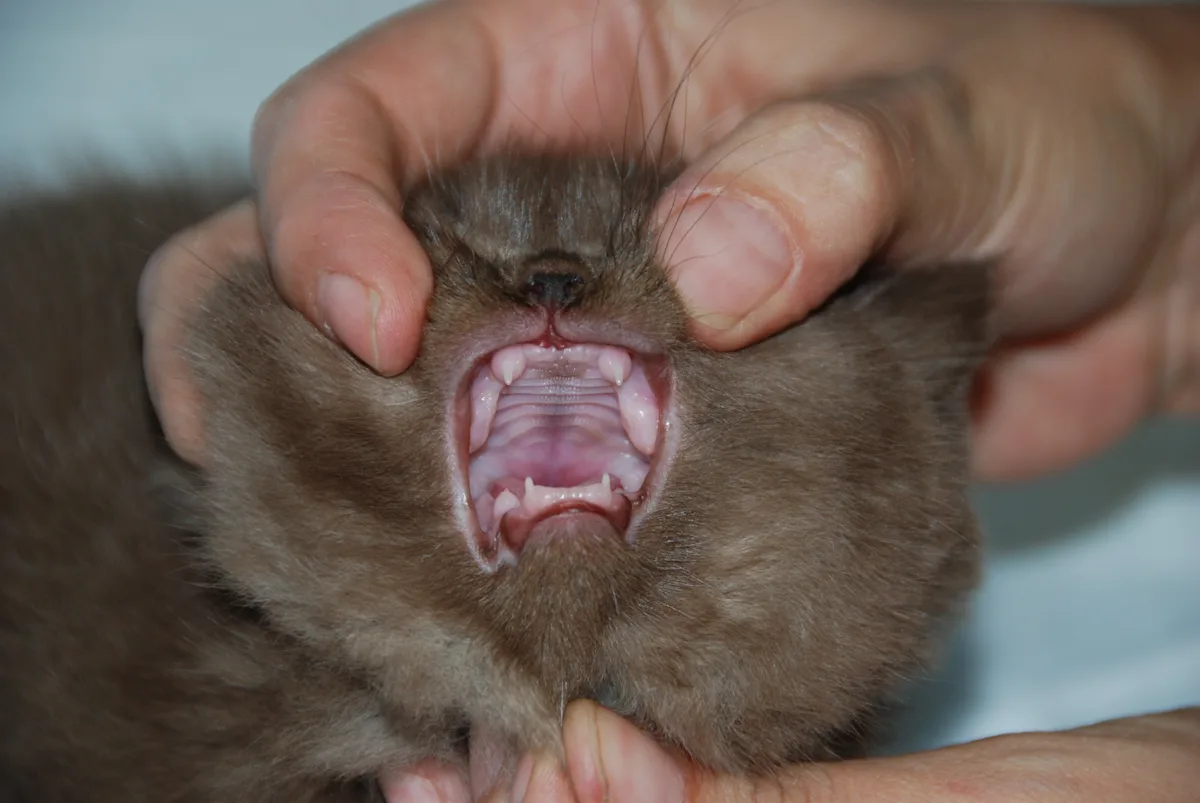
FIGURE 1 (A) A kitten with hypothyroidism (left) compared with a normal-appearing littermate (right). Smaller stature (ie, dwarfism), facial dysmorphia, ventral curling of the ear pinnae, and a fluffy kitten coat can be seen. (B) Retained deciduous teeth visible in a kitten with congenital hypothyroidism. Photos courtesy of Antonio Maria Tardo, DVM, PhD, DECVIM - CA (Internal Medicine); University of Bologna, Italy.
Diagnostics
Clinicopathologic findings include anemia, azotemia, hypercalcemia, and hypercholesterolemia.1,2,6 Radiographic findings primarily include delayed closure of ossification centers, with additional findings including delayed maturation and dysgenesis of the epiphyses, short vertebral bodies (end-plate dysplasia), and reduced long bone length.2
Recommended clinicopathologic testing for definitive diagnosis includes thyroid hormone measurement (ie, total serum thyroxine [tT4], free thyroxine [fT4] via equilibrium dialysis) and thyroid stimulating hormone (TSH) measurement. Thyroid function testing (via TSH stimulation test) or thyroid scintigraphy may be indicated in certain clinical situations or in cases in which diagnosis is elusive.2,3,15 Classic findings for kittens with congenital hypothyroidism are elevated TSH, low to low-normal tT4, and low fT4 (if measured).2,14
Feline TSH can be routinely measured using a chemiluminescent immunoassay for canine TSH; however, this assay cannot reliably measure low TSH concentrations (<0.3 ng/mL), which may make distinguishing low-normal TSH concentrations (seen in ≈25% of clinically normal cats) difficult.16 This may not be an issue, however, because TSH is expected to be increased in cats with congenital disease. A more sensitive TSH assay that uses bulk acoustic wave resonators to measure mass is also available, can measure concentrations <0.3 ng/mL, and may be able to measure higher concentrations.17
Thyroid scintigraphy can be used to differentiate between thyroid dysgenesis and thyroid dyshormonogenesis. Kittens with thyroid dyshormonogenesis have increased uptake of the radionucleotide due to compensatory bilateral goiter development and elevated TSH, whereas kittens with dysgenesis have minimal uptake due to lower amounts of thyroid tissue.2,11 A thyroid stimulation test using recombinant human TSH (rhTSH) can also be used to test the reserve of the thyroid gland. Minimal or no increases are expected in tT4 or fT4 6 hours after rhTSH administration compared with nonthyroidal illness and clinically normal cats15; however, rhTSH is expensive and not readily available.
In healthy kittens, tT4 values may be higher than in adult cats because of the metabolic and organ demands of growing kittens.18,19 Nonthyroidal illness can be a differential in kittens with TSH, tT4, and fT4 findings similar to kittens with hypothyroidism; however, clinical signs would differ from those seen in patients with congenital hypothyroidism. A TSH stimulation test or thyroid scintigraphy (where normal uptake should be seen) can differentiate the conditions.20
Treatment
Treatment for feline congenital hypothyroidism is lifelong and requires T4 supplementation. Levothyroxine (20-40 micrograms/kg PO divided and administered every 12 hours, 1 hour before feeding or 2-3 hours after feeding) is the treatment of choice. Therapeutic monitoring should be performed 4 weeks after T4 supplementation is initiated or 2 to 4 weeks after medication is adjusted based on tT4 and TSH measurements.
The goal of treatment is to normalize tT4 and TSH concentrations. Up to 25% of clinically healthy cats may have low to low-normal TSH concentrations, which may be undetectable with the canine TSH assay; caution is thus warranted when using this assay to assess therapeutic goals. The feline TSH assay may help detect lower concentrations in these cases.16,17 The T4 dose can be increased in 25% to 50% increments if tT4 continues to be low or TSH continues to be elevated.
As kittens grow, the dose should be adjusted based on current body weight. Continued rechecks at 2- to 3-month intervals are recommended until growth stops, normally by 1 year of age.2 Adults can be rechecked every 6 to 12 months.2
Prognosis
Following diagnosis, kittens typically respond well to thyroid hormone supplementation. Mental alertness, growth, normal hair coat, and resolution of clinical signs may be seen within 4 weeks of treatment.1 Prognosis is good with early and accurate diagnosis. Cats diagnosed later in life can also have a good prognosis when treated with levothyroxine.21-23