Facial Excoriation in Cats
Rebecca Geddes, MA, VetMB, GPCert(FelP), MVetMed, PhD, DACVIM, DACVNU, FHEA MRCVS, Royal Veterinary College, Hertfordshire, United Kingdom
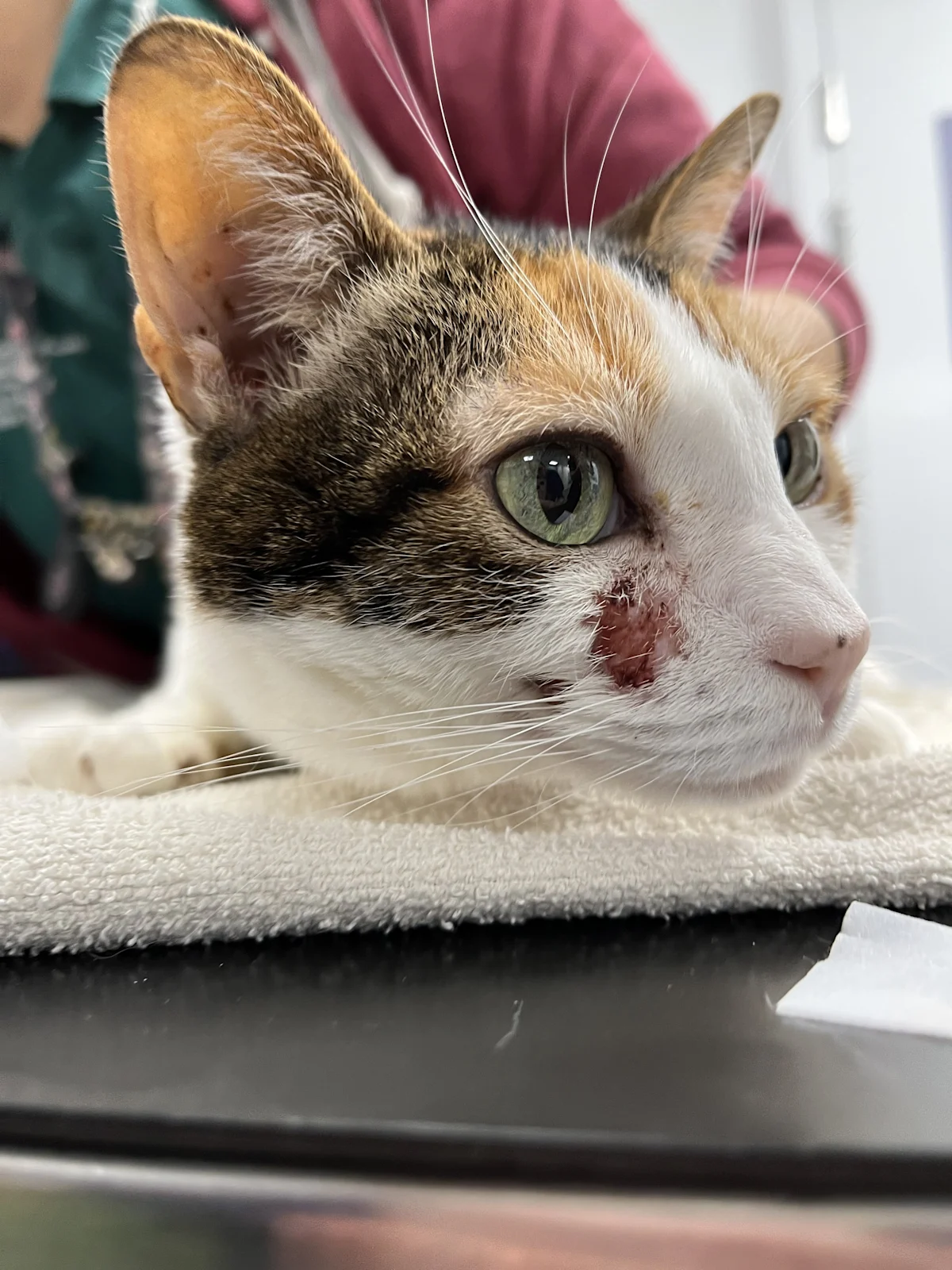
FIGURE A 12-year-old spayed domestic shorthair cat presented with facial excoriations that appeared 2 weeks following initiation of methimazole (5 mg PO every 12 hours) for treatment of hyperthyroidism.
Facial pruritus leading to facial excoriations is an adverse effect of antithyroid medication and has only been reported in 2% to 4% of treated cats.1,2 Although this condition is not common, new excoriations on the face or neck of a cat recently treated with antithyroid medications should warrant consideration of the lesions as drug reactions and discontinuation of the medication. Excoriations usually occur within the first few weeks of treatment and can be secondary to commonly used oral or transdermal antithyroid medication (eg, methimazole [ie, thiamazole], carbimazole). Cessation of medication is usually sufficient to resolve excoriations. Affected cats should not be administered any thioamide antithyroid medications, and alternative treatments for hyperthyroidism (eg, radioactive iodine, thyroidectomy, therapeutic iodine-restricted diet) should be explored.