End-of-Life Care
You have asked…What constitutes end-of-life care for senior pets? The expert says…
Many owners request palliative, hospice, and end-of-life (EOL) care for their senior pets. Although veterinarians are instructed to treat all life stages, only 5% routinely recommend palliative and hospice care for patients diagnosed with life-limiting disease.1
Because attachment behaviors are the essence of the human–animal bond, owners feel obliged to return the unconditional love offered by companion animals,2 especially senior pets that have established a long-term relationship with family members. All companion pets diagnosed with advanced or life-limiting disease deserve compassionate medical care and the family of each pet likewise deserves emotional support from their local veterinary teams.
Palliative & Hospice CareEOL care prioritizes quality-of-life (QOL) support services that consist of both palliative and hospice care. Palliative care focuses on the treatment of clinical signs and the timely transition to hospice care; hospice care involves more intense patient management and expertise to ensure EOL comfort.
Enrollment in a total simultaneous care model, such as the Pawspice Hospice Program, helps transition patients from standard to palliative to hospice care. Pawspice begins at diagnosis and offers a combination of standard, palliative, and hospice care options for life-limiting diseases by focusing on pain management and minimizing the impact of adverse events.
Pawspice (rhymes with hospice) is a program that combines standard, palliative, and hospice care for pets with life-limiting disease.3
Veterinarians [unable to] offer hospice services should be prepared to refer clients to a veterinarian who does offer hospice. — Approved revision to AVMA Guidelines for Veterinary Hospice Care.4
Some veterinarians may opt to follow an “either/or” model for patients with life-limiting disease by forcing the client to choose either the most complete care option or euthanasia. Because some owners may find euthanasia objectionable, they are forced to select what could be more costly complete care. For example, if the either/or options for a pet with hemangiosarcoma of the spleen are surgery or euthanasia and the owner does not consider euthanasia a viable option, the only choice is complete care. On the other hand, compassionate palliative/hospice care options might include a belly bandage, corticosteroids, pain management, and follow-up therapy at day clinics. By withholding palliative/hospice care options, veterinarians may be using the “strongest form of coercion” on clients.5

Using a QOL ScaleVeterinary staff and caretakers need to recognize the basic needs of their terminally ill patients. A convenient means of monitoring the QOL for these patients is called the HHHHHMM Quality-of-Life Scale, which stands for hurt, hunger, hydration, hygiene, happiness, mobility, and more good days than bad. Quantitative QOL scales are easy to implement and provide useful guidelines for clients to sustain a positive, rewarding relationship that nurtures the human–animal bond during EOL care.
When a pet is approaching death, the owners may have difficulty honestly assessing whether they can provide their pet with a good QOL that, for example, helps gauge the pet’s pain level or breathing capability.6 QOL scales assist clients as they struggle through the difficult decision-making process of whether to maintain their pet’s EOL care or elect humane euthanasia. If a terminally ill pet has more than 3 to 5 bad days in a row, QOL may be too compromised (this generally correlates with the QOL score dropping <35). Loss of a healthy, interactive human–animal bond and/or the presence of unrelenting breakthrough pain suggests that the family should elect euthanasia for their pet.
Providing Palliative CarePalliative care for patients focuses on managing clinical signs and may include chemotherapy or palliative radiation protocols that have inherent minimal toxicity. Placement of a feeding tube or catheter (stoma or stent) to maintain patency in obstructed structures may also be included. Palliative surgery may help patients with cancer retain QOL for some time.7-11 Studies have shown that when human patients with terminal lung cancer were enrolled in palliative care programs, they survived 3 months longer than their counterparts.12
Veterinary staff can teach clients how to provide optimal nutrition and hydration in addition to pain management. They can demonstrate wound-care techniques and how to prevent decubital ulcers by using egg crate mattresses, soft bedding, and body rotation. The staff can also provide strategies to prevent self-soiling through use of strategic elevation, absorbent towels, and diapers.13 In addition, patients may benefit from acupuncture or rehabilitation therapy; veterinarians who practice “womb-to-tomb” medicine are already engaged in EOL care and can emphasize this level of practice.14
Key PointWhen terminal patients are released to go home, a signed consent form should relieve the attending doctor of all liability. The consent form should state that “the pet is being released with a terminal/near-death condition for home hospice and euthanasia when QOL declines further.”
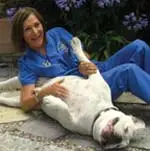
Pawspice: Unique From Human HospiceDying companion animals deserve differentiation from the human hospice goal of waiting and hoping for reconciliation or enrichment during their family member’s death. In the wild, animals that are old and frail are spared prolonged death by predation and natural elements. In my opinion, there is nothing authentic or natural about the slow, inevitable decline toward “true hospice” or “natural” death for companion animals.
Ultimately, the type and degree of EOL care provided are the pet owner’s decision.
Some veterinarians or counselors advise pet owners that euthanasia is a last resort and witnessing the hospice-assisted active dying process of their beloved pet may provide them with an occasion for spiritual enrichment. However, others believe there is nothing “natural” about an animal facing an artificially ultra-slow death as a kept pet.
Making EOL DecisionsAn EOL plan should include provision of heavy sedation to relax the pet before euthanasia. Although some animals may pass peacefully on their own, death can be unpredictable. Most veterinarians feel that dying pets deserve a bond-centered euthanasia17 that can be performed at home or a local veterinary hospital. The family must be prepared to go to the nearest emergency clinic to euthanize their dying pet if a crisis emerges outside the primary clinic’s hours.
Pet owners are understandably emotional and vulnerable when beloved companion animals are ill,18 and they may unwittingly wish for a natural death for their companion animal without understanding the potential consequences. A pain-free, peaceful death is most predictable when the family has arranged for veterinary supervision, including pain management, regular QOL assessment, and provision for euthanasia.
Pawspice PhilosophyPawspice care involves a flexible philosophy that can be offered by veterinarians in every type of practice by addressing the following basic functions:
Initial consultation to assess client goals, beliefs, concerns, treatment philosophies, and financial limitations
Assessment of comorbidities that may impact comfort (eg, osteoarthritis, cognitive dysfunction, cardiac disease)
Use of a quality-of-life scale (see section on Using a QOL Scale) so clients can measure patient trends over time
Species-specific pain assessment techniques and client education in pain recognition15,16
Appropriate comprehensive pain management (International Veterinary Academy of Pain Management, ivapm.org)
Client guidance for comfortable patient bedding, safe surroundings, appropriate patient hygiene, wound management, administration of medications, optimal nutrition, management of feeding tubes, use of assistive devices, and physical medicine options (eg, acupuncture,therapeutic laser, massage, physiotherapy)
Discussion of 24-hour preparedness for decline in patient health, advanced directive (resuscitation preference should encourage do not resuscitate [DNR]), at-home euthanasia services when requested, and referral to qualified pet-loss resources (Association for Pet Loss and Bereavement, aplb.org)
A plan to guide the veterinary team and prevent compassion fatigue
DNR = do not resuscitate; EOL = end-of-life; HHHHHMM = hurt, hunger, hydration, hygiene, happiness, mobility, more good days than bad; QOL = quality-of-life
Related articles:Hospice: A Way to Care for Terminal PetsDecision-Making Issues with Euthanasia
End-Of-Live Care • Alice E. Villalobos
References
1. Are veterinarians obligated to provide palliative care? In Willer K: AVMA Ethics Plenary Sessions—St. Louis: American Veterinary Medical Association, 2011.2. Attachment of people to companion animals. Voith VL. Vet Clin North Am 15:289-296, 1985.3. Hospice: A way to care for terminal pets. Villalobos AE. Clin Brief May:39-45, 2009.4. Guidelines for veterinary hospice. American Veterinary Medical Association; avma.org/issues/policy/hospice_care.asp; accessed November 2011.5. The ethics of influencing clients. Yeates JW, Main DC. JAVMA 237:263-267, 2010.6. Mental health and well-being in animals. In McMillan FD (ed): The Concept of Quality of Life in Animals—Oxford: Blackwell Publishing, 2005, pp 183-200.7. Owners’ perception of carboplatin in conjunction with other palliative treatments for cancer therapy. Bowles D, Robson M, Galloway P, et al. J Small Anim Pract 51:104-112, 2010.8. Palliative radiation therapy for canine osteosarcoma. Mayer M, Grier C. Can Vet J 47:707-709, 2006.9. Piroxicam therapy in 34 dogs with transitional cell carcinoma of the urinary bladder. Knapp DW, Richardson RC, Chan TC, et al. J Vet Intern Med 8:723, 1994.10. Relief of chronic cancer pain. In Lascelles BDX (ed): BSAVA Manual of Canine and Feline Oncology, 2nd ed—Gloucester, UK: British Small Animal Veterinary Association, 2003, pp 137-151.11. Principles of surgery for cancer palliation and treatment of metastases. Gilson S. Clin Tech Small Anim Prac_t 13:65-69, 1998.12. Early palliative care for patients with metastatic non-small-cell lung cancer. Temel JS, Greer JA, Billings JA, Lynch TJ. _N Engl J Med 363:733-742, 2010.13. Pet hospice. In Gaynor JS, Muir WW, Shearer TS (eds): Handbook of Veterinary Pain Management—St. Louis: Mosby/Elsevier, 2008.14. Womb to tomb: Bond-oriented practice. Downing R. 148th AVMA Conv Proc HAB Sessions:2011.15. Handbook of Veterinary Pain Management. Gaynor JS, Muir WW (eds)—St. Louis: Mosby/Elsevier, 2008.16. Pain Management for the Small Animal Practitioner, 2nd ed. Tranquilli WJ, Grimm LA, Lamont LA—Jackson, WY: Teton New Media, 2004.17. Euthanasia and quality of life. Rollin BE. JAVMA 228:1014-1016, 2000.18. Animal Illness and Human Emotion: Problems in Veterinary Medicine. Cohen SP, Fudin CE (eds)—Philadelphia: Lippincott, 1991.