Diagnosing Heart Disease: Make it Simple with the Vertebral Heart Score
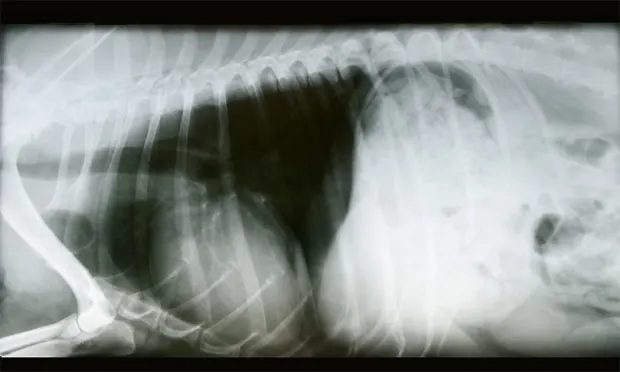
An estimated 10% of all dogs are at risk for heart disease that, depending on the type, can progress to congestive heart failure.1 Some cardiology cases need referral to a specialist, but the majority can be handled at your clinic. The vertebral heart score (VHS) is one of the tools to help make that possible. Not only is it more convenient and cost-effective for your patient, but it can be a practice-builder as well.
Using the VHS to interpret thoracic radiographs can allow you to evaluate any size breed and make a prompt diagnosis in your clinic. Developed by Dr. James W. Buchanan and Dr. Jōrg Bücheler at the University of Pennsylvania, finding the VHS lets you determine whether your patient has an enlarged heart.2
Calculating the VHS step by step:
Take a thoracic radiograph with the thoracic vertebrae T4 to T12 clearly visible.
Using calipers, measure the longest axis of the cardiac silhouette from the carina of the mainstem bronchus to the apex (Long Axis “L”).
Transfer this long axis measurement to the vertebrae, starting from the cranial edge of T4. Count the number of vertebrae within the caliper measurement.
Using calipers, measure the short axis at the widest part of the cardiac silhouette (Short Axis “S”). This measurement should be taken perpendicular to the long axis.
Transfer this short axis measurement to the vertebrae, starting from the cranial edge of T4. Count the number of vertebrae within the caliper measurement.
Add the two numbers: VHS = L + S. A normal VHS for most dogs is between 8.7 and 10.7.
You can refamiliarize yourself with this diagnostic technique at the Cardiac Education Group’s radiograph viewer and VHS calculator. Use the radiograph library and interactive demo to practice finding the VHS for a diverse collection of normal and enlarged hearts. With these resources, you can make the VHS a useful tool for evaluating and monitoring heart size in all your patients!
© 2015 Boehringer Ingelheim Vetmedica, Inc. VET0515006