Clinician's Forum: Understanding & Addressing Vaccine Hesitancy in Veterinary Practice
Michael R. Lappin, DVM, PhD, DACVIM, Kenneth W. Smith Professor in Small Animal Clinical Veterinary Medicine, Colorado State University
George E. Moore, DVM, PhD, DACVIM (SAIM), DACVPM (Epi), Purdue University
Jessica Pritchard, VMD, MS, DACVIM (SAIM)

Sponsored by Elanco
PARTICIPANTS
Michael Lappin, DVM, PhD, DACVIM, Colorado State University
George E. Moore, DVM, PhD, DACVIM, DACVPM, Purdue University
Jessica Pritchard, VMD, MS, DACVIM, University of Wisconsin–Madison
MODERATOR
Jill Pattee, DVMa
a Dr. Pattee is an Elanco employee.
Vaccine hesitancy in veterinary medicine poses a substantial challenge to optimal patient care and is primarily driven by client perceptions of disease risk and vaccine safety. This roundtable brought together veterinary specialists to critically examine current data on client vaccine acceptance. Their objective was to formulate and share pragmatic, evidence-informed communication strategies designed to reaffirm the importance of preventive health measures and underscore the established safety and efficacy of veterinary vaccines.
KEY TAKEAWAYS
Vaccine hesitancy exists along a spectrum rather than as a simple yes/no decision.
Data indicate that 2 primary determinants of vaccine hesitancy are the undervaluation of disease risk and the overestimation of vaccine risk.
Practicing presumptive messaging is a better approach to increasing compliance as compared with offering multiple, open-ended choices for a pet’s wellness care.
The most significant potential for increasing vaccination rates lies with clients at wellness visits who accept some vaccines.
Dr. Pattee: What is vaccine hesitancy?
Dr. Pritchard: Vaccine hesitancy is defined by the World Health Organization as a delay in acceptance or refusal of vaccination, despite available vaccine services.1 In other words, vaccine hesitancy is someone saying they either are not sure they are going to accept the vaccine or saying outright they are not going to get the vaccine when one is available. An important part of the discussion around vaccine hesitancy is normalizing some level of vaccine hesitancy with our clients and being careful not to shame them for having potential concerns. It’s important to understand that there’s a spectrum when it comes to clients and how hesitant they may or may not be about vaccines.2 There are some clients who are completely comfortable with following vaccine recommendations without question. Then, on the far end of that spectrum, we have clients who are going to say, “Nope, I’m not vaccinating my pet,” and you may not even see those clients at wellness appointments. The MacDonald paper has a great infographic showing the spectrum of vaccine hesitancy (Figure 1).2 When we talk about strategies for combating vaccine hesitancy, we’re really talking about trying to reach those people in the middle of the spectrum. Those folks who are already saying yes to some and who believe in vaccination as a core means of disease prevention are the folks we are trying to reach. Clients who come in refusing all vaccines are going to be harder to convince; for those clients, a single appointment with them likely will not change their mind.
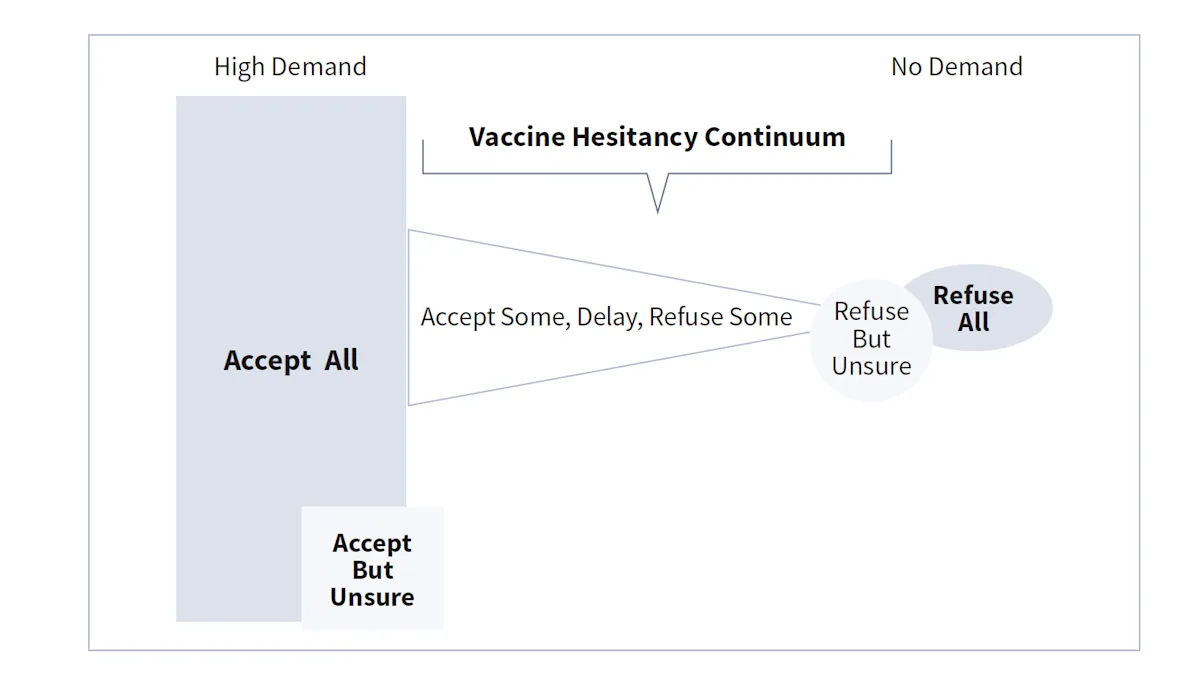
The continuum of vaccine hesitancy between full acceptance and outright refusal of all vaccines.
Image courtesy of MacDonald NE and SAGE Working Group on Vaccine Hesitancy, originally published in “Vaccine hesitancy: Definition, scope and determinants.” Vaccine. 2015;33(34):4161-4164. This image has been modified by Clinician’s Brief; original image remains the property of the copyright holder.
Dr. Moore: Appreciating that spectrum is important, because I think we have a tendency to label people as being on one side of the spectrum or the other, with one group giving you pushback with conviction and the other giving acceptance with confidence. Many, however, are in the middle and may not clearly express where they are on that spectrum. For example, a client might readily approve a rabies or distemper vaccine, but they might push back on a different vaccine. It’s important to remember that our clients’ questions or hesitations come from a place of concern about their pet’s health, and our role is to meet them where they are and explain the benefits of vaccination.
Dr. Lappin: The clients we see at wellness visits are already motivated; they care about doing what’s best for their pets. These appointments give us the opportunity to address hesitations, and just as clients vary in comfort levels, we as veterinarians also fall along a spectrum within our profession when it comes to accepting different products and recommendations. For example, on the WSAVA vaccine guidelines committee, we have similar discussions among ourselves about the best approaches and recommendations, and our perspectives don’t always fully align. It’s important to recognize that this conversation happens on both levels: with clients and within the veterinary profession itself.
Dr. Pattee: How common is vaccine hesitancy in veterinary medicine?
Dr. Pritchard: A 2021 survey asked ≈2,385 veterinarians if they were hearing vaccine-hesitant rhetoric from clients, what that looked like, and why they felt their clients were declining vaccines.3 It also explored veterinarians’ own concerns about vaccines and asked whether they felt there was an antivaccination movement in their specific area related to mandatory vaccines for children. The survey found that clients who declined vaccines did so because they felt the vaccines were unnecessary or believed vaccines to lead to illness. In contrast, concerns of veterinarians who participated in the survey centered on known, potential side effects such as soreness at the vaccination site, lethargy, and naphylaxis. The survey also found that, in areas where veterinarians had reported antivaccination movements around childhood vaccines, they were more likely to report that clients were hesitant to vaccinate their pets.3
Dr. Lappin: It is also important to think about the animals that are not being brought to the clinic, because we’re only getting survey insights based on clients who are showing up for some level of veterinary care. So we are not actually capturing information on pets or pet owners who don’t make it to the vet, meaning we are likely undercapturing the extent of vaccine hesitancy.
Dr. Pattee: Vaccine hesitancy among pet owners often stems from misunderstandings about vaccine risks or a belief in misinformation.1,4 What are the common red flags you look for to distinguish misinformation, and how can veterinarians effectively recognize those flags when engaging with clients?
Dr. Moore: Often, we don’t know what information clients have been exposed to or where it came from, which makes it hard to judge how distorted their views may be. You need to work to determine what sort of misinformation they may have consumed and then, with that knowledge, ask them to elaborate so you can determine how to address their hesitancy and provide them with trusted sources of information. Another thing I’ve noticed is we sometimes miss opportunities to reinforce accurate information and affirm good decisions. When we have a patient that is current on vaccinations, it can be valuable to acknowledge that and explain how those choices are helping protect their pet. Maybe your practice has treated clinical cases of these preventable diseases recently and you can emphasize how their pet is avoiding costly and impactful illnesses.
Dr. Pritchard: It is also important to note that a lot of today’s misinformation around vaccines is designed to appeal to the emotional state of people. If you’ve been on social media lately, you may have seen an image of a toddler in the United States surrounded by syringes next to an image of a toddler in Denmark who has far fewer syringes surrounding it. The goal is to make you think, “Oh, that poor American baby. Why are we doing so much more to the children in the United States?” But that comparison isn’t accurate, as it reflects vaccines given over the lifetime of the child, and it ignores the fact that we have different disease risks and a different healthcare system in the United States than they do in Denmark. That’s an example of an image that’s designed to grab you and emotionally appeal to you, and that emotionally charged angle is a hallmark of the misinformation campaigns we often see online.
Dr. Lappin: Another source of misinformation can come from outdated scientific information—things that were accurate at one time but have since changed as science has evolved. For example, we once thought the occurrence of vaccine sarcomas was 1 in 400 cats, and for many of us, that statistic stuck, and we shared it with pet owners. Many owners became understandably fearful, especially if they had experienced a pet with a sarcoma firsthand, but unless we actively updated them, they likely have not realized that the current estimates are much lower—now closer to 1 in 16,000 to 1 in 50,000 cats5—so it’s really important that we as veterinary professionals keep revisiting the data and continue to educate pet owners based on today’s understanding of risks and benefits.
Another source of misinformation can come from outdated scientific information—things that were accurate at one time but have since changed as science has evolved.—Dr. Lappin
Dr. Pattee: When assessing risk versus benefit, how are risks of vaccine-preventable diseases showing up today?
Dr. Moore: Shelters and humane societies serve as real-world reminders that, unfortunately, these diseases remain an environmental threat and still pose a patient-to-patient risk. Among our clinic patient population, the risk is not always obvious due to the higher vaccination rates among that population. It can be worthwhile for veterinary teams to pay attention to recent outbreaks that may have occurred in shelters or even other clinics in the area. We can share those scenarios with our clients to reinforce the fact that diseases are, in fact, present in our communities and illustrate how protective vaccination is for their pets. These vaccines really do keep us from spending so much of our clinic day taking care of infectious disease cases.
Dr. Lappin: Anyone who works with underprivileged populations, which are often shelter animals, sees this firsthand. Even in Fort Collins, Colorado, where I am, if you go just 30 miles into the prairie, we still see distemper and parvovirus cases. Maybe not daily, but weekly for sure. So even the core vaccine agents are out there waiting for herd immunity or individual immunity to wane. Often, with clients, you can make that relatable by saying, “Oh, did you hear our friends in Greeley had a parvo outbreak?” That makes the risks resonate a little bit deeper.
Dr. Pritchard: It can be hard for the dangers to remain top of mind because we don’t see these diseases all the time; folks forget about it because vaccines and preventive measures have been working so well.
Dr. Pattee: Let’s touch on rabies. Domestic animal cases have dropped dramatically since mid-century.6 What do the current data tell us about transmission risk and the broader impact of vaccination?
Dr. Moore: One of the challenges with rabies is that we can’t always predict where exposure will come from. In dogs and cats, it’s often linked to wildlife interactions, like with a bat, for example, but this is a disease with a very real cost. It can mean death of the animal and can come with potential exposure and significant risk to humans. That’s why consistent, life-long vaccination is so important. Rabies vaccination doesn’t just protect individual pets; it has dramatically reduced human cases as well, and beyond disease risk, there’s also the emotional toll of managing a suspected rabies case. Having that vaccine protection in place provides peace of mind for veterinarians, pet owners, and communities.
Having that vaccine protection in place provides peace of mind for veterinarians, pet owners, and communities.—Dr. Moore
Dr. Lappin: From a One Health perspective, this is a major priority for WSAVA. Globally, we’re still seeing an estimated 50,000 to 60,000 bite-associated rabies deaths each year.7 The United States has been very successful at reducing this through appropriate vaccination protocols. Domestic animal and human cases have dropped dramatically since we started vaccinating dogs in the late 1940s. Now, the focus is on expanding access in regions like parts of Africa and India. We know that, when we vaccinate dogs—and sometimes cats—those numbers drop dramatically. The global goal is zero human rabies deaths from dog bites by 2030,7 and the key to getting there is improving vaccine coverage in dogs worldwide.
Dr. Pattee: Dr. Pritchard, can you share how widespread use of 4-serovar leptospirosis vaccination has affected the incidence of leptospirosis and related acute kidney injury in dogs?
Dr. Pritchard: There was a study from a referral hospital in Switzerland that evaluated the number of dogs diagnosed with acute kidney injury secondary to leptospirosis.8 The region used a 2-way lepto vaccine until 2013, so it looked at cases before the 4-way vaccine and after. There was a dramatic drop in the number of cases presented to this referral hospital. It dropped from 56.5 cases with the 2-serovar leptospirosis vaccine to 15.7 cases with the 4-serovar vaccine, highlighting the impact of expanded coverage.
Dr. Lappin: This is really a hallmark study for those of us who have long supported leptospirosis vaccination. Dr. Moore and I go back to the days of using the 2-serovar lepto vaccine. I remember lecturing at one point ≈15 years ago and saying this vaccine likely only protected a small subset of dogs and that we were also seeing some patients return postvaccination with fever and hives. But everything changed when protection against Leptospira grippotyphosa, the lepto serovar responsible for ≈75% of cases in North America, was added. Concerns about reactions lessened at this time through removal of unnecessary excipients, which reduced adverse events, so we ended up with vaccines that are both more effective and better tolerated.
Dr. Moore: The irony is that, back at a time when most practitioners were using only a 2-serovar vaccine, it was the standard to include leptospirosis in routine vaccination protocols for puppies. Then, as expanded serovar vaccines became available and lepto rates declined, many practices moved away from routinely vaccinating against it, largely because they weren’t seeing nearly as many cases. Ironically, the drop in cases was due to the vaccine’s success. As vaccination rates fell, fewer patients were protected, and unsurprisingly, infection rates increased again.
Dr. Pattee: We’ve talked about current risks for vaccine-preventable disease. Now let’s delve into how clients perceive vaccines and what drives their decisions. Dr. Pritchard, can you walk us through the surveys evaluating this?
Dr. Pritchard: We have some really good data on what clients are thinking and why they’re making those choices.
Survey 1
The survey I referenced earlier, which includes ≈2,385 responses from the United States and Canada, found that veterinarians’ main concerns surrounding vaccination were things like anaphylaxis, sarcomas, soreness, and lethargy.3 However, the client concerns veterinarians reported hearing—keeping in mind that this depends on them asking clients if they have concerns in the first place, which they don’t always have time to do—were that they felt vaccines weren’t always necessary, were too costly, or may cause chronic illness. In this survey, veterinarians were able to change clients’ minds sometimes, with success ≈60% of the time for rabies vaccination and ≈40% of the time for other core vaccinations,3 suggesting it may be easier to influence decisions when a vaccine is mandated.
Survey 2
The second survey4 is interesting, because I think this is where, during the pandemic, the public health and One Health aspects on vaccine hesitancy started to take hold. This survey looked at whether people who were hesitant about their dog’s vaccines were also hesitant about vaccines for themselves.4 To me, that’s really interesting, because those conversations we have about vaccines with our clients and families may be influencing more than just decisions about their pets. Clients may be thinking about more general vaccine safety during these conversations. Because we know veterinarians are one of the most trusted healthcare professions out there, I think we have an opportunity to make a difference with our clients and their ideas regarding vaccines. In this study, 2,200 US adults were included, 42% of which were dog owners. They were asked whether they believed vaccines can cause cognitive issues in dogs, and 37% said yes. They were also asked whether they believed the risks of vaccines outweighed the benefits, and 22% said yes; 30% answered yes when asked if they believed that the vaccines dogs receive aren’t medically necessary. These are all still the minority, but they’re not a minority of 1% to 2%. This is a concerning amount of people. Those who exhibited more hesitancy toward vaccines were—not surprisingly—less likely to have their dog up to date on rabies vaccination. From a public health standpoint, these are the folks we need to be talking to.
Survey 3
Another survey looked at comparative vaccine hesitancy scores, and cats were included in this survey.9 This survey asked pet owners similar questions on the safety and efficacy of vaccines in humans, dogs, and cats. In this study, scores were out of 10, with 10 being the most hesitant. Overall scores for humans, dogs, and cats were 3.2, 2.6, and 2.8, respectively. Although the vaccines were a bit different in this survey as compared with the others and they differ from the ones we would likely be giving, they did survey pet owners specifically, which was nice.
Survey 4
The fourth survey started a few years ago. At University of Wisconsin–Madison, we were working on a study about leptospirosis and asking families whose dogs had lived through lepto if they subsequently had their pets vaccinated against lepto. I spoke with one owner who said it took a year for their dog to get back to normal after the illness. I asked if the dog was vaccinated now, and she said, “You know, I really have to weigh the risk of the vaccine against the risk of the disease.” That discussion really piqued my interest in wondering what an owner’s reasons are for saying no to a vaccine. What would they say if you asked them? So we sent a group of veterinary students into primary care practices for a summer, and they followed along in the wellness appointments where a dog was healthy enough to receive vaccines. In those appointments, the owner was given the option to take a survey about why they were choosing the vaccines they did for their dog. Wisconsin is a great place to do this work because we have a bunch of opportunities for dogs to get lepto, and we are crawling with Ixodes spp ticks, so there is plenty of opportunity for Lyme as well. Most of the practices considered Lyme and lepto to be core vaccines and offered them to every single pet that came in, so when the dog came in for vaccines, the owner took a survey on why they made the choices they did for their dog. We assigned them scores for their degree of hesitancy, with a higher score meaning more accepting of vaccines. We had a lot of clients who were pretty accepting of vaccines, but we also had clients who were hesitant. When they were hesitant for canine vaccines, they were also hesitant for human vaccines, so not surprisingly, if you’re worried about vaccines for yourself, you’re likely also going to have vaccine concerns for your pets. Importantly, the main reason clients said no to vaccines—whether it was rabies, distemper, leptospirosis, or Lyme—was because they didn’t feel their pet was at risk for the disease, followed by concerns about side effects. For us, those are really important insights to have, because those are things we can tailor our discussion around. We can hopefully convince folks that we see lepto in Wisconsin and that their pet is actually at risk for Lyme, especially in an endemic area like Madison, where most people know of a person who’s had Lyme disease. We noted that we have a biased population. We are asking folks who are already buying into the importance of a wellness appointment for their dog, but those are also the folks who will be easiest to move the needle with regarding vaccine hesitancy.
Dr. Pattee: What have we learned in the past few years about the drivers behind vaccine hesitancy?
Dr. Pritchard: In veterinary medicine, what we’ve seen over and over is that clients are saying no to vaccines because they don’t think their pet is at risk for the disease. Protecting a pet from disease with vaccination doesn’t have the same immediate impact that stopping a pet from itching does. It’s not something that’s tangible or an issue that a client can see resolved. Vaccination is a silent, thankless thing. Clients don’t know or realize that maybe their pet splashed in water that was teeming with leptospires from a rat or raccoon and their dog didn’t get sick because they were vaccinated. They don’t realize that the tick that was on their dog could have given their dog Lyme disease but didn’t because their dog was vaccinated. They don’t see that, so it’s harder to get that same buy-in, especially when they don’t realize their pet is even at risk.
Vaccination is a silent, thankless thing. Clients don’t know or realize that maybe their pet splashed in water that was teeming with leptospires and their dog didn’t get sick because they were vaccinated.—Dr. Pritchard
Dr. Moore: Part of the challenge is that many outbreaks of preventable disease aren’t visible to the public. A clinic may shut down because of a respiratory disease outbreak, but that’s not going to make the local news. Clients may not hear about it from neighbors or friends, so they don’t always recognize the risk. That’s where we come in, because we do see it, especially in underserved populations and among pets whose owners have chosen not to vaccinate. We understand the epidemiology and the real-world risk, and we can help remind clients that what we don’t want is for their pet to become the sentinel case, the painful reminder that these diseases are still out there. We see the consequences firsthand, including the financial cost and, in some cases, serious illness or even mortality, such as with leptospirosis, for example. Clients often worry about the cost of vaccination, but the reality is that there’s a much greater cost associated with not vaccinating.
Dr. Lappin: I agree. It’s also important to consider that cost of not vaccinating. Leptospirosis is indeed a great example, because it is zoonotic and a real risk, not just to pets but to their owners as well. At our hospital, a leptospirosis vaccine series, not counting the examination fees, is probably $100, whereas the average lepto treatment that doesn’t require dialysis is about $4,000; if dialysis is needed, that can climb to roughly
$20,000. So when we talk with clients, it helps to frame it in a way that’s professional but honest about the costs and even to explain that this vaccination is essentially insurance against the significant financial and medical costs of the disease.
Dr. Pritchard: If someone comes in and says their breeder required them to agree to not vaccinate against lepto, I acknowledge that and I understand they may have a contract with their breeder, but I also encourage them to check whether treatment for leptosporosis, including the cost of dialysis, would be covered by their breeder if their pet were to fall ill. I try to frame it from a place of care, because I know they love their pet and I want to help them protect their pet against this.
Dr. Lappin: One tool we have at our disposal to help communicate patient risk is social media. Both Colorado State University and the Colorado Veterinary Medical Assocation send out public health statements and animal health updates on social media. People don’t always see them, but if you have an active social media presence with your clients, you can use it to educate them and share cases of preventable disease. That can help raise awareness outside of the limited time you have together during their in-office appointment. It could also motivate clients to bring their pets in for preventive care when they weren’t otherwise planning to.
Dr. Pattee: The World Health Organization has published a position paper on communication around vaccine hesitancy (Figure 2).10 Can you explain the key factors it identifies as influencing motivation to vaccinate?
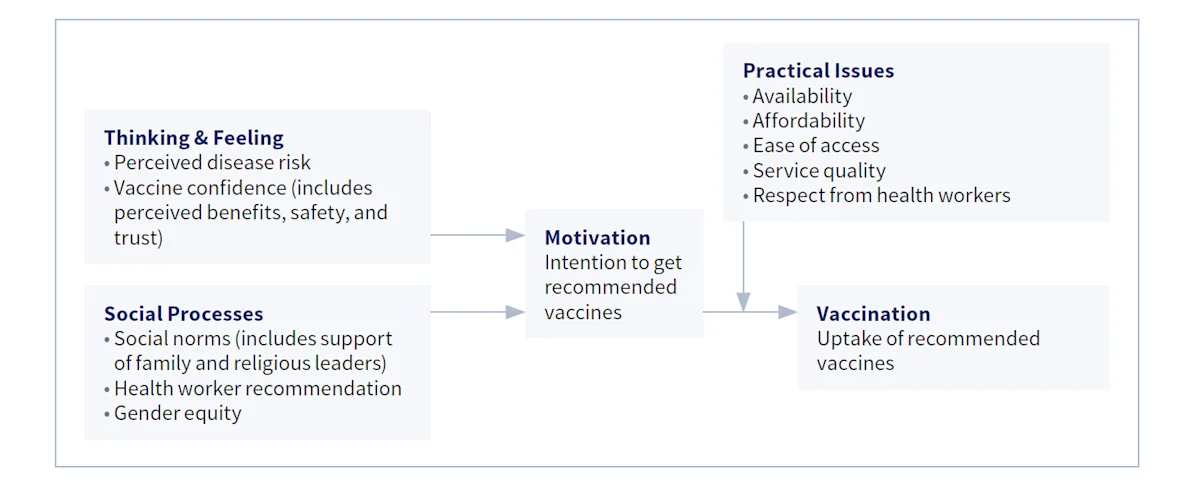
The World Health Organization’s framework for behavioral and social drivers for vaccination.
Image courtesy of the World Health Organization, originally published in “Understanding the behavioural and social drivers of vaccine update WHO position paper – May 2022.” Weekly Epidemiological Record. 2022;97(20):209-224. This image has been modified by Clinician’s Brief; original image remains the property of the copyright holder.
Dr. Pritchard: One of the major factors influencing vaccination motivation is social processes, including prevailing social norms. An example of this is when I was a resident in North Carolina in the 2010s; back then, there was a prevailing belief that we didn’t see lepto in North Carolina, but that was because we weren’t really testing for it. Many dogs that got sick in North Carolina were being treated with either doxycycline or amoxicillin/clavulanic acid, they were sent home, and they got better, but when a documented lepto outbreak occurred along the coast, the clinics there took a great approach and saw a real opportunity: they shared on social media that they were seeing lepto cases and encouraged clients to bring their dogs in for vaccination. Clients responded well, vaccination rates increased, and routine lepto vaccination suddenly became the norm in the area. That was a really successful example of how those clinics helped get both pets and their people protected. This is an example of protection motivation theory, which is when people are more likely to take action when they perceive a real risk for disease and understand the benefit of preventing it. So when we hear clients say, “I don’t think my dog is at risk for leptospirosis,” or “I don’t think my dog is at risk for Lyme,” they simply don’t understand the risks. When we think about what drives their motivation and intent to vaccinate, those perceptions are the first things we need to address; we need to help them understand that these diseases really are risks for their pets. Those thoughts and feelings are exactly where we can play an active role in the examination room. We can answer their questions, talk through their concerns, and help strengthen their motivation by clearly sharing our recommendations. Veterinarians are highly trusted healthcare professionals, and simply hearing why you recommend this vaccine for their pet can make a big difference.
Dr. Pattee: That helps frame how motivation is driven by perceived risk and benefit, and of course, we don’t always know where each client is starting from. How do you approach those initial conversations in practice and start moving clients toward vaccination?
Dr. Pritchard: When you’re having this conversation with a client, motivational interviewing as a technique is not necessarily designed to change their opinion completely in the moment. You’re trying to get them closer to vaccination. That means resisting the “righting reflex,” understanding their motivations, and asking questions. It’s about being empathetic, listening, and better understanding what’s driving their decisions. You want to find shared truths, like the fact that you both want their pet to be healthy, and you want to explain that you both understand that it’s important for their dog to go to the dog park, for example, and spend time outside for their well-being and mental health. You’re listening to understand, not just to argue or look for an opening, and it’s important to recognize that, if someone says no at first to all vaccines, you’re probably not going to get a yes to everything on day one. Part of the process is empowering clients and letting them know you trust them to make informed decisions for their pets while supporting them through the decision-making process and working through those choices together. For example: “I understand how important it is to you that Jake goes to the dog park and spends time outside hunting in Wisconsin. We see a lot of dogs with lepto that aren’t vaccinated, and many end up needing referral for treatment, which can be very expensive, anywhere from $8,000 to $25,000. I know we both want to protect Jake so he can live a long life and keep doing the things he loves.”
Dr. Moore: It’s important to ask questions to really understand their concerns and encourage them to share what’s driving their hesitation. You can reflect that back with something like, “I hear what you’re saying.” At the same time, it can be helpful to gently provide factual information they may not have, especially since we are the ones seeing first-hand the impact of disease in clinics. For some clients, that can still feel impersonal. Adding a personal perspective can help, too; for example, share that you would never let your own dog go without this protection and that your own pets are vaccinated. We as veterinary professionals assess risk differently because of what we know and what we see, and sometimes that personal note of protection can mean a lot to people.
We as veterinary professionals assess risk differently because of what we know and what we see, and sometimes that personal note of protection can mean a lot to people.—Dr. Moore
Dr. Lappin: Clients often assume a disease isn’t present simply because they don’t hear about it very often. Leptospirosis is a great example, especially in places like Colorado. It’s cold in the winter and dry in the summer, so people often forget that we still have irrigated areas like golf courses and other watered spaces, and that ties into another important point: wildlife. One of my favorite pictures you could show in the clinic shows a possum, a rat, and a raccoon, with the message, “Have you seen one of these? If so, ask us about lepto.” Visuals like that can be really helpful in the waiting room, remind clients of the likely sources of infection, and reinforce that these risks are present in their everyday environments. Another question I like to ask people is if they are living within 100 miles of an international airport. If the answer is yes, you should be doing influenza vaccination. We didn’t know there was going to be an outbreak in Chicago. We didn’t know there was going to be one in Atlanta or Los Angeles. Another outbreak could happen tomorrow. I think personal stories are good and help build a connection with our clients and result in more compliance with our recommendations.
Dr. Pattee: Another common reason for vaccine hesitancy is concern about adverse events. How do you approach conversations about adverse events with clients?
Dr. Moore: Adverse events are an important topic, because that’s often what clients are most focused on. In many cases, they may already be carrying concerns or misinformation from childhood vaccines over to pet vaccines. We don’t always know exactly what their specific fears are, just that they’re worried about something going wrong. It’s also important to work closely with your suppliers and manufacturers to ensure vaccine quality. Large studies involving millions of dogs have shown just how low the risk really is: <1%, and when reactions do occur, they’re most often mild sensitivity reactions that can be managed and don’t lead to long-term consequences.11 That said, even as we try to clarify this, it’s worth remembering human nature. Did you ever bring home a report card as a child and your parents were only focused on the one B instead of all the other grades, which were As? People naturally fixate on the negative, and once they hear it, it’s not easily forgotten, so I’m careful not to spend too much time emphasizing adverse events, because that negative information tends to stick. Instead, we can acknowledge their concerns, reassure them that we’re using safe vaccines, and emphasize that the risk is extremely low. These vaccines are very safe.
Dr. Lappin: Sarcomas in particular are a vaccine-related event that many pet owners are familiar with, and because they’re so devastating and difficult to treat, they tend to stick with us. But sometimes I think we forget about how low the actual incidence rate for vaccine-induced sarcomas is. That being said, I’ve lost a personal cat to sarcoma, and it was devastating, but the incidence rate is actually 1 in 16,000 now,5 whereas the number of animals that die of panleukopenia or rabies or something else because we didn’t vaccinate can be much higher. Now we see rates below 1% when it comes to acute adverse events, which is so low that it shouldn’t be the reason we don’t vaccinate. Incidence rates of actual diseases are higher than serious vaccine side effects, but it’s easy for clients—and even for us—to focus on the negative. When we read research looking at side effects, it’s so easy to get wrapped up in the side effects themselves and not take a step back and realize how infrequently these events occur.
Incidence rates of actual diseases are higher than serious vaccine side effects, but it’s easy for clients—and even for us—to focus on the negative.—Dr. Lappin
Dr. Pattee: Can you speak to adjuvanted versus nonadjuvanted vaccines and how they differ, both in terms of efficacy and adverse events?
Dr. Moore: In terms of efficacy, the first thing we look at is how well the animal mounts an immune response from a given vaccine. Sometimes, whether on the human side or on the veterinary side, the best choice is an adjuvanted vaccine to make sure there is a strong and appropriate immune response. What we sometimes forget is that, as we’ve attempted to refine vaccines by using less of the pathogen, we have removed identifiers that allow the immune system to recognize the bad guy. When that happens, the immune response, including its strength, duration, and memory, can be reduced, so adjuvants can be helpful, even though they have been, I think unfairly, incriminated as the culprit for sarcomas at times. They still play an important role in vaccines. As newer technologies emerge, we continue to evaluate how protective those options are, but we are not necessarily seeing any increase in adverse events because of the use of adjuvants specifically.
Dr. Lappin: I think many of us have changed how we think about this since the early 1990s. There used to be a sense that injection site sarcomas followed a linear relationship, meaning that more inflammation meant more tumor formation. This may be true in nude mouse models, but it’s not necessarily true in cats. Injection site sarcomas have been associated with a variety of injection types, so it seems to be that any inflammation in the wrong cat, meaning one with a genetic predisposition, can trigger these events. When I have these conversations with our students at Colorado State University, I talk about giving the most effective vaccines that have a blend with a good safety record from the immunity standpoint. All licensed vaccines have already met USDA standards for safety and efficacy, and then we look to the published literature. Our goal is always the same: balancing the best protection with the lowest risk. That’s also why we follow the longest currently accepted vaccination intervals. Problems tend to arise with excessive vaccination, like multiple kitten boosters followed by annual revaccination. We’ve been advising against that for >25 years, so if you vaccinate appropriately, side effect rates are actually quite low, regardless of vaccine type.
Dr. Pattee: What are some tangible, practical strategies veterinarians can use to improve communication with clients when addressing vaccine hesitancy?
Dr. Pritchard: One thing that’s really resonated with me is presumptive versus participatory messaging. Presumptive messaging sounds like, “Hi, Addie is due for these vaccines today. Here are the sheets that have all the information about them. What questions do you have?” That’s different from participatory messaging, which would be, “Here are the vaccines we could give her today. Which are you interested in?” There have been numerous studies in human medicine—not in veterinary medicine yet—that show that you get much higher compliance with presumptive messaging as compared with participatory messaging. As veterinarians, we are trusted, and that’s why clients come to us, because they want guidance on how to provide the best care possible for their pets, and we can feel confident in saying, “These are the vaccines your pet needs, based on my assessment of the risks in our area.” Framing it as, “Here’s what we’ll do today” is a very small shift that doesn’t require new infrastructure, additional costs, or major changes in workflow; it’s simply a different way of communicating.
Dr. Moore: And you can build on that by explaining, “Because we are actively seeing cases of canine parvovirus and distemper in our area, we want to make sure we’re keeping your pet protected through vaccination.” That way your clients understand that your recommendations are grounded in real experience and local risk. It reinforces that you’re doing what’s best for their pet and not simply asking for their opinion on which vaccines they want but guiding them toward the care their pet truly needs.
Dr. Lappin: Having conversations about vaccine hesitancy really starts with listening. Understanding why clients are concerned gives us as scientists and clinicians the opportunity to share accurate information to help them make their decisions, even if that means delayed acceptance. It’s about understanding what’s driving their fear, and although not everyone automatically trusts scientific literature, many people do. Clients may not be familiar with AAHA, WSAVA, and others, but explaining to them that your recommendations came from supported, official, scientist-formed guidelines can make a difference. I’ve had clients assume we recommend vaccines for financial reasons, and I make a point to explain that these recommendations are based on global guidelines and collective scientific expertise. It’s not just my opinion; it’s the consensus of veterinary experts around the world on the best medicine for pets.
PM-US-25-2489