Canine & Feline Urinary Tract Disease: Practical Guidance for General Practice

Sponsored by an educational grant from Hill’s Pet Nutrition
Intended for veterinary professionals
PARTICIPANTSa
Joseph Bisignano, DVM, DACVIM, Pacific Coast Veterinary Specialists, Calabasas, California
Eva Furrow, VMD, PhD, DACVIM, DACVNU (Nephrology/Urology), University of Minnesota
Leslie Hancock, DVM,b Hill’s Pet Nutrition
Jody Lulich, DVM, PhD, DACVIM, University of Minnesota
MODERATOR
Beth Molleson, DVM
Urinary tract disease spans a spectrum—from self-limiting bouts of idiopathic cystitis to life-threatening urethral obstruction and recurrent urolithiasis—and the approach to diagnosis and management can vary greatly. In this roundtable discussion, clinicians from academic, specialty, and industry settings came together to share perspectives and discuss the evidence behind some of the most common and most debated decisions in navigating urinary disease, with a particular focus on the role of therapeutic nutrition.
KEY TAKEAWAYS
Bacterial cystitis in cats is rare, and empiric prescribing of antibiotics for FLUTD without culture and susceptibility testing is rarely indicated, is generally ineffective, and can delay making the correct diagnosis.
FIC is a waxing and waning disease that typically self-resolves, with evidence-supported management centering around diet, MEMO, and pain control.
Because FIC is a diagnosis of exclusion, clear communication with owners regarding the diagnostic process, the likelihood of spontaneous resolution, and the rationale for treatment choices is essential to building trust and improving long-term compliance.
Although most struvite stones in cats can be dissolved with therapeutic diet alone, struvite stones are still one of the top stone types submitted to the Minnesota Urolith Center.
The free Minnesota Urolith Center app includes a signalment-based calculator that predicts stone composition by analyzing patient breed, age, sex, and geographic location, helping practitioners make more informed decisions about whether to pursue medical dissolution or surgical intervention.
Therapeutic nutrition is an effective, practical, powerful, and noninvasive tool that can simultaneously address multiple aspects of feline urinary disease, from reducing RSS and urine concentration to supporting stress management through targeted nutrients, making it a valuable cornerstone of management.
Dr. Molleson: How do you approach a cat presented with lower urinary tract signs? What do the data tell us about the prevalence of feline idiopathic cystitis (FIC), uroliths, and UTIs? How does that shape your initial index of suspicion?
Dr. Lulich: First, I make sure the clinical signs we are seeing are truly associated with the lower urinary tract and that we’re not dealing with a GI problem. Then I try to categorize the patient into 1 of 4 categories: dysuric without obstruction, dysuric with obstruction, having inappropriate urination without dysuria, or having urinary incontinence. The first 2 are the most common, and the others are less common. For patients without obstruction, idiopathic cystitis is at the top of the differential list, and infection and neoplasia are lower on the list. When they’re obstructed, plugs and stones are at the top of the list. If they have not been treated by a veterinarian before, strictures and spasms are less likely. For cats that don’t have dysuria but are urinating outside the litter box, I think about behavioral things, but I remind myself that a behavioral problem could have been initiated by a medical problem. When it comes to urinary incontinence, it’s generally an anatomic or neurologic problem. How I approach those situations often depends on the age of the cat and whether the cat has any history of trauma.
Dr. Bisignano: I agree. By the time patients usually make it to me, they are typically a repeat offender and have been showing clinical signs for a while. By the time they’re referred, we’re already pretty convinced that the lower urinary tract is the problem. For the cats that are presented with just signs of straining or frequenting the litter box and the owner is not too sure if they’re trying to urinate or defecate, the general practitioner has usually done a good job of ruling out things like constipation or arthritis. When it comes to making a differential diagnosis list, FIC is usually at the top. With that said, though, infection and stones should be ruled out. Usually, depending on the case and how long the clinical signs have been going on for, I’m looking to see if the cat has had a urine culture done and if they’ve had imaging performed recently. Those are the diagnostics I run first if they haven’t been done already, simply because those tests can clearly show what to remove from the differential list, and then we at least know what it’s not and can move on from there.
When it comes to making a differential diagnosis list, FIC is usually at the top.
—Dr. Bisignano
Dr. Furrow: It’s all about making sure we have the signs appropriately characterized and have correctly localized the issue. Signalment and comorbidities can weigh into our approach quite a bit. We often think of FIC as being the most common cause of feline lower urinary tract disease (FLUTD) in the average adult cat, but this changes with other patient populations. For example, in a geriatric female cat or a cat with kidney disease, UTI may be higher up on the list. We have a general ranking, but there are aspects of the individual case that might make us change where we rank things or how we approach the diagnostic investigation. With the different categories Dr. Lulich mentioned, I would add one more: hematuria. Sometimes we get cats with hematuria that don’t necessarily have dysuria or other signs. I consider those their own category because it makes me question whether it is really the lower urinary tract or if it could be coming from the upper urinary tract or a genital source.
Dr. Molleson: How does the prevalence of UTIs in cats compare with dogs? How does that compare with the prevalence of sterile FIC in cats with urinary signs?
Dr. Lulich: In the United States, UTI prevalence in cats is probably around 1% to 2%, maybe up to 4%, depending on the study.1,2 There are reports from other parts of the world that are considerably higher, with a paper out of Germany reporting 18%3 and Norway reporting somewhere between 12% and 14%,4 but with those numbers, it’s possible that different diagnostic criteria were used. To confidently diagnose a UTI, I look for high colony counts, the usual bacterial suspects, and a single bacterium rather than multiple. Although the standard threshold for making a diagnosis of UTI via cystocentesis is 103 colony-forming units (CFUs),2 I’d caution against applying that number across the board in cats. In my experience, almost all cats with a true, clinical UTI have 104 to 105 CFUs on quantitative culture. Cats are a species that rarely get urinary infections, so I think we need to reassess the diagnostic threshold.
Dr. Furrow: Infection is so uncommon in young adult cats that don’t have comorbidities or a reason to be at higher risk for infection, so I often don’t run a urine culture unless the owner is on board to do everything and be really comprehensive. Because the probability of infection being the cause is so low in these patients, I’d rather the owner spend their money on something that’s more likely to be valuable in that situation, like radiography. Of course, urine sediment findings will influence that decision as well, but cats really don’t get bacterial cystitis nearly as much as dogs do, unless they’re geriatric or have chronic kidney disease or some other underlying condition.
Dr. Molleson: What are the key risk factors for FIC? What does the evidence tell us about the roles of stress and obesity?
Dr. Bisignano: Being indoor only is one of the largest risk factors, and that varies geographically. For example, here in Los Angeles, cats don’t typically leave the home, so being indoor only becomes a more common risk factor. Stress and obesity are large risk factors as well, and those things are often interrelated; indoor cats tend to have decreased activity and reduced stimulation, which drives obesity and can be a source of chronic stress.
Dr. Lulich: Idiopathic cystitis is a multifactorial, stress-sensitive disorder involving interactions with the bladder, brain, adrenals, environment, and caregiver. Although we have markers of stress, they’re hard to quantify and difficult to associate with a particular event. We need more research in that area. That said, stress is generally at the top of the list when we think about contributing factors. Obesity may be a significant factor as well, though the mechanisms of obesity are underexplored. I think understanding that mechanism matters, because obesity is a factor we can actually change.
Dr. Furrow: I think there’s a tendency to talk about FIC as if it’s all one thing and as if every cat has the same underlying factors. The reality is we are grouping these cats based on clinical signs. There are likely subsets of cats in which stress may be the main driver and others in which stress may not have anything to do with it, where there are different underlying triggers or diseases we don’t understand yet. The data that exist are all associations, and real proof or evidence is hard to get. There are also contributing factors beyond stress and the indoor environment, like litter box management and the potential increased susceptibility of certain breeds. Even the indoor/outdoor distinction isn’t straightforward; is that association due to the stress of being indoors, or is it due to the fact that outdoor cats have different food sources, higher moisture intake from prey, or different urination habits? There’s a lot we don’t understand about where the problem is originating and what’s contributing to it. That being said, one of the reasons I bring up stress with owners, even knowing it’s based on association, is because reducing a cat’s stress and enriching their life is beneficial, regardless. If it turns out stress wasn’t really a factor for that cat, then no harm done. At the same time, maybe we need to ask owners whether stress is a plausible factor for their cat, because sometimes cats seem genuinely unstressed at home and still develop FIC. It’s complicated, and ultimately, we need more research.
There are likely subsets of cats in which stress may be the main driver and others in which stress may not have anything to do with it, where there are different underlying triggers or diseases we don’t understand yet.
—Dr. Furrow
Dr. Molleson: When a cat is presented in an acute FIC episode, what should immediate management look like in general practice? What interventions have the strongest evidence for resolving the episode and getting these patients comfortable? Are there any commonly used therapies evidence does not support?
Dr. Furrow: There are a number of therapies out there that have been tried in the past that we know are not effective, like pentosan polysulfate sodium, glycosaminoglycans, and steroids; those are all things that have not been shown to make a difference when compared with placebo. Understanding what does make a difference is more challenging, because we don’t have perfect evidence and you will get different answers from different experts. When I look at the data, the studies I value most are the ones that had a placebo or control group, and that is because this is a waxing and waning disease and animals come in when they’re at their worst, so the probability is that they are going to get better. If you don’t have a comparison group, it makes it difficult to tell if your therapy actually did anything or if that was the natural course of the disease. Sometimes, we as veterinarians can convince ourselves that a therapy did something if we don’t have a comparison group. For FIC, the studies that fall into that category of having a control group include a couple of diet studies—they were small and only one was randomized, but both had a control group. Both looked at nonobstructive FIC and found that the frequency of signs decreased in the therapeutic diet group.5,6 The question of what part of the therapeutic diet was responsible is harder to answer. These diets were low in sodium, and there are other nutritional aspects that could have played a role. These diets seem to help cats with FIC, though, so I often talk to owners about diet. For a first visit with nonobstructive FIC, we discuss the fact that it’s likely going to resolve on its own, but we also talk about diet and multimodal environmental modification (MEMO). The big study that looked at the impacts of MEMO was not controlled,7 which makes it a little more challenging to interpret, but if there’s an opportunity to improve something in the cat’s environment, like getting a cat tree, enrichment activities, changing litter box setup, et cetera, then I would consider making those changes. I like to talk about all of those options with the owner and give them the opportunity to pick what resonates most and what they can realistically achieve. We add pain meds, too, usually buprenorphine. Sometimes we add in gabapentin if there’s an anxiety element, whether it was driving the FIC or the FIC caused the anxiety. So, ultimately, I talk about diet, MEMO, and pain control until signs are gone. With obstructive FIC, I feel really strongly about diet, because we see a lot of plugs, 99% of which contain struvite.8 I know some people feel very strongly about doing MEMO first and feel diet is optional, but I would argue that the literature says diet is important.
Dr. Hancock: The FLUTD recurrence rate is fairly high (≈58% over a median 3-year follow-up period),9 which is why nutritional therapy makes sense out of the gate. From a formulation standpoint, Hill’s foods address urinary health through a 3-pillared approach. The first is crystal management, which includes limiting the precursors for struvite crystals, targeting a urine pH that inhibits stone formation, and diluting the urine. The second is inflammation, and Hill’s research has shown that the addition of fish oil—a source of long-chain omega-3 fatty acids (eicosapentaenoic acid and docosahexaenoic acid)—to a urinary food can reduce relative supersaturation (RSS) for struvite crystal formation, and data have shown that, in other physiologic conditions, these fatty acids are effective at mitigating some of those inflammatory cytokines.10 The third is stress. If stress is a component, we have some nutritional options that have been shown to reduce signs of stress. If we can address all 3 of those pillars in one diet that could help avoid recurrence, why wouldn’t we go that route?
Dr. Lulich: For the acute cat, I focus on 2 things. The first is addressing pain. The second is educating owners that the research says that cats with struvite crystals, especially male cats, can develop a life-threatening obstruction, even if they didn’t present with it initially. It’s the same thing Dr. Furrow said, just a slightly different approach. I’m managing their pain and minimizing a life-threatening obstruction.
Dr. Bisignano: I agree with Dr. Furrow, too. If we’re trying to prevent clinical signs from coming back, then I usually focus on diet. In acute cases, I prescribe buprenorphine. Out of everything, pain control is probably the most likely thing to have a positive impact for both the owner and their cat. I try to steer them away from the idea that an antibiotic needs to be prescribed every time they become symptomatic for the reasons we discussed. I’m always on the fence about gabapentin, especially when it comes to acute pain. By the time it is effective, has it done anything in those initial stages other than perhaps sedate them a little bit and make it appear as if they’re less clinical? I don’t know for sure, so I usually just reach for buprenorphine. Owners also typically feel good walking out with something. I can sometimes see the disappointment in their eyes when I do nothing but talk about changing their food long-term; it seems like they want to have something at home that they know they can use when the cat becomes sick again.
Dr. Molleson: What should long-term management of FIC look like? What do we know about the impacts of MEMO and FIC recurrence rates?
Dr. Lulich: When I look at long-term strategies, I focus on the 4 most common comorbidities, which are intercat aggression, obesity, concentrated urine, and struvite crystalluria.11-15 This gives me a framework for what I’m treating and gives me something to monitor over time. For intercat aggression, I think about MEMO and getting a behaviorist involved. For obesity, even without a really good explanation for why obesity has an impact on FIC, I tell owners that addressing it may not only help mitigate the risk for this disease but also the risk for other diseases as well, as long as the implementation of a weight loss plan doesn’t add more stress to their cat. Concentrated urine and struvite crystalluria have both been associated with FIC, so those are the things I look to manage as well, though in many studies, they appear more as adverse findings than confirmed causes. It’s important to know that management is a stepwise process, often requiring a combination of pharmacologic, nutritional, and environmental changes.
Dr. Hancock: When managing FIC, especially obstructive cases, which are truly life-threatening, the long-term goal is to dilute urine, lower urine RSS for struvite, and reduce inflammation. Although diluting urine and reducing crystal precursors are key, recommending “any wet food” over dry isn’t enough. Wet food inherently promotes water intake. With selective use of electrolytes, some tailored dry foods can also effectively dilute urine. Recent Hill’s research has demonstrated that increasing dietary potassium in dry diets effectively increases urine volume without relying on high sodium levels.16 In addition, by formulating diets to avoid overdelivering stone precursors, the goal is to have urine with fewer stone-forming particles available to form bonds or crystals. Although canned food in general may help dilute urine through moisture alone, it can still fall short on struvite RSS. Not all canned foods are created equal. For example, canned c/d Multicare has been shown to effectively reduce recurrence risk, whereas nonurinary canned foods may not.17 I’m not aware of any well-controlled studies that allow for the quantification of the impact of MEMO on long-term reduction of FLUTD signs; however, we can focus on strategies that support bladder health through medical and nutritional management, along with long-term environmental and stress management. These approaches can benefit overall welfare, and if they also positively influence the brain–urinary connection, that’s an added benefit. If combining therapeutic nutrition with MEMO offers the best long-term outcome, helps reduce the chance of recurrence, preserves the human–animal bond, and keeps cats in their homes, then it seems like a solid strategy to me.
Dr. Furrow: For struvite stones in cats, we have data on multiple therapeutic diets that have shown beautiful efficacy for dissolution. When you look at FIC, we’re working with a much smaller evidence base, just a couple of studies I referred to earlier.5,6 One of them was looking at Hill’s Prescription Diet c/d Urinary Stress, and the other was Hill’s Prescription Diet c/d Multicare, and both showed lower rates of recurrent episodes with the therapeutic diets. When we talk about nutrition in the FIC patient, an important question needs to be raised: when someone says, “Oh, we already tried a special diet,” does that mean the diet wasn’t an effective therapy for that cat, or do we just not understand exactly what’s needed on the nutrition side and diet could still be an effective intervention? We’ve learned that, in GI disease, diet effectiveness can vary from individual to individual; sometimes it’s about trying different diets for an individual animal. You can get efficacy with one diet even when another therapeutic diet intended for the same condition didn’t work. There’s a lot we don’t understand about nutrition, and when you look at therapeutic urinary diets, they may not all be equivalent—either overall or in how they perform within a subset of cats with FIC. Given all the things we don’t know, if a cat was on a therapeutic urinary diet and signs didn’t resolve, it may be worth trying a different one rather than concluding that diet isn’t the answer.
Dr. Molleson: What role do Hill’s Prescription Diet c/d and c/d Stress play in FIC patients? What are the key nutrients in those diets, and what is the rationale for including them?
Dr. Lulich: I go back to my 4 primary comorbidities. Nutritional strategies can play an important role in each of these categories. There was a report that came out of Europe evaluating Hill’s Prescription Diet c/d Stress, a food supplemented with L-tryptophan and the milk protein alpha-S1 casein with the goal of minimizing anxiety.18 That would be a great way for us to work on intercat aggression. Diet can be an important aid in these behavior cases, but it certainly is not going to address the root cause, so we need owners to help identify the cause for aggression. Strategic nutrition also helps with obesity, because, with the right formula, we don’t have to starve these cats to get them to lose weight, which would only add to their stress. If there’s a way for dry food to reduce urine specific gravity, that’s great, or we feed canned food, which has higher water content. The last thing we can address nutritionally is the minimization of struvite crystalluria. When we talk about cats with chronic disease or those having recurrent clinical signs, it’s important to remember that it is not always idiopathic cystitis. Sometimes it is associated with struvite stones, calcium oxalate stones, or urethral plugs, which can all be impacted by nutrition. For example, can we impact inflammation with nutrition? If we change the intestinal microbiome, will it also change the urinary microbiome? There are good reasons to consider nutritional strategies as long as that dietary transition is accepted by the cat. These strategies can be less invasive than pilling the cat with anxiety medications. Then, of course, there are ways to work on those major comorbidities using MEMO. Diet and MEMO have to work hand in hand. Diet offers an opportunity not only to help manage this disease but also to minimize stress and potentially prevent other lower urinary tract diseases that can occur.
Diet offers an opportunity not only to help manage this disease but also to minimize stress and potentially prevent other lower urinary tract diseases that can occur.
—Dr. Lulich
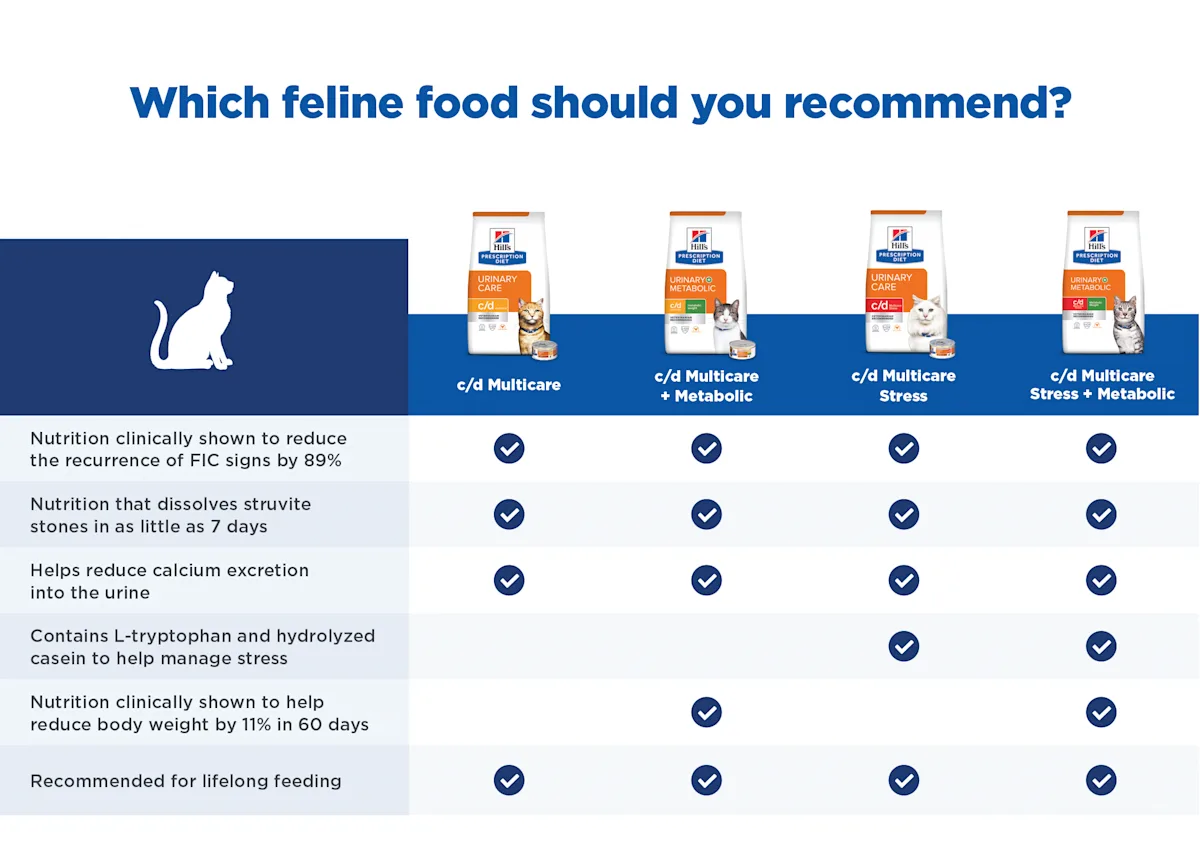
Dr. Hancock: Hill’s Prescription Diet c/d Multicare and c/d Multicare Stress target both the physical and neurologic triggers of FIC in a single, highly palatable format. Utilizing precise levels of eicosapentaenoic acid and docosahexaenoic acid can benefit feline urinary health, and ingredients such as alpha-casozepine (a bioactive milk protein fragment) and L-tryptophan may provide calming, antianxiety effects.10,19,20 Combining anti-inflammatory nutrients, urinary dissolution profiles, and ingredients aimed at stress management into a single complete food removes the need for extra handling, keeping the cat calm while managing the underlying disease.
Dr. Furrow: When I think about stress being a contributor to FIC, I think about the brain–urinary axis. There’s a lot of data for the gut–brain axis and gut–urinary axis, so it is logical to look at ways to modify the gut to promote brain and urinary tract health, because the urobiome and urinary metabolites are going to be affected by gut health and the microbiome, and a lot of FIC cats have a history of GI signs, too. With nutrition, we have the opportunity for a noninvasive therapy that could target several of these risk factors. However, when we make diet changes, we have to make sure we do the transition in a way that’s not stressful to the cat and that we take our time.
Dr. Bisignano: It’s also important to consider that the number of owners who are 100% compliant with diet recommendations is pretty low. A lot of times, what I hear from owners is, “Yes, I tried this diet, but he doesn’t really like it, so I put a topper on it.” The nutrient levels in these diets—and their effect on the urinary environment—are calibrated for cats eating the therapeutic diet as their sole food source. In practice, exclusive feeding may be closer to the exception rather than the rule. There’s almost always confounding variables involved, because clients are mixing things or adding things to the food that are changing its nutritional profile and perhaps even diluting the beneficial ingredients in them. Part of our job is to help owners understand that the benefit of some therapeutic diets comes precisely from what they leave out, and this varies depending on the condition being managed. The other point that comes to mind is the assessment of struvite crystalluria on urinalysis. Urinalyses are often sent to a reference laboratory rather than being spun and read within 15 to 20 minutes of collection. When I see a patient that has had 2, 3, or 4 urinalyses all performed at reference labs, all with urine specific gravity in the 1040s to 1050s and struvite crystals reported, I find myself questioning the significance of those crystals. Did they form after urine collection because the urine sat in a tube for 24 hours, was refrigerated, and had a lengthy transport to the lab? Can I use the resolution of crystalluria as a meaningful marker of improvement once the diet is changed? I find myself paying a lot more attention to urine specific gravity in scenarios like that as opposed to sediment for those reasons. It’s important to keep in mind that the data presented on the reduction of RSS or struvite crystalluria likely reflect urine being analyzed immediately or within a very short time period, which isn’t typically the scenario in clinical practice.
Dr. Hancock: No 2 urinary diets are the same under the hood, and I wonder if we need to approach owner education on FLUTD the same way we do renal disease, where we’re upfront that nutrition is critical and that transition to a new food is going to meet a high likelihood of resistance. Most cats are neophobic, and owners need to know that rejection of a new therapeutic diet is to be expected and not a reason to give up. We’ve done a lot of work on palatability and transition strategies, and cats can get over that hump, but in general practice, if nutrition doesn’t fit easily into an owner’s life, it’s going to be abandoned quickly. So we need to actively work to get over those hurdles.
Dr. Molleson: Shifting to urolithiasis, based on current data from the Minnesota Urolith Center, which stone types are most common in cats today? Are there breed- or species-specific risk factors to consider?
Dr. Furrow: When I looked at the 2025 report from the Minnesota Urolith Center (Figures 1 and 2), in cats, 45% of stones were struvite, 42% were calcium oxalate, and 7% were purine.8 For plugs in cats, 99% were struvite.8 In dogs, the data are similar. The biggest difference is that, in dogs, ≈5% to 10% of stones are cystine, which are particularly common in intact males, so we’re likely seeing the androgen-dependent form of cystinuria in those dogs. In terms of breed predilections, there certainly are some. Rather than practitioners trying to memorize all the different breed risk factors, they should check out the Minnesota Urolith Center app, because we have a signalment tool. It’ll take not only the patient breed but the age, sex, and geographic location and pull all the data for patients that match that information so you can see exactly what stones are common for that patient type. In domestic shorthair, longhair, and mediumhair cats, a lot of the data are going to look very similar in all those random-bred populations, but there are outliers like the Egyptian Mau in which urates are more common than in many other breeds. There are also some breeds in which the risk for calcium oxalate is higher than the risk for struvite. Again, sex and even age can play into the probability of different compositions. With the calculator, you can click and see example radiographs so you can consider whether the radiographic appearance fits. You can also see how comorbidities or patient-specific information affects probabilities. For example, are there urinalysis findings, like an elevated pH, that might influence your probabilities? It really is a wonderful tool for trying to quickly figure out what stone is most likely in a particular scenario without having to remember all the different breed predispositions. For dogs, there are certainly breed predispositions for different stone types, and with the calculator tool, there’s no need to memorize them.
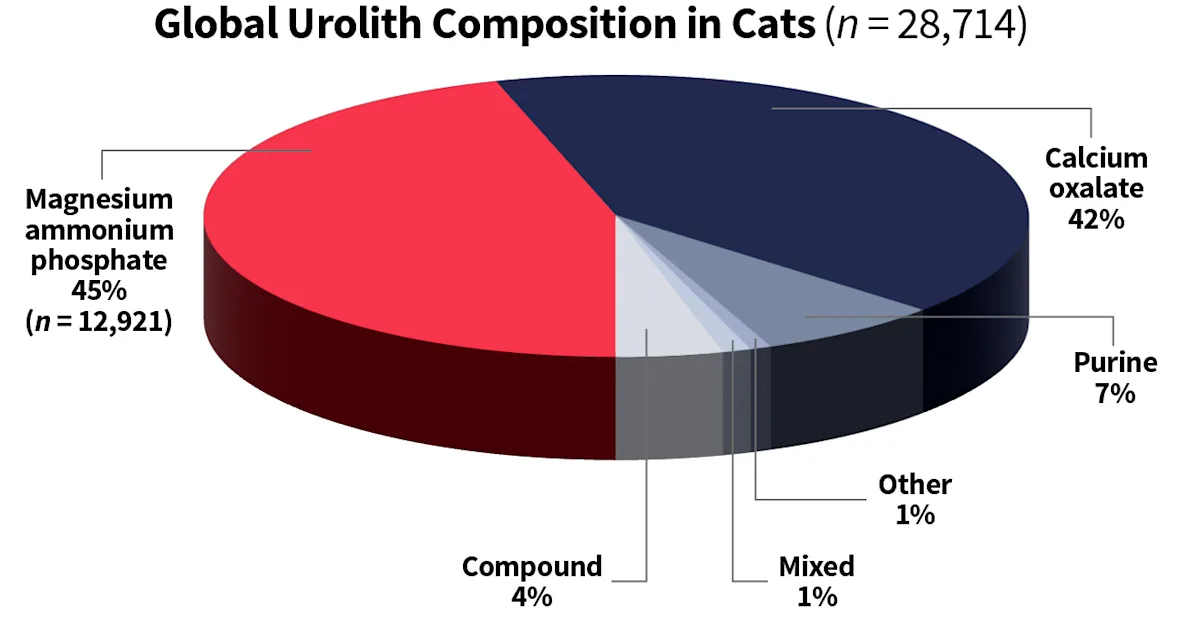
Global urolith composition in cats in 2025. Data obtained from Minnesota Urolith Center8
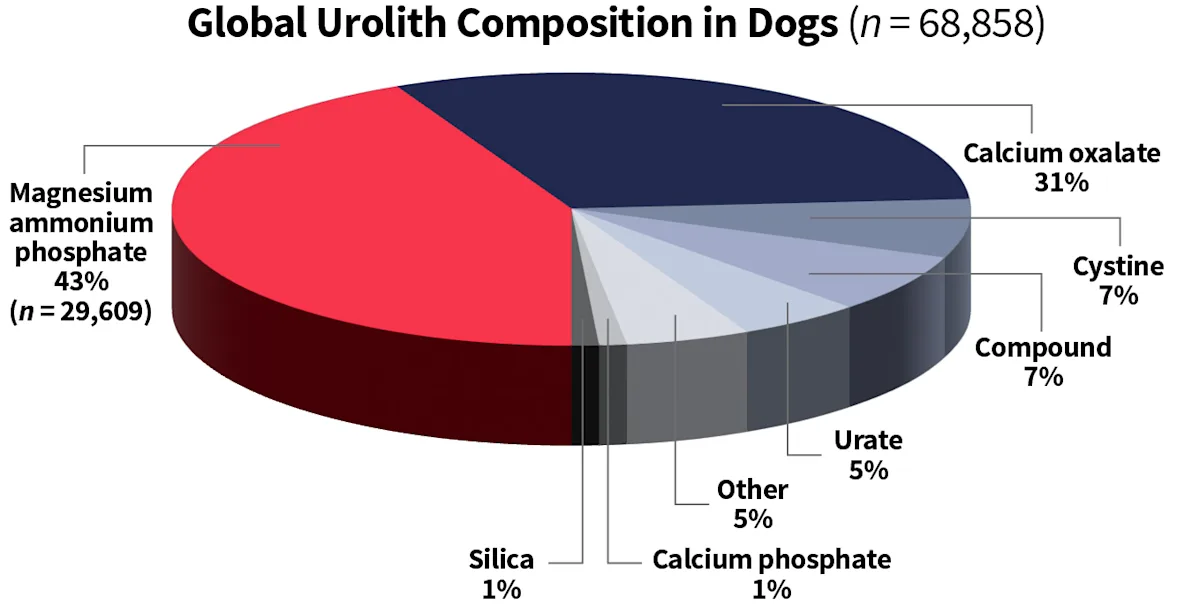
Global urolith composition in dogs in 2025. Data obtained from Minnesota Urolith Center8
Dr. Molleson: Which stone types can be medically dissolved with diet, and which require surgical or interventional management? How often do you think patients that could have been managed medically end up undergoing surgery?
Dr. Lulich: In cats, when we discuss medical dissolution, we’re really talking about struvite stones. Last year, we analyzed stones in 28,714 cats, and 45% were struvite (Figures 1 and 2). That meant 12,921 cats could have had their stones medically dissolved. Maybe that’s too strong a statement. If a cat came in obstructed, they’re probably not the best choice for medical dissolution because they usually reobstruct, but we certainly know that there are many cats that could have had their stones dissolved for a fraction of the cost, with a fraction of the adverse effects and really no additional discomfort. The Minnesota Urolith Center was established in 1981, and in our data, struvite has always been the most common stone submitted for cats, even though it was in the 1990s when we started showing how effective dissolution is for that stone type.
Dr. Furrow: For dogs, struvite being the most common stone submitted to the lab is disappointing. In dogs, struvite requires that extra step of treating the bacteria causing the struvite stone to form, meaning antibiotic therapy continues during dissolution. There are several studies on antibiotics and different diets that all show how well you can dissolve struvite stones.21,22 When you look at the stones we get at the lab, a small minority of them are massive solitary cystoliths or obstructions where dissolution wasn’t an option. Most of the time I’ll get a collection of struvite stones and they could have been gone within a month or a little longer. I think a lot of veterinarians feel for the patient and want a rapid solution; they want to get them scheduled for their cystotomy right away because they think it’s going to make their pet feel better faster. The reality is, if you start treating the infection, many of those dogs feel better within 24 hours, and then they not only feel better faster, but it takes away some of the other risks that happen with cystotomy. If you go straight to cystotomy and you haven’t treated the infection, the risk for the stones coming back is high; you’re cutting into an infected bladder, and they have to recover from surgery, so that pain related to surgery exists. Then we see a lot of suture-nidus stones, which can form really quickly. If you have supersaturated urine and you dangle a little suture in it, the crystals start attaching. We see a lot of stones submitted to the lab where you can either see the suture or a hollow center where the suture was. I would love it if we dissolved more struvite. We can do it.
Dr. Lulich: Some may not want to dissolve the stone due to the fear of urethral obstruction. There were 6 studies done in cats,23-28 and I don’t know how many of the cats were male, but at least one-third or more were male, and the number that obstructed during dissolution was zero.
Dr. Bisignano: As someone who performs a fair amount of minimally invasive stone removals, I often see a missed opportunity at the time of the stone diagnosis. Many clinicians go straight to removal without realizing how much signalment, urinalysis, imaging, urine culture, and radiographic density/size/shape of the stone can help predict stone composition. It is still very much the perspective of primary practitioners that one cannot predict stone composition until the stone is removed and analyzed. In my local CE lectures and in consultation with local general practice doctors, I spend a lot of time going over the different tools that can be used to differentiate cases in which attempting medical dissolution is appropriate from cases in which it isn’t. On the other hand, I also tend to see time wasted when a dissolution diet was attempted when there were highly predictive aspects that pointed to the stone not being struvite. This comes from a lack of understanding that the diagnostic investigation involved after identifying the presence of stones is very important. When a stone is identified, radiography is important in offering information on size, number, shape, density, and general anatomic location. In addition, urinalysis and culture results can help tremendously when determining if a stone is struvite and if dissolution is something that would have a high likelihood of success. Of course, submitting stones that have been removed is very important and should always be performed, but in advance of intervention, we have a lot of knowledge now that allows for clinicians to make an educated guess with high accuracy.
Dr. Furrow: That’s such a beautiful point about the need for information and tools to make that decision. Determining whether it’s right to go forward with cystotomy, removal, or dissolution is so dependent on our ability to predict stone composition. Dr. Lulich and I are talking from the perspective of someone who already has a reasonable ability to predict stone composition, but sometimes clinicians aren’t aware of how to make those predictions. That’s why we want to educate on how to use the Minnesota Urolith Center tools and the data out there that can help.
Dr. Molleson: When treating struvite stones in the setting of concurrent bacterial infection, what does your antimicrobial protocol look like? For how long should treatment continue, and should stone resolution be confirmed before discontinuing antibiotics?
Dr. Furrow: When you look at the published studies, generally, antimicrobials are continued for at least a month. In the prospective trials, they were continued until dissolution occurred.29,30 We’ve historically recommended continuing antimicrobial therapy until the stones are radiographically gone—or even a couple of weeks beyond that, because we know that stones can harbor viable bacteria and that can be a source of relapse and stone regrowth or dissolution failure. Retrospectively, we instead found that there are many cases in which antibiotics are stopped after a month and they still have high success rates.21,22 So, based on where we’ve seen success in the data, I would say antimicrobials should be given for 1 month or until radiographic dissolution. If you’re going to stop before radiographic dissolution, you have to know that relapse of infection could cause failure of dissolution, so rechecking and monitoring are important. What we don’t know is whether it’s okay to do even shorter courses. In the ISCAID consensus statement, there was a comment that maybe 7 days is sufficient, and unfortunately, that was based on a study in which they surgically removed struvite stones from dogs, then put them on antibiotics for 7 days and talked about the struvite crystalluria being gone at the end of only 7 days, so I don’t think we have any data that says that you get adequate success rates with such a short duration. I know from our referrals that we have lots of cases where they only had 3 to 7 days of antibiotics and the stones continued to grow. My clinical impression is that <7 days is too short. I don’t know if there’s some intermediate duration between 7 days and 4 weeks that would be okay. If you are going to try that, you really need to reculture and keep an eye on the urinalysis.
Dr. Bisignano: I typically keep the patient on antibiotics for the entire dissolution period and even go a couple of weeks beyond radiographic dissolution. I also recheck urinalysis and culture midway through, especially if there’s been no radiographic improvement or if dissolution seems a bit delayed, to make sure the urine is sterile and there hasn’t been a change in antimicrobial susceptibility or even just a different bacteria that wasn’t present the first time. I also use that as a bit of a gauge of compliance as well, because, if the diet or antibiotic is being given inconsistently, that can sometimes be caught with monitoring the urine pH.
Dr. Molleson: Mechanistically, how do these diets work to resolve uroliths? What options do we have for struvite dissolution specifically?
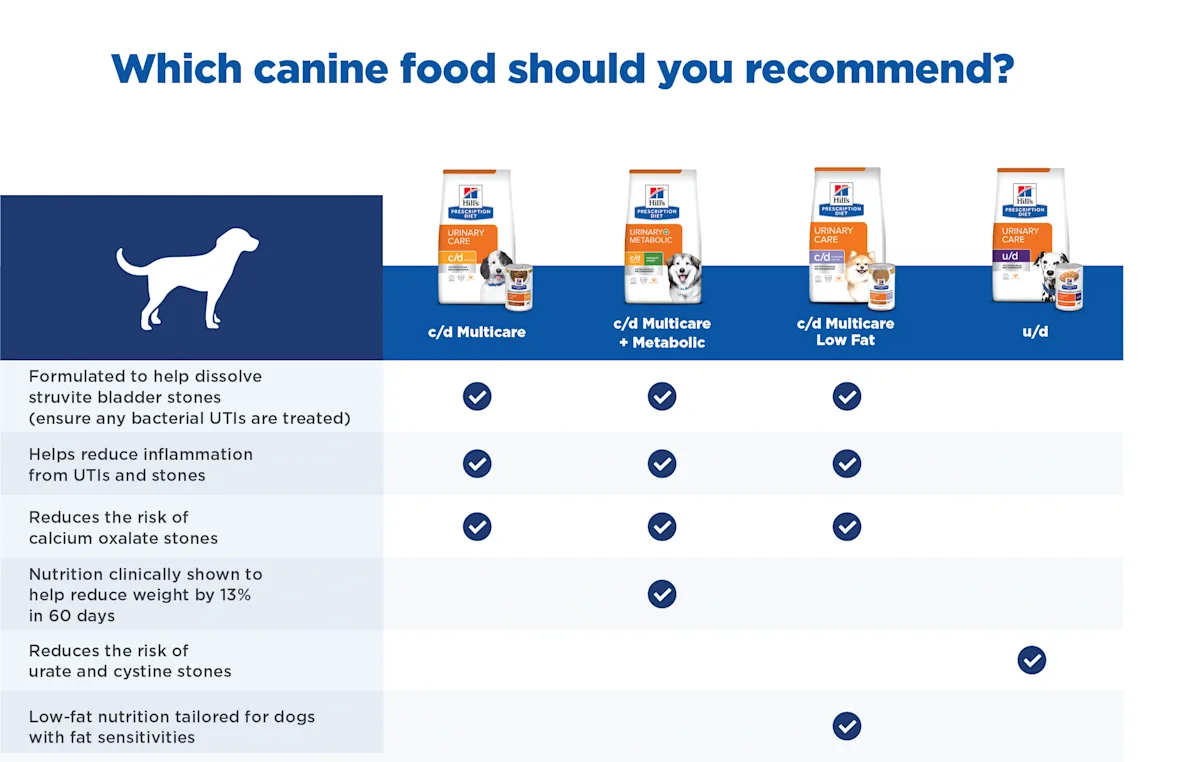
Dr. Hancock: Managing urinary disease has historically required different approaches for targeting struvite and calcium oxalate crystals. Rather than targeting one crystal type at a time, Hill’s c/d Multicare aims to dissolve struvite while inhibiting calcium oxalate crystal formation by simultaneously promoting the desired urine pH, precursor concentration, and urine volume within a single complete diet.26
Dr. Furrow: We pulled the data from the Veterinary Medical Center at Minnesota to see which cases underwent attempted struvite dissolution with c/d Multicare. It was a small retrospective study with only 13 dogs.21 Nine of them had stone dissolution with c/d. One was a dog with nephroliths. The other 8 were cystoliths. All 4 dogs that did not have dissolution had a bunch of calcium in the stones. When the stone was removed, there was a calcium phosphate or calcium oxalate layer, and it was not a small percentage of the stone; it was a large part of the shell or stone or both. So c/d definitely works for struvite dissolution in dogs and cats. In this study, with dogs, it was in combination with antimicrobial therapy. There’s another published study on a different multipurpose therapeutic diet, so similar concept to c/d, and it also showed that it was highly effective for struvite dissolution in dogs.29 Again, the failures were dogs that had calcium or some other mineral in their stone. So, therapeutic diets, in combination with antibiotics in dogs and alone in cats, work really well for struvite dissolution.
Dr. Molleson: What are your long-term nutritional recommendations for patients that have had uroliths managed with diet?
Dr. Bisignano: When it comes to struvite stones, for cats, I am leaving them on the diet long-term. For dogs, I’m shifting my focus toward early detection of UTIs and appropriate treatment of infection when applicable. It’s so nuanced. In dogs with calcium oxalate, it’s long-term dietary management, so it depends on the species and the stone that we were successful in treating.
Dr. Lulich: In cats, struvite stones are very nutrition-responsive, and we don’t have the trigger of underlying infections to contend with like we do in dogs. So, long-term, management with a therapeutic diet is quite manageable, at least until they develop a disease with conflicting nutritional requirements. I often wonder, though: because obstruction is a life-threatening condition, could we potentially be more proactive with nutrition to reduce the risk for urinary obstruction and other urinary tract diseases?
Dr. Furrow: That’s a great point. We have great data on how nutrition can reduce the risk for struvite stones in cats. Calcium oxalate stones are so much more complicated because it’s hard to identify in which patients there’s an opportunity to sufficiently reduce the risk with nutrition, but if we have a breed that’s very high risk, like schnauzers, which get so many calcium oxalate stones, should we consider talking to their owners about nutrition as a preventive therapy? From the research side, we’re trying to find some of these genetic risk factors to really identify those dogs that are at high risk, where there’s even more need to initiate preventive therapy. There’s a lot to be said for thinking about ways to prevent disease for a patient recognized as high risk.
Dr. Hancock: For patients with a history of urolithiasis managed through diet, my primary long-term recommendation is to transition them to a precisely formulated therapeutic food rather than returning to over-the-counter commercial foods. Many marketed foods are rather high in protein and ash. Popular trends push high- protein diets, and commercial options often achieve this, but with animal protein comes bone leading to high ash content, elevating dietary phosphorus, magnesium, and other mineral precursors that promote stone formation. Although these high-protein formulas may mimic an ancestral diet on paper, they often result in concentrated minerals in the urine.17 These foods are rarely made to deliver precision over time, which can be detrimental when you need to maintain a narrow preventive urine pH window. Therapeutic urinary diets work to control mineral precursors and reduce RSS. Because real-world urinary pH naturally fluctuates throughout the day, controlling dietary precursors of urinary crystals and stones (eg, magnesium, phosphorus, calcium oxalate) in the bowl is our most reliable defense. Beyond feline urinary care, we must apply this same preventive mindset to canine patients, particularly breeds that are predisposed to calcium oxalate uroliths. Rather than waiting for a first obstructive event, identifying high-risk genetic and breed factors should proactively prompt us to recommend diets formulated to manage RSS early.
KEY TAKEAWAYS
Bacterial cystitis in cats is rare, and empiric prescribing of antibiotics for FLUTD without culture and susceptibility testing is rarely indicated, is generally ineffective, and can delay making the correct diagnosis.
FIC is a waxing and waning disease that typically self-resolves, with evidence-supported management centering around diet, MEMO, and pain control.
Because FIC is a diagnosis of exclusion, clear communication with owners regarding the diagnostic process, the likelihood of spontaneous resolution, and the rationale for treatment choices is essential to building trust and improving long-term compliance.
Although most struvite stones in cats can be dissolved with therapeutic diet alone, struvite stones are still one of the top stone types submitted to the Minnesota Urolith Center.
The free Minnesota Urolith Center app includes a signalment-based calculator that predicts stone composition by analyzing patient breed, age, sex, and geographic location, helping practitioners make more informed decisions about whether to pursue medical dissolution or surgical intervention.
Therapeutic nutrition is an effective, practical, powerful, and noninvasive tool that can simultaneously address multiple aspects of feline urinary disease, from reducing RSS and urine concentration to supporting stress management through targeted nutrients, making it a valuable cornerstone of management.
For more information or additional resources on the information discussed in this roundtable, visit hillsvet.com/pet-nutrition/urinary
CFU = colony-forming unit; FIC = feline idiopathic cystitis; FLUTD = feline lower urinary tract disease; MEMO = multimodal environmental modification; RSS = relative supersaturation
a The views and opinions expressed in this transcript are solely those of the speakers and do not necessarily represent the views of Hill’s Pet Nutrition or Clinician’s Brief. They should not be taken as a substitute for veterinary advice or judgment.
b Dr. Hancock is a Hill's Pet Nutrition employee.