Clinical Brief | Bacterial Pyoderma Patient Pearls
Overview
Kimberly Coyner, DVM, DACVD, Dermatology Clinic for Animals, Tacoma and Olympia, Washington
Bacterial skin infections (bacterial pyoderma) in dogs are a very common clinical problem usually caused by Staphylococcus pseudintermedius. A gram-positive coccoid bacteria that is considered normal flora in dogs,1 S pseudintermedius can also be an opportunistic pathogen in dogs with underlying conditions that compromise the skin barrier or immune function including2:
Hypersensitivity dermatitis (atopy, food allergy, flea allergy)
Parasitic skin infestations (Demodex mites, scabies, fleas)
Endocrinopathies (hypothyroidism, Cushing’s disease)
Follicular dysplasia disorders
Keratinization disorders (sebaceous adenitis, zinc-responsive dermatosis)
An underlying cause was found in 28 of 30 dogs in a study of recurrent bacterial pyoderma.3
In otherwise healthy dogs, treatment of bacterial pyoderma will result in complete cure. Common causes of rapid recurrence (within 1–2 weeks) include inadequate duration of antibiotic therapy or bacterial resistance. In recurrent cases in which infections resolve and then recur within 2 to 3 months, it is important to identify and treat the underlying cause.3
Recurrent bacterial pyoderma occurs more commonly in atopic dogs due to increased adherence of staphylococcal bacteria to atopic canine skin cells,4 altered skin immune system function,5 and abnormalities of skin barrier function.6
The “outside in” theory of atopic dermatitis is that a genetic abnormality leads to barrier dysfunction and increased penetration of allergens.
ABNORMAL SKIN BARRIER
The epidermis acts as a functional and immunologic barrier to prevent desiccation and penetration of the skin by infectious organisms and allergens. The stratum corneum, the outermost layer of the epidermis, is composed of cornified keratinocytes (corneocytes) surrounded by complex lipid lamellae that are manufactured by keratinocytes deeper in the skin layers.7 The lipids consist of ceramides (fatty acids linked to a long-chain sphingosine base).
The “outside in” theory of atopic dermatitis is that a genetic abnormality of skin protein manufacture leads to barrier dysfunction and increased penetration of allergens.7 Ultrastructural evaluation of skin samples in dogs with atopic dermatitis showed wide spaces between corneocytes, intracorneocyte retention of lamellar bodies, and intercellular areas with lipid lamellae absence and disorganization.8 Allergenic challenge caused further disorganization of corneocytes and lipid lamellae arrangement, as well as widening of intracellular spaces.8
In atopic dogs there is also a quantitative reduction in ceramides, which increases transepidermal water loss (TEWL).9 While studies in atopic dogs are limited, application of topical products containing ceramides in atopic humans helps to reduce inflammation and TEWL.<sup10, 11sup>
KEY POINTS
Dogs with chronic or recurring bacterial pyoderma typically have an underlying condition that compromises the normal skin barrier or immune function.
New understanding of the role of epidermal barrier dysfunction as well as the emergence of multidrug-resistant, methicillin-resistant Staphylococcus pseudintermedius (MRSP) has led to increased emphasis on management of bacterial pyoderma with topical therapy, rather than systemic antibiotics.
Barriers to owner compliance with topical therapy can often be overcome with client education and tailoring the regimen to the owner’s ability to successfully apply treatments.
Recognition
Kimberly Coyner, DVM, DACVD, Dermatology Clinic for Animals, Tacoma and Olympia, Washington
CLINICAL APPEARANCE
The appearance of canine bacterial pyoderma can vary depending on infection location and length of surrounding hair. In a superficial bacterial folliculitis, initial primary lesions are papules and pustules (Figures 1 & 2), which can crust and then progress into expanding areas of alopecia and surrounding scaling (epidermal collarettes), hyperpigmentation, and lichenification (sometimes appears similar to Malassezia/yeast dermatitis) (Figures 3, 4, & 5). Papules can appear similar to hives in short-coated dogs (Figure 6), whereas long-coated dogs with superficial bacterial pyoderma may have just a dull coat with scaling +/- odor and easily epilated hair coat (Figure 7). Deep bacterial pyoderma may appear as areas of thick crusting, alopecia, inflamed bullae, and/or ulcerative draining skin lesions (Figure 8).
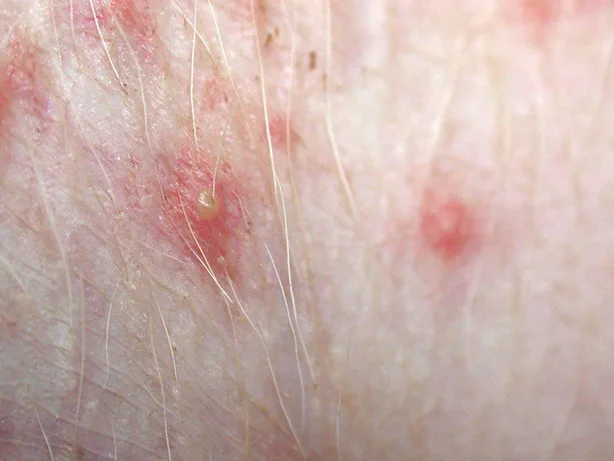
Figure 1. (A), Inguinal pustule (left) and papule (right);(B), neutrophils with intracellular cocci found on pustule.
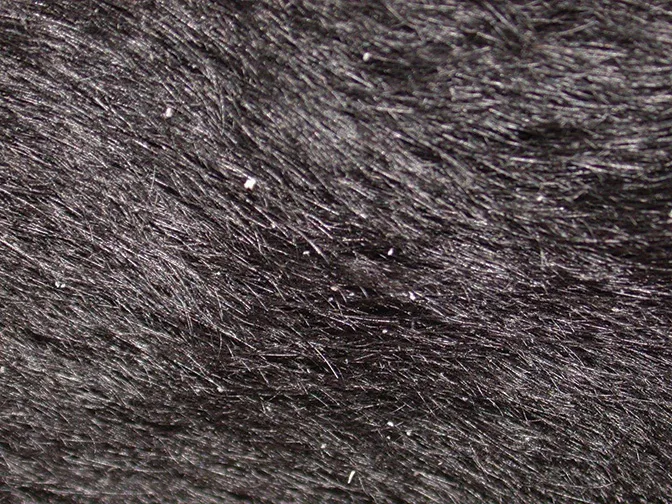
Figure 1. (A), Inguinal pustule (left) and papule (right);(B), neutrophils with intracellular cocci found on pustule.
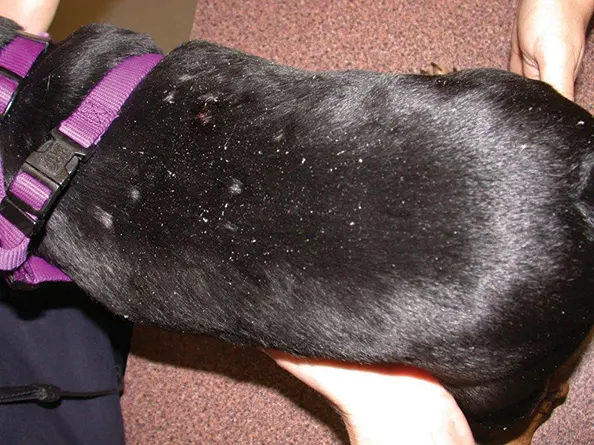
Figure 2. (A), This atopic cocker spaniel was very pruritic but only slight fine scaling was visible on external examination. (B), When the dog was shaved for intradermal allergy testing, numerous tiny bacterial papules were identified; papules, scaling, and pruritus quickly resolved with antibiotics and topical antimicrobial therapy.
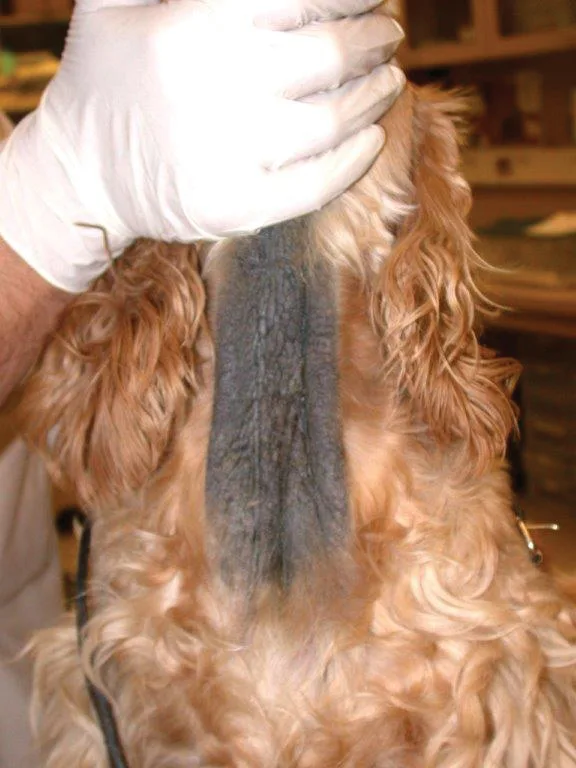
Figure 2. (A), This atopic cocker spaniel was very pruritic but only slight fine scaling was visible on external examination. (B), When the dog was shaved for intradermal allergy testing, numerous tiny bacterial papules were identified; papules, scaling, and pruritus quickly resolved with antibiotics and topical antimicrobial therapy.
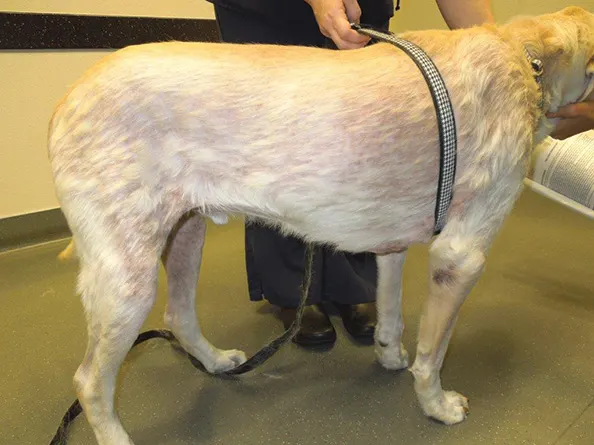
Figure 3. Patchy truncal hair loss and scaling due to bacterial folliculitis in an atopic miniature pinscher.
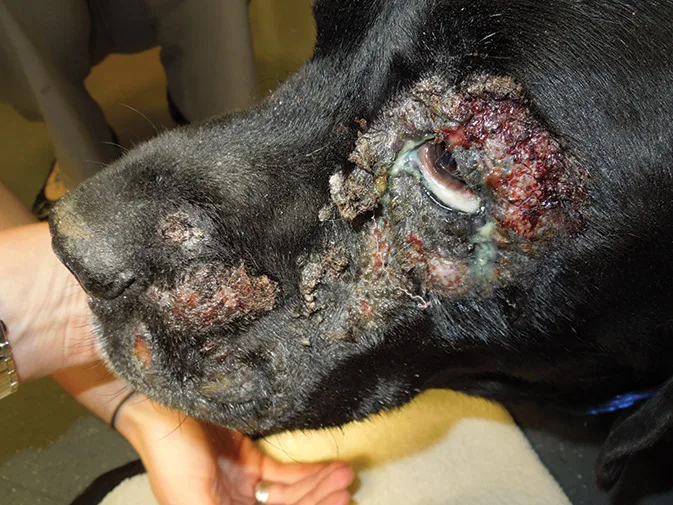
Figure 4. Epidermal collarettes.
Figure 5. After several weeks of ketoconazole for suspected Malassezia dermatitis of the neck (A) and axillae, impression cytology of the affected areas in this dog revealed only bacterial infection with no yeast (B).
Figure 5. After several weeks of ketoconazole for suspected Malassezia dermatitis of the neck (A) and axillae, impression cytology of the affected areas in this dog revealed only bacterial infection with no yeast (B).
Figure 6. Hypotrichosis, easily epilated fur, and raised tufts of fur are caused by a bacterial folliculitis in this atopic dog.
Figure 7. This long-coated dog with superficial bacterial pyoderma has a dull coat with greasy scaling; when the hair is parted, bacterial crusts are visible.
Figure 8. Deep bacterial pyoderma.
DIAGNOSTICS
Bacterial pyoderma is diagnosed by clinical appearance and cytology as well as by ruling out other infectious causes of folliculitis with deep skin scrapings for mites +/- dermatophyte culture. Samples can be collected using the following techniques:
If pustules are present, rupture with a needle and impress the contents onto a slide.
For moist, exudative, or lichenified lesions, press a slide directly onto affected areas to obtain impression cytology.
For dry scaly areas, collect skin debris with a dull, dry scalpel blade or spatula; smear onto the slide, and stain with Diff-Quik or a similar stain.
Press a piece of clear acetate tape onto the area of interest, then place the tape onto a slide over a drop of blue stain.
Slides are first scanned under 10× and then examined under 40× to 100×. Neutrophils with intracellular cocci +/- macrophages are found in superficial and deep bacterial pyoderma. In bacterial overgrowth syndrome, numerous extracellular bacteria are seen and may include cocci as well as rods +/- Malassezia.
Aerobic bacteria culture is indicated if bacteria persist on cytology despite empiric antibiotic therapy (especially in recurrent cases that have already been treated with multiple antibiotics), if primarily rod-shaped bacteria are found, and in cases of deep bacterial pyoderma.3 Culture can be performed by swabbing a freshly ruptured pustule, by rubbing the culturette swab under an intact crust or under the rim of an epidermal collarette, or by obtaining a 4- to 6-mm punch biopsy of a papule or pustule for tissue culture.
The Shift Toward Topical Therapy & Home Management
John Angus, DVM, DACVDAnimal Dermatology Clinic, Pasadena, California
Three major developments during the last decade have led to increased emphasis on home management with topical therapy in treatment of staphylococcal pyoderma:
Understanding of the role of epidermal barrier dysfunction in pathogenesis of atopic dermatitis
Understanding that bacterial overgrowth as a consequence of epidermal barrier dysfunction contributes to progression of clinical disease, pruritus, and dermatitis
The emergence of multidrug-resistant, methicillin-resistant Staphylococcus pseudintermedius (MRSP)
As a result, veterinarians are now more often asking owners to utilize shampoo and other topical therapeutic protocols for both short- and long-term management of common dermatologic diseases. Frequent bathing is a critical tool in managing atopic patients from an early age—not just when they are dirty, infected, itchy, seborrheic, or malodorous—but as a constant therapy to 1) remove irritants/debris, 2) remove allergens, 3) reduce bacteria/yeast, and 4) moisturize and repair the defective epidermal barrier. Atopic dermatitis is a chronic, progressive disease and these patients may always be prone to relapse or recurrence of bacterial and yeast overgrowth. Frequent bathing with products that are both restorative of epidermal function but also reduce recolonization by native bacteria and yeast is essential. Home care with veterinary-directed topical protocols can be viewed as both steroid- and antibiotic-sparing over the lifetime of the patient.
Management
John Angus, DVM, DACVD, Animal Dermatology Clinic, Pasadena, California
When managing a single episode of bacterial skin infection, veterinarians have one goal: successful resolution of the infection. When managing chronic or relapsing infection, however, there are two goals: 1) successful resolution of the current infection, and 2) diagnosis and management of the underlying cause. Failure in one or the other will ultimately result in disease progression and perception of treatment failure by owners.
SYSTEMIC TREATMENT
Rapid, complete resolution is often achieved by combining systemic and topical treatment. The major risk factor for acquiring MRSP, however, is being on antibiotics. Thus, clinicians must evaluate whether an antibiotic is needed. If so, the selection should be based on:
SafetyVeterinarians should be familiar with common side effects, adverse events, drug interactions, and other factors affecting safety of antibiotics they use. For example, aminoglycosides are rarely chosen to manage superficial bacterial pyoderma due to safety concerns.
Efficacy
Cephalosporins are the first choice for staphylococcal pyoderma (except for cases of MRSP; see box below). They are safe, effective, encounter low levels of resistance, and have easy-to-administer options by multiple routes.
Variable resistance is reported to clindamycin, lincomycin, erythromycin, doxycycline, potentiated sulfa, and chloramphenicol; reserve these for cases with specific culture and susceptibility profiles.
Poor choices include penicillin, ampicillin, amoxicillin, and tetracycline.
Fluoroquinolones should be reserved for gram-negative pathogens or rare cases where they exceed beta-lactams in efficacy.
TREATING PYODERMA IN PATIENTS THAT ALREADY HAVE MRSP
Protocol with Topical Therapy Alone
Deep soak, whirlpool, or pulsating hydrotherapy prior to medicated bath. Clip hair if necessary.
Benzoyl peroxide shampoo: Focus on problem area first, then the rest of the body. Deep massage for 5–10 minutes then rinse thoroughly, beginning with unaffected areas and then proceeding to those with lesions.
3–4% Chlorhexidine shampoo: Same process as benzoyl peroxide.
Accelerated hydrogen peroxide or Dakin’s solution rinse. Soak to skin. Do not rinse.
Repeat DAILY for 10–14 days then reassess. If resolved, then repeat two times per week for 4 weeks. If not resolved, continue DAILY therapy switching up topical products as needed.
TOPICAL TREATMENT
The benefits of topical therapy are summarized in the box below.
BENEFITS OF TOPICAL THERAPY
Physical removal of scale, crust, debris, irritants
Physical removal of allergens
Moisturize, restore, repair dysfunctional epidermal barrier
Reduce active infection
Reduce recolonization by pathogens
Provide temporary relief from pruritus
Decrease odor
Reduce reliance on systemic antibiotics as sole therapy
May reduce selection of resistant bacterial strains during antibiotic therapy
ShampoosCommon antiseptic ingredients in veterinary shampoos are listed in the box above. Regardless of product, the active ingredient must contact the target—that means frequent AND correct use by the owner. As an adjunct to systemic antibiotics or to prevent bacterial overgrowth syndrome and relapsing infection, “frequent” may mean one to two times per week. In active MRSP, “frequent” may mean daily or every other day. With a long, thick coat, a grooming length clip may be useful. If there is obstructive debris, dirt, crust, adherent scale, or seborrhea, try a prebath with an antiseborrheic shampoo followed by antiseptic shampoo. For deep bacterial pyoderma, prolonged hydrotherapy with pulsatile action, whirlpool, or simple warm water soak is highly beneficial.
Direct the owner to “treat the problem area first, then the rest of the body, rinse in reverse order” (unaffected areas first) so that the majority of time/product/ attention is spent treating the affected skin.
RinsesAfter shampooing, skin is clean, hydrated, free of debris, and the hair follicles are open: an ideal time to lock in hydration and apply a product with residual antimicrobial action. Multiple conditioners and lotions are available to provide moisturizing, antipruritic, or antiseptic action—including products effective against MRSP (see box below).
ACTIVE INGREDIENTS IN TOPICAL AGENTS
Shampoos
Most common antiseptic ingredients
Benzoyl peroxide
Chlorhexidine
Ethyl lactate
Acids: Acetic, boric, malic, glycolic
Imidazoles––for management of concurrent Malassezia dermatitis
Additional ingredients to enhance antimicrobial therapy
A carbohydrate, such as mannose, d-galactose, or l-rhamnose––to inhibit bacterial adherence to keratinocytes
Tris-EDTA: May have a synergistic antimicrobial action by damaging bacterial cell walls
Phytosphingosine: A pro-ceramide, to increase epidermal barrier function
Sulfur-salicylic acid: Enhances keratolysis and debris removal
Rinses Effective Against MRSP
Sodium hypochlorite (Dakin’s solution): Caution––May stain fabrics and light-colored hair
Accelerated hydrogen peroxide
Stabilized oxychlorine
MAINTENANCE THERAPY OF DOGS WITH HIGH PROBABILITY OF RELAPSE
3–4% chlorhexidine shampoo: Focus on past problem areas first, then the rest of the body. Rinse in reverse order—unaffected followed by lesional areas
Apply rinse of choice: Antiseptic, antipruritic, or intensive moisturizing
Repeat 1 to 2 times per week
If unable to bathe weekly, then bathe a minimum of every 2–3 weeks and use topical spray or mousse with chlorhexidine 2–3 days per week
Client Communication
Chantelle Tebaldi, BS, CVT, Animal Dermatology South, Port Richey, Florida
There are many things we can do as a team to help ensure our clients are ready, able, and willing to undertake the tasks we set before them. At every step, we can help set ourselves, our clients, and our patients up for success.
BEFORE THE APPOINTMENT
The initial phone conversation is an excellent place to start setting expectations for the visit as well as the approach the team will take.
Discuss the time clients should be prepared to spend during their visit.
Discuss preparing for the appointment including when to stop current topicals and fasting for possible procedures.
Discuss the flow of an appointment, basic diagnostics, and estimated costs.
Email a “welcome letter” to new clients with pertinent information. A template personalized to each client and patient makes this an efficient strategy.
DURING THE APPOINTMENT
In the exam room:
Get owners involved in the exam. Most owners will appreciate efforts to make them integral to their pet’s care. Teach what the lesions are and what their presence means.
Explain diagnostic results and show them pictures. It is not difficult in this age to take a photo of microscopic findings and show the owner what it means to have a skin infection. Often, this gives owners an appreciation for why it is important to return for progress exams and follow-up cytology.
Discuss oral medications in detail. Show them the pills and call them by name. Clients should have a clear understanding of what each medication is and what it is for.
Demonstrate proper techniques for bathing, ear cleaning, or ear medicating; then have the owner attempt it so you can troubleshoot.
Handouts and written instructions are useful to help ensure compliance. Keep them simple and short.
CLIENT HANDOUTS
Client handouts can reinforce information shared during the visit and improve compliance. In practices using electronic records, prewritten templates allow the technician to choose the relevant information for each case and insert it into the discharge instructions. Clients feel empowered when they have the knowledge and skills they need to help their pet and are less likely to discontinue treatment.
AFTER THE APPOINTMENT
Preventing compliance issues extends beyond the appointment. A follow-up call can often head off problems before they start or go too far.
Set follow-up call reminders starting 2 to 3 days after the initial visit and continuing at set intervals.
Ask owners how they feel the pet is doing. Clients with unreal expectations may feel their pet should be dramatically better by this point and could be getting frustrated.
Confirm dosing of oral medications and make sure there are no difficulties medicating the pet. Offer tips to ease administration and avoid missed doses.
After receiving a wealth of information clients need a chance to ask questions. Reiterate the hospital’s availability should they have any questions at home.
CLIENT TALKING POINTS
Differences Between Human Skin & Pet Skin
Clients should understand that their pet’s skin is different in structure and microbiome from their own and that products designed for our use are often not ideal for our pets.
Staphylococcus pseudintermedius is the most common cause of bacterial pyoderma in dogs, whereas S aureus infections are more common in human medicine.
Bacterial pyoderma is more common in pets, especially dogs, than in people.
Owner’s Ability to Administer Topical Therapy
Topical therapy, especially bathing, can be a daunting task. Asking owners what they can reasonably do will help the veterinary team better tailor an individualized treatment plan. An ideal topical therapy regimen should incorporate more than one product to increase the effectiveness of the treatment. If bathing frequency is an issue, sprays, wipes, and mousses can be used in conjunction with or in place of bathing.
Methicillin-Resistant & Multidrug-Resistant Staphylococcal Infections
As discussed earlier, topical antimicrobial therapy often is our best or only option after consideration of culture and sensitivity results in conjunction with the risk associated with certain systemic therapies.12 When MRSP is cultured, clients will often ask about risk to themselves or other pets. Colonization can occur in pets and people who are in contact with an infected pet with active lesions.12
Team Aspects
Chantelle Tebaldi, BS, CVT, Animal Dermatology South, Port Richey, Florida
Bacterial pyoderma cases can be time consuming and there are many factors the team must consider before, during, and after the appointment. Each member of the team needs to be on the same page when it comes to the recommendations of the practice, and good communication between team members, including the receptionist, the technician, and the doctor, is essential. Receptionists are often where good case management begins. They can set client expectations for the visit as well as ensure records from any referring veterinarian are received prior to the appointment. A well-trained technician can manage the flow of an appointment from beginning to end.
PYODERMA CASE MANAGEMENT
1. PRIOR TO APPOINTMENT
Review records, paying special attention to:
Dates of previous visits for similar issues: To help establish a pattern for chronicity
Cytology or culture and sensitivity results: A history of MRSP affects the choice of treatment
Previous antibiotic use and response will help establish whether a culture and sensitivity may be warranted at this visit
Response to therapy: Were previous treatments tolerated? Any drug reactions? Were previous medications effective?
2. DURING APPOINTMENT
HISTORY: Beyond the signalment of the pet:
Age at first occurrence of bacterial pyoderma and frequency of recurrence
Progression of clinical signs: Pruritus before lesions, lesions before pruritus, or lesions without pruritus
Medications and response, past and present
Ectoparasite control for pet and other pets in household
Diet and response, past and present (client adherence to diet exclusivity)
Concurrent clinical signs: Change in activity level, appetite, water consumption, or elimination habits
Change in environment
PHYSICAL EXAM
Lesion type and distribution
Discussion of findings with the owner during the process
DIAGNOSTICS
Cytology will help direct therapy
Culture and sensitivity if warranted
Blood tests for endocrine diseases, serum allergy testing, etc
Biopsy
Intradermal allergy testing
TREATMENT COURSE
Oral medications
Topical therapies
Combination of systemic and topical therapy
Ectoparasite program
CLIENT EDUCATION
Demonstrate proper techniques for topical application
Client handouts
3. AFTER APPOINTMENT
Proper disinfection of the exam room
Postappointment follow-up calls
Confirm medication and topical therapy compliance and adjust as necessary
Relay test results and their implications
Answer questions