Periods of Low & High Interstitial Glucose Concentration in Healthy Dogs
Thomas Schermerhorn, VMD, DACVIM (SAIM), Kansas State University
In the Literature
Brisman RF, Palma DA, Fox PR. Evaluation of low and high interstitial glucose concentrations in healthy, nondiabetic dogs using a flash glucose monitoring system. J Vet Intern Med. 2026;40(2):aalag032. doi:10.1093/jvimsj/aalag032
The Research …
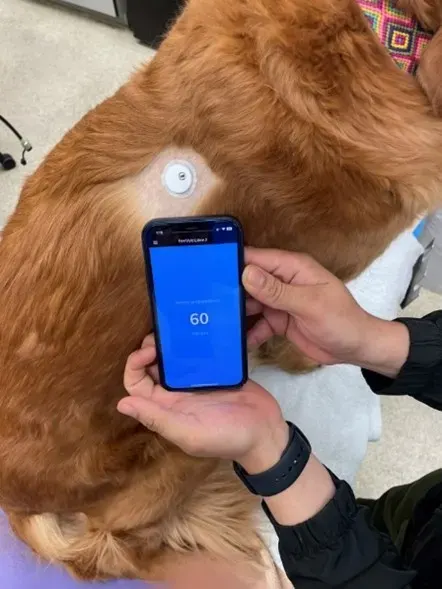
Continuous glucose monitors (CGMs) have revolutionized glucose monitoring for diabetic dogs and cats, with reports describing successful use in clinical patients.1,2 CGMs measure interstitial glucose, which is used as a surrogate for blood glucose; portable blood glucose monitors (eg, glucometers) and biochemical assays measure glucose in whole blood, plasma, and serum.
This study used a commercial flash glucose monitoring system to determine the frequency of fluctuation in interstitial glucose concentrations measured in healthy dogs (n = 23). Fluctuations >180 mg/dL or <70 mg/dL were recorded as high or low interstitial glucose concentrations, respectively; the cutoff points used were based on human reference intervals.
Interstitial glucose concentrations <70 mg/dL were recorded at least once in 73.7% of dogs; elevated interstitial glucose concentrations occurred less frequently, with values >180 mg/dL recorded in 26.3% of dogs. The frequency of low interstitial glucose was significantly greater in dogs weighing 5.5 to 45.2 lbs (2.5-20.5 kg) compared with dogs 45.4 to 91.3 lbs (20.6-41.4 kg), but age and reproductive status had no detectable influence (the study included intact and neutered males and spayed females). For individual dogs, overall mean percentages of low and high interstitial glucose concentrations were 2.8% and 0.8%, respectively, of the total readings obtained. Markedly low (<55 mg/dL) and markedly high (>250 mg/dL) interstitial glucose concentrations were documented on at least one occasion in 63.2% and 10.5% of dogs, respectively; the authors presented several examples of interstitial glucose curves from individual dogs showing low or high interstitial glucose concentrations that persisted over an extended time period (ie, several hours), suggesting the recorded incidents did not represent brief or transient changes for some dogs. None of the dogs that experienced decreased interstitial glucose concentrations showed clinical signs of hypoglycemia, and no dogs that experienced increased interstitial glucose concentrations were diagnosed with diabetes mellitus.
This study showed that healthy, nondiabetic dogs demonstrated fluctuations in interstitial glucose concentrations when assessed with a CGM. Although these fluctuations could be considered physiologic, several factors might impact interpretation and application. The study did not assess the accuracy of CGM readings by comparing results with another method for glucose determination; some low or high values may have been erroneous. In addition, device validation and performance limitations of CGM technology as possible confounders were not examined. Although the CGM employed in this study has been validated in previous studies of diabetic dogs,3 results obtained from one device cannot be expected to be similar to devices from other manufacturers or even different models from the same manufacturer. Numerous environmental, physical, and technical factors may also affect sensor function.4,5 For example, pressure applied to the sensor may cause the device to malfunction and render hypoglycemic readings; this is referred to as a compression low and is frequently recorded overnight during sleep.5,6
… The Takeaways
Key pearls to put into practice:
Interstitial glucose concentrations approximating hyperglycemia and hypoglycemia may occur in healthy, nondiabetic dogs.
Physiologic variation in interstitial glucose must be distinguished from the variability inherent in CGM technology.
Data from nondiabetic dogs may be helpful for understanding and interpreting CGM data from diabetic dogs, but caution is warranted to avoid misinterpretation, especially during periods of apparent hypoglycemia. Single measurements or unexpected trends when using a CGM in diabetic dogs should be closely scrutinized.
More research is needed to understand whether the same factors affect interstitial glucose in nondiabetic and diabetic dogs.
You are reading 2-Minute Takeaways, a research summary resource presented by Clinician’s Brief. Clinician’s Brief does not conduct primary research.