Another Option for Managing Feline Cystitis
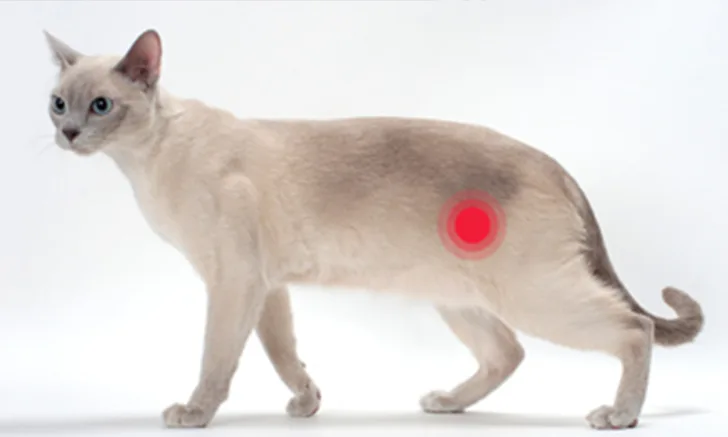
Produced by Bimeda Animal Health
Adapted from Bimeda Animal Health’s original handout “A-CYST Fact Sheet: A New Way to Manage Feline Cystitis.”
The Case of the Blocked Tom-Cat
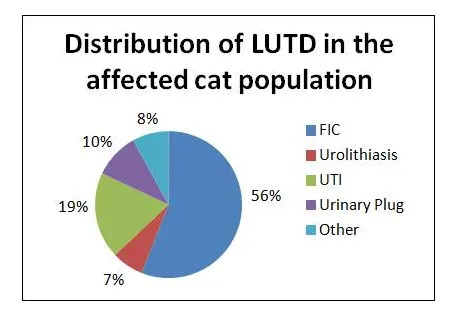
Veterinary practices know the frustration and economic hardship that can be experienced by pet owners when cats suffer from chronic urinary tract diseases especially Feline Lower Urinary Tract Disease (FLUTD), including Feline Idiopathic Cystitis (FIC), urolithiasis, or Urinary Tract Infections (UTI).
Of the potential causes of FLUTD, studies have shown FIC to be the single most common diagnosis.1 FIC can also become life threatening in cases that lead to obstruction. Not only can obstruction alone be fatal, but male cats with urethral obstruction have a repeat urethral obstruction rate as high as 51%,2 which becomes quickly expensive to manage. Owners choose euthanasia over treatment in many of these cases.2 Idiopathic cystitis is often multi-factorial but even in cases where the exact cause of urinary disease can be identified, many of the patients suffer from chronicity or recurrence of their disease.3-5
Many cases of urinary disease share a common problem: deficiency of the protective glycosaminoglycan (GAG) layer of the urinary bladder.6-9
An increasing body of evidence points to the in-situ administration of GAGs as being an effective way to both speed up healing of the bladder uroepithelium and prevent repeat obstruction.10-11
This suggests that ensuring the proper healing and maintenance of the GAG layer in any urinary disease, may be of primary importance in both the short- and long-term management of these diseases.
A-CYST
A-CYST is designed to provide temporary replenishment of the GAG layer of the urinary bladder and provide a critical physical barrier against irritants, allowing time for the damaged bladder lining to heal.
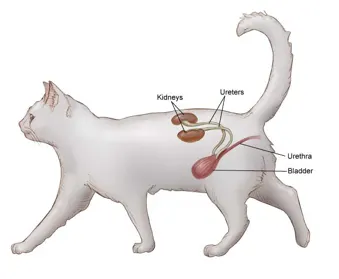
A-CYST is a highly viscous sterile solution of defined fractions of purified hyaluronic acid, chondroitin sulfate C4 and C6, in a 10% solution of N-acetyl-D-glucosamine. It is administered intravesicularly via urinary catheter.
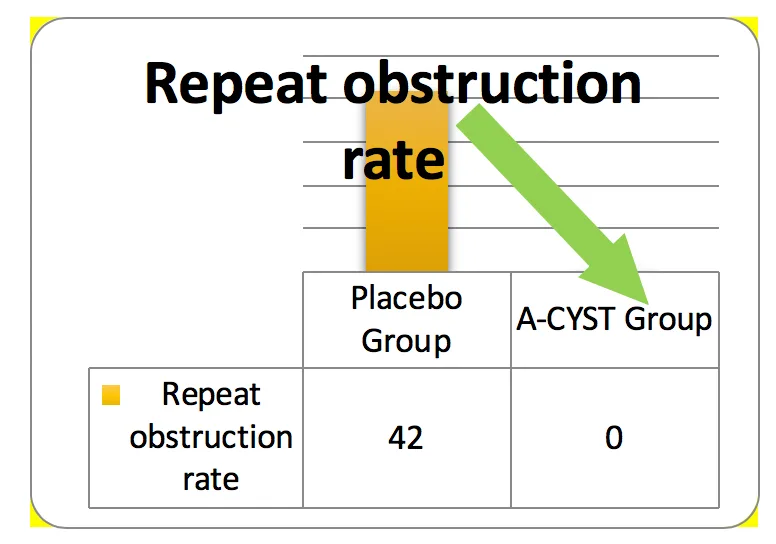
In a pilot study on blocked toms performed at the Colorado State University, intravesical infusion of A-CYST reduced the overall 7-days repeat obstruction rate to 0%, versus a placebo group rate of 42%.
Opportunity to Help
Lower Urinary Tract Diseases (LUTD) affect around 6% of the total feline population in the United States, or 5.5 million cats.9 Considering that approximately 35% of cats are presented to a veterinarian regularly, A-CYST represents an opportunity to help up to 2 million cats annually.
Besides the steady growth of the feline population, the rise in overweight, indoor, and dry food fed cats may further contribute to an increasing number of cases each year.
Given the risk to life of FLUTD, FIC, and especially urethral obstruction, there is great potential in offering multimodal therapy designed to improve patient comfort and urinary tract health.
Feline Idiopathic Cystitis (FIC) represents the majority of LUTD, followed by Urinary Tract Infections (UTI).